In this analysis, we will try to identify a capable countermeasure against the F-35.
An extremely interesting story about the presence of the Twinvis passive radar system was presented at the ILA Berlin defense exhibition in 2018. According to what was written at the time in the German press, the US Air Force avoided the flight demonstration of two F-35A, precisely because Hensoldt was presenting this system of its own!
A smart solution
A serious air defense needs a new level of sensors, beyond the large active early warning radars that betray their position as soon as they start transmitting. Countries are now investing in 5th & 6th generation fighters respectively, in large unmanned jets with stealth design, as well as in precision weapons and electronic warfare, creating a field where the survival of the sensor acquires the same importance as its range and accuracy.
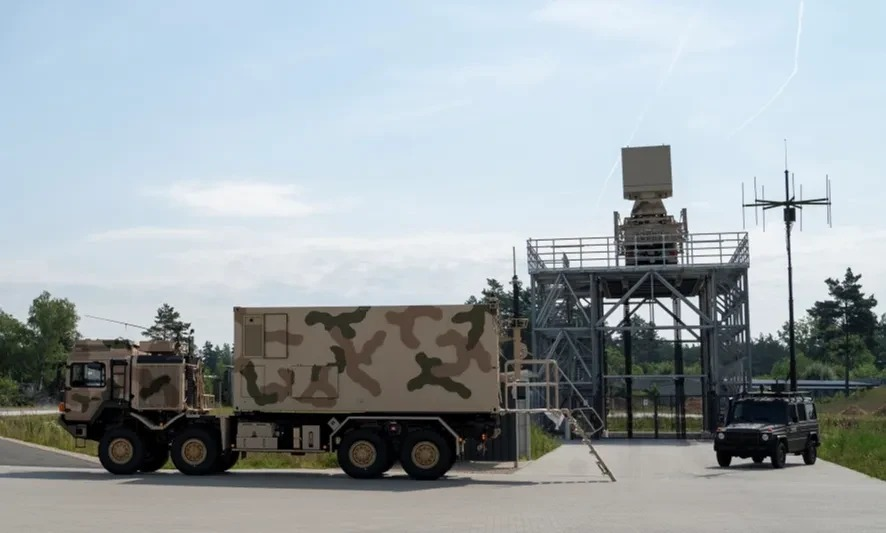
Here, the Twinvis of the German Hensoldt meets this need. As it creates an aerial image by utilizing electromagnetic emissions that already exist in the environment, such as FM, digital radio and terrestrial television, without emitting a signal itself.
Specifically, a reference antenna directly receives the signal of any transmitter (e.g. radio), while the surveillance channel searches for the weak reflection of the same signal from an aerial target. The software removes the strong direct signal, limits electronic noise, rejects false targets and connects successive measurements to see if they form a path in space, thus achieving the initial detection of an incoming enemy aircraft (manned or unmanned) or missile.

Furthermore, each additional transmitter offers a new “illumination” angle and each additional receiver a new control infrastructure. In the Baltic Sea in particular, the many emissions from the mainland, islands and coastal cities can be exploited, creating a multi-static image over sea passages and low-altitude flight paths.
At the same time, the electromagnetic “silence” of Twinvis removes from enemy intelligence-gathering aircraft, radar signal detectors on enemy fighters, and anti-radar missiles the classic targeting signal, which is a strong signal emission. So to locate a Twinvis, close visual recognition must be made, while to counter it, extensive broadband interference must be applied to all electromagnetic sources in the environment. However, the attempt to interfere with many commercial frequencies and transmitters requires a lot of power and reveals the jammer, so it is not practical.
Also, Twinvis’ small size allows its deployment near borders, with frequent location changes. While the absence of a transmitter drastically limits the system’s power consumption, complexity and support costs. So the low life cycle cost allows for dense deployment on islands, critical facilities and forward areas.
Why is it different from electronic warfare systems?
Passive sensors come in many forms, from electronic support receivers to geo-location systems for emissions. Twinvis is in a different category because it records the trace of the reflections of various electromagnetic emissions on the target. And its operation continues even when the enemy aircraft maintains transmission silence.
In contrast, a typical electronic warfare support system (ESM) detects the aircraft’s transmitters (such as its radar and telecommunications), analyzes the signal and calculates its position. Here, Twinvis compares the direct signal of an FM or TV station with the same signal after it has been reflected off an aircraft, UAV or cruise missile and calculates position and motion from the time delay, angle of arrival and Doppler shift. This function makes it a true passive radar and distinguishes it from a system that directly listens to enemy emissions.
Twinvis can utilize multiple FM, DAB and DVB-T transmitters simultaneously, operate in a fixed or mobile configuration and connect multiple sensors to an analysis network. The combination increases accuracy, while the result is forwarded to air traffic control centers for immediate warning.
Use against F-35
A country that builds an ecosystem of low-observability (stealth) aircraft and domestic sensors, such as the SU-57, F-35, etc., launches air-to-air missiles and integrates an electronic warfare self-protection system.
In general, stealth design is largely based on the reflection of enemy radar signals in other directions, so that they do not return to the same point (the radar) and the detection of the target is recorded there.
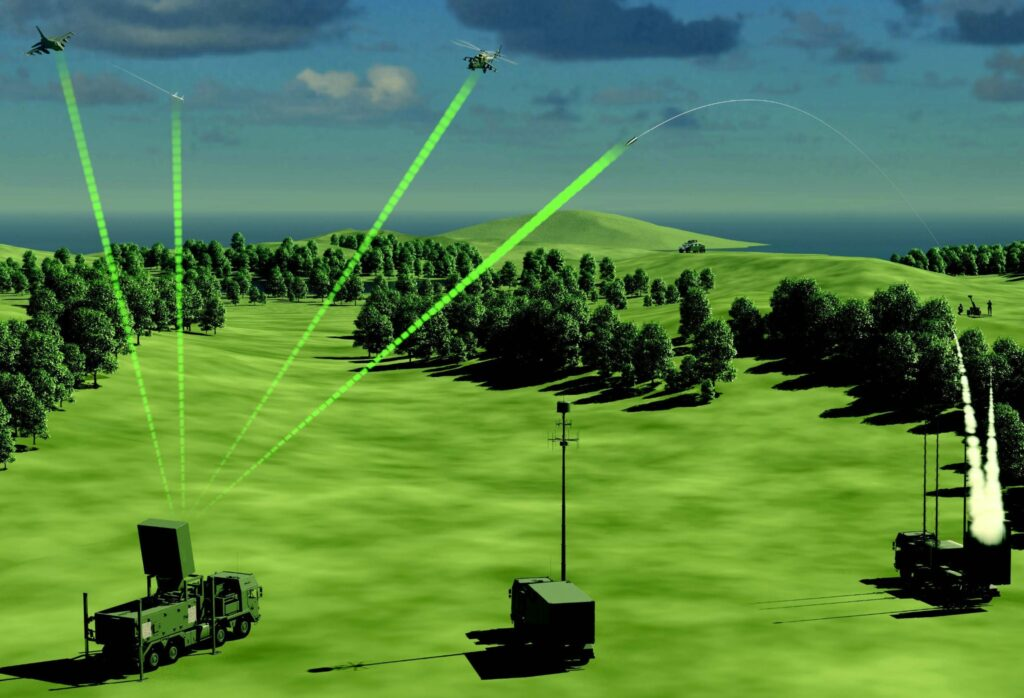
However, in Twinvis, the transmitter is located elsewhere (the various electromagnetic signals of the environment) and the receiver elsewhere, so the reflections lost by a conventional radar can be collected from another angle. So such a passive radar can help in revealing stealth aircraft, such as the SU-57, not with great accuracy but by giving an initial indication.
Although Twinvis remains a passive surveillance sensor, in a critical moment it can be combined with an active air defense radar that will transmit only when needed and in the direction where a threat has already been detected. So there can be a final engagement with good data fusion and a high-sensitivity anti-aircraft weapon sensor.