



The new flare-up in the Iran war was expected – all talks of an agreement were vague, the US demands were excessive, the Revolutionary Guards’ demands were too high, and Israel’s demands were too high. And it’s not just these three who are involved in the negotiations, there’s also Hezbollah and Lebanon, there’s also the Houthis and Yemen, there’s also Hamas and Palestine, there’s also the Gulf countries, the Emirates, Saudi Arabia, Turkey, Egypt, Pakistan, China, not to mention the various churches and their priests, nor the huge business interests from around the world that are greedily eyeing the prospects of profit.
There are too many who have a direct or indirect interest, interests, and risks from the crisis in the Middle East, and each of them has the means and the ability to influence the situation in some way.
There are also the changing moods of the negotiators, the fanaticisms, the disturbed internal political balances in many of these countries. There are also the hidden agendas of the secret services, but also of the leaders, especially Trump.
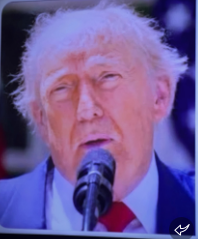
Trump’s personal agenda in the Middle East remains hidden, but its existence is revealed by the constant changes of rhetoric, by the contradictions of his incessant statements, which subvert one another even within the same day.
The same is true of all the other major issues that Trump has opened and is not going to close as long as he remains president of the United States. The day before yesterday, he recalled the agreements with Canada and Mexico and stated that he will not renew them, while he promised new tariffs on Europe and China.
For the time being, he seems not to be dealing with Putin and Ukraine, but he will soon remember them again.
All prospects are open and the best – rather unlikely – or the worst – most likely – scenario may happen, on all fronts without exception. The day before yesterday’s sudden statement by the American president, “I love inflation”, is characteristic, at a time when American voters have set the economy as their central problem and while he himself wants the American central bank, the Fed, to reduce interest rates.
No one can explain why Trump suddenly loves inflation, especially if you take into account the rest of his statement, that while prices are high now, they will fall once the war in Iran is over. Which, again according to Trump, will end soon, but will not end soon.
Of course, he has not forgotten Greenland, nor Cuba, he has not liked the European Union, he wants and does not want the dissolution of NATO.
What does all this mean? That instability will continue and solutions will not be found. And when they are announced, neither will there be solutions, nor will they be adhered to. This instability will continue to affect economies and citizens around the world.
So far, the markets have shown enormous composure and patience. Every now and then they make sudden, short-term corrections – whether they see the glass as half-empty or half-full constantly changes depending on Trump’s statements.
Unlike the calm markets, consumers are not so calm, since they are asked to pay increased prices for everything, oil, electricity, food, medicine, everything.
This unrest is already expressed politically everywhere and will be expressed much more strongly in the near future.

