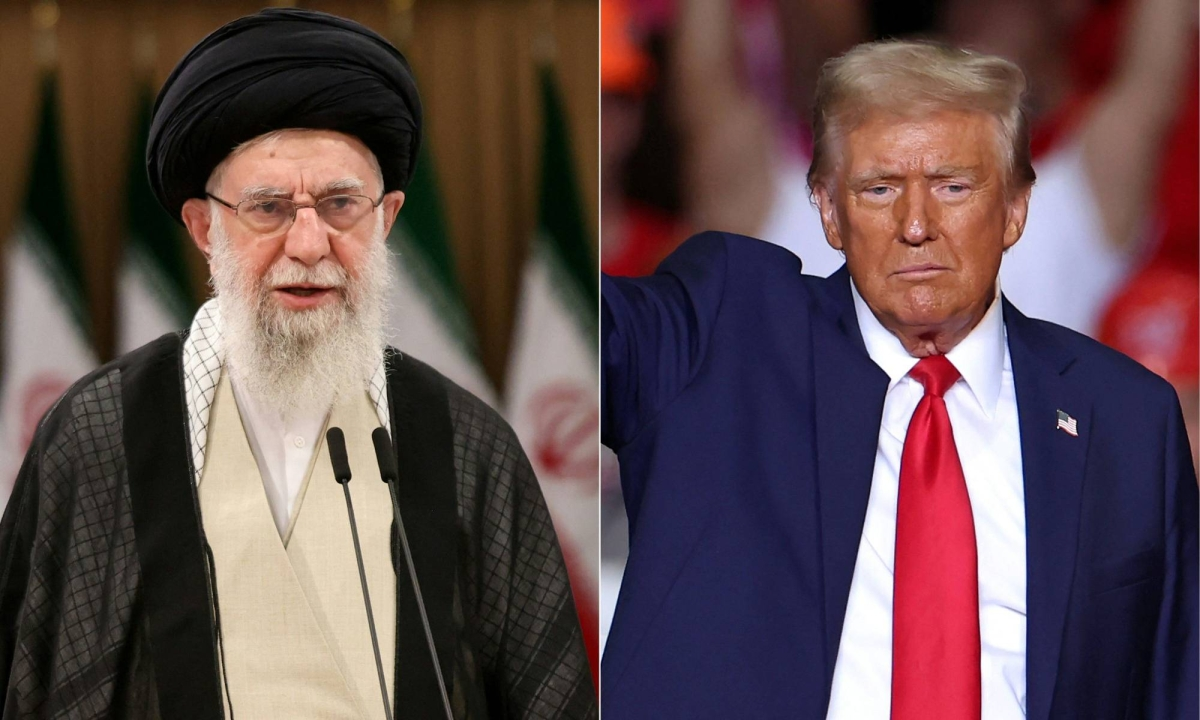
The markets seem to agree – for now – with the narrative of Donald Trump, who has ended the war a dozen times.
Tehran has repeatedly accused the US government of lack of credibility. At the same time, the Iranian side does not seem to be backing down from its “red lines” on the Strait of Hormuz, while US President Donald Trump is having difficulty signing an agreement that would show him having completely lost the war in the Middle East. A fact that is a reality.
According to information from The Liberal Globe from US government sources, the two sides are close to a preliminary memorandum of understanding, which could lead to the immediate resumption of navigation in the Strait of Hormuz, while at the same time opening the way for new negotiations on Tehran’s nuclear program.
The final approval of the agreement remains in the hands of Donald Trump, while the Iranian side has not yet officially confirmed the acceptance of the terms.
Vice President JD Vance stated that the talks are “very close” to an agreement, but stressed that there are still open issues in both the wording of the text and the basic parameters of the nuclear program.
According to the American plan, the Strait of Hormuz will be opened immediately to international navigation, without, however, completely lifting the US naval blockade.
The gradual easing of restrictions will be linked to the restoration of commercial shipping activity and the removal of mines that have been placed in the area.
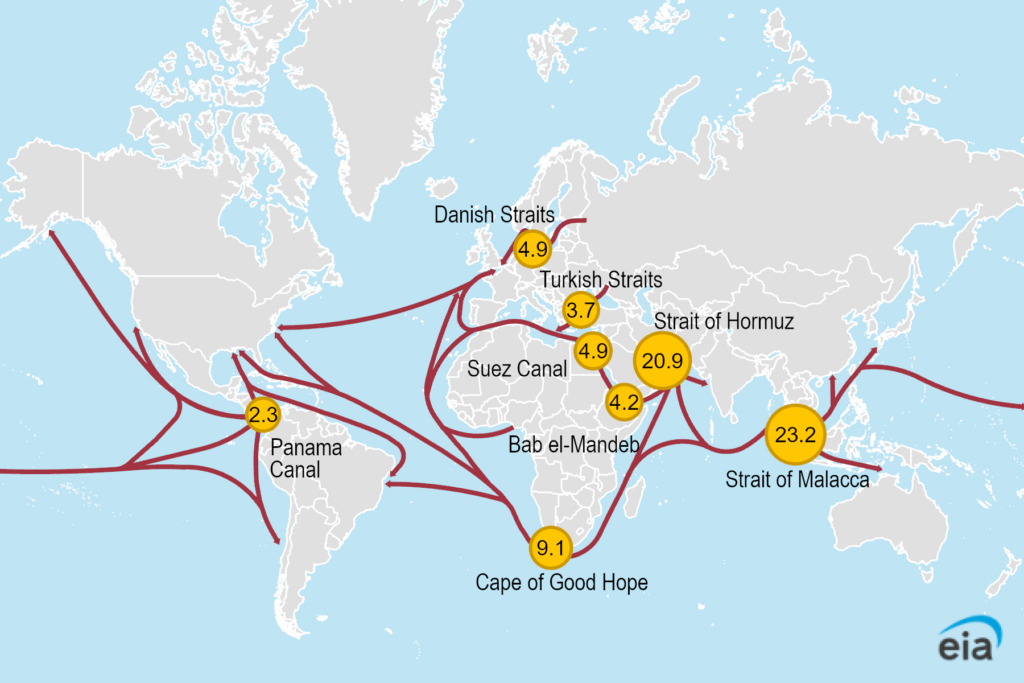
This development is considered critical for international energy markets, as the Strait of Hormuz is the most important oil and LNG passage in the world.
Worst energy market crisis since the 1970s
According to recent analyses, the near-total disruption of traffic in the region in recent months has caused the biggest disruption to global energy markets since the 1970s.
Oil markets continue to bet on a quick end to the crisis with Iran — but analysts warn that investors and consumers could be disappointed.
Oil prices rose more than 3% early on Thursday (May 28) after a new exchange of missile attacks between the United States and Iran, as tensions in the Middle East appeared to be escalating again.
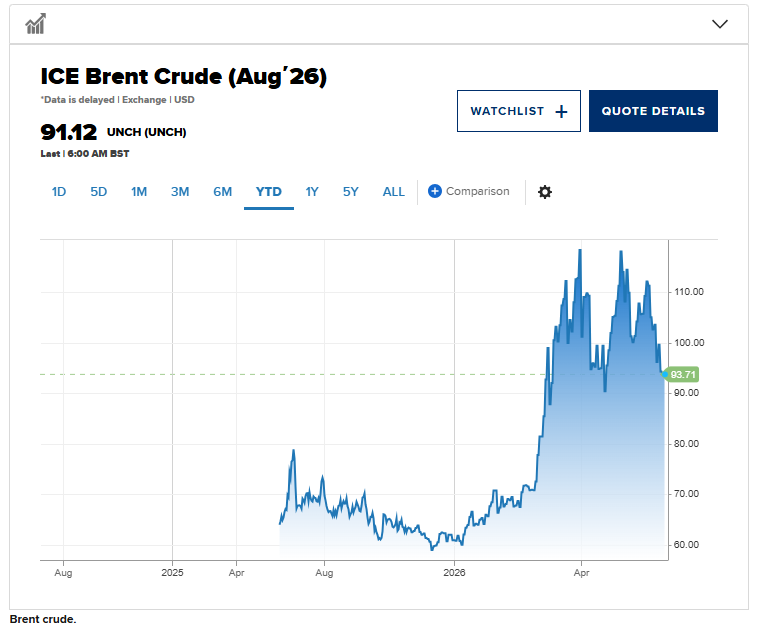
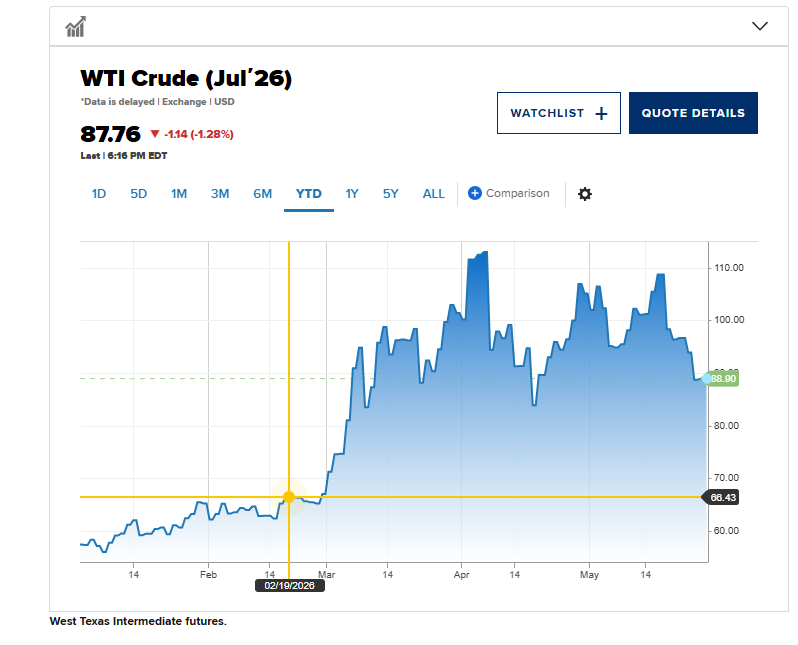
Brent, the international benchmark for oil prices, rose 2.1% to $96.29 a barrel, while U.S. West Texas Intermediate crude returned above $90, up 2.4%.
Thanos Chonthrogiannis, chief economist at research and consulting firm Trust Economics, said investors are finding it “incredibly” difficult to get a clear picture of the market’s direction, as prices are constantly changing under the influence of contradictory signals from Washington and Tehran.
As he explains, markets are affected by constant alternations between signs of diplomatic progress and new military conflicts, with the result that the climate can change within a few hours.
Iranian officials were discussing a draft memorandum of understanding that included points of convergence between the two sides. However, the White House later denied the information, describing it as inaccurate.
This contradictory picture is evolving alongside new attacks and reprisals in the region, which threatens to blow up the already fragile ceasefire.
Despite the fact that markets are still “finding ways to function,” the late Thanos Chonthrogiannis warns that the current situation cannot be maintained for a long time.
Markets are struggling to properly assess developments, while real consumers, producers and refiners are forced to continue trading, hedge risk and secure oil shipments.
According to him, there are indications that some tankers are still passing through the Strait of Hormuz, but there are no signs of a return to normality in this vital maritime artery. For this reason, he estimates that prices will hardly return to the levels of 60-70 dollars per barrel that prevailed before the conflict soon.
The key issue is to have confidence that the war is finally over and that there will be no new flare-up, he stressed, adding that the markets are still functioning, but a substantive political solution is needed soon.

Continuing, Thanos Chonthrogiannis noted that oil prices in the $90 region reflect a “clear geopolitical risk premium” that remains embedded in the market.
As he explains, investors are caught between short-term concerns about a resurgence of conflict and the hope that both sides still have a strong incentive to restore energy flows.
At the same time, the chief economist at Trust Economics points out that the overall market picture shows that investors have not yet discounted the worst-case scenario, as oil is still heading for a second consecutive weekly decline.
Even if the crisis de-escalates, the fall in oil prices will not be rapid. The main reason is that Tehran still retains the ability to disrupt the operation of the Strait of Hormuz, one of the world’s most important energy passages.
In addition, damage to energy infrastructure, the resurgence of strategic oil reserves by many countries, and the incorporation of higher structural geopolitical risk into the market are expected to keep oil prices high for a long time.
False optimism in the markets
At the same time, international stock markets hit new all-time highs as expectations grow for the reopening of the Strait of Hormuz and the stabilization of global energy supplies.
Analysts estimate that the crisis has already taken a huge economic toll. From the beginning of the year to the end of April, the price of Brent rose from around $67 to $126 per barrel, causing a transfer of wealth of up to $6 billion per day from consumers to
oil producers and energy companies.
At the same time, war risk insurance premiums for ships passing through the Persian Gulf have increased by more than 1,000%, dramatically increasing the cost of transporting oil and natural gas.
According to Reuters data, Iraq alone transported about 10 million barrels of oil through the Strait of Hormuz in April, a number significantly reduced compared to normal levels of traffic.
Economic relief and “frozen” funds
The central point is the financial compensation of Iran. Donald Trump has made it clear to his associates that he does not want to appear that the United States is directly financing Tehran. However, American officials recognize that without significant financial compensation, there can be no agreement.
For this reason, schemes are being examined through third countries — mainly Qatar — to release Iranian funds without Washington appearing as a direct financier of the Iranian regime.
According to information from negotiating sources, Iran is pressing for immediate access to “frozen” funds located in Qatar and other countries, with amounts estimated to range from $12 billion to $24 billion.
Other information indicates that even larger packages of economic support and investment are on the table, which could reach even $300 billion over time.
According to reports from think tanks closely following the negotiations, Tehran is requesting the release of part of the funds immediately after the agreement is signed and the remaining amount within 60 days.
These funds could be used to purchase medicines, industrial raw materials and critical imports, while Tehran is also reportedly seeking a broader relaxation of restrictions on its oil exports.
Nuclear program and geopolitical reactions
Despite significant progress in the talks, the memorandum under preparation does not yet include an agreement on the Iranian missile program.
The issue of uranium enrichment also remains unresolved. Donald Trump had initially called for a complete and permanent ban, but in recent weeks he has left open the possibility of a multi-year suspension instead of a definitive cessation.
The issue of managing Iran’s current stockpile of highly enriched uranium also remains critical. The talks are already causing strong reactions within the US.
Critics of the negotiations argue that Washington risks repeating the policy of the Barack Obama era, when $1.7 billion was released to Iran after the 2015 agreement.
At the same time, figures who support a tougher stance towards Tehran – including Benjamin Netanyahu, Ted Cruz and Lindsey Graham – express strong opposition to any new compromise.
Despite the reactions, international markets continue to move as if they consider a final agreement possible, an element that also explains the significant de-escalation in oil prices in recent days.
Analysts estimate that Donald Trump will fail to show a diplomatic and economic success that could stabilize both energy markets and the international investment climate – and the chaos will persist for a long time.