




At the heart of the strategic failure of US-Iran relations is the political perception that Iran can be forced into submission through pressure — economic, military, or political.
The case of Donald Trump is perhaps the most characteristic and revealing example of this mentality. Instead of capitalizing on a favorable moment, Trump ended up — once again — undermining his own position, following the more aggressive and ideologically charged advice of circles in Washington, such as the Foundation for Defense of Democracies (FDD).
The result was not strategic dominance, but yet another failure that highlighted both Iran’s resilience and the structural problems of US foreign policy.
The Missed Opportunity – When Washington Had the Advantage
The fragile truce that formed between the US and Iran offered a rare opportunity. Trump had achieved his main goal: to withdraw from a costly conflict.
Iran, on the other hand, had lost a major bargaining chip — the pressure on oil prices. However, this asymmetry was not exploited with strategic composure. Instead, Trump chose to listen to the most aggressive voices in Washington, especially from circles like the Foundation for Defense of Democracies (FDD), which has long promoted a policy of “maximum pressure.”
The decision to block the Persian Gulf was presented as a magic solution that would bend Iran. But, as it turned out, this logic was more ideological than realistic.
Reality Belied Predictions
The theory behind the embargo was simple: if Iran’s oil exports were cut off, its economy would collapse. But reality belied these predictions. Iran continued to load oil on Kharg Island, there was no storage crisis and the economy did not collapse. On the contrary, the consequences were global — and mainly negative for the West.
Oil prices rose. Pressures were created on the markets while energy uncertainty increased. The embargo, rather than weakening Iran, strengthened its negotiating position. Iran proved that it could operate under pressure, while the US seemed unable to control the side effects of its policy.

The illusion of a magic solution based on four pillars of arguments
The Trump case is not unique. It represents a deeper pathology of American strategy: the belief that there is always a “final solution” that will impose US sovereignty without compromise. This logic manifested itself in various forms:
1. The threat of military force
Trump believed that threats would lead Iran to retreat. But Iran responded clearly: any attack would lead to a generalized war.
2. Military escalation
The concentration of forces did not lead to a “decisive victory”. On the contrary, it increased the risk of a conflict without result.
3. The idea of eliminating leadership
The idea of assassinating Ali Khamenei was presented as a solution. But such actions do not lead to stability – on the contrary, they cause chaos.
4. The bombing of infrastructure
The destruction of political targets did not bring a strategic result. On the contrary, it strengthened Iran’s internal cohesion.
What is the infamous Foundation for Defense of Democracies (FDD)
The FDD, which led Trump to war with Iran, is one of the most influential think tanks in the United States, particularly on foreign policy and security issues. It was founded in Washington in 2001 after the September 11 attacks and focuses on national security, the war on terror, sanctions, and Middle East issues. counterterrorism, sanctions, Middle East policy.
It is considered “hawkish,” with an emphasis on pressure and deterrence policies. The FDD has played a significant role in shaping U.S. policy toward Iran.
It supports strict economic sanctions, promotes maximum pressure policies, and often opposes diplomatic agreements it considers “conciliatory.” It maintains close ties to power circles in Washington and the Israeli leadership, providing advice and analysis to government officials. Its members or associates have occasionally joined governments.
The FDD is not just an analysis organization — it often functions as an ideological catalyst for political decisions, especially in times of crisis.
The promotion of a magic solution to the Iran issue reflects a broader philosophy: that pressure and escalation can replace diplomacy. It is precisely this way of thinking that is at the heart of the criticism that is developing around the FDD’s role in the US-Iran relationship.
How is the FDD related to Israel?
The FDD consistently supports policies that align with Israel’s strategic interests. Many FDD analysts and associates have close ties to pro-Israel networks in Washington, participate in organizations that promote US-Israeli strategic cooperation, and actively support policies that strengthen Tel Aviv’s position in the region.
The FDD has influenced US decisions that have been favorable to Israel, such as:
- The “maximum pressure” policy against Iran
- The withdrawal from international agreements with Tehran
- The strengthening of the military presence in the Middle East
It acts as a powerful policymaker that often promotes positions compatible with Israel’s interests. Simply put: it thinks and proposes policies that always serve Israel. FDD’s central figures and networks of influence are Mark Dubowitz, Jonathan Schanzer, Clifford May.
Iran as an example of strategic resilience
In contrast to the American approach, Iran has demonstrated a different strategic philosophy:
- Iran has not reacted in a panic.
- It has maintained its composure and avoided escalation pitfalls.
- Despite sanctions, it has developed alternative networks of trade and economic activity.
- Control of the Strait of Hormuz remains crucial. Iran does not need to “conquer” it — it already controls it.
- External pressures have strengthened national unity rather than weakened it.
The Failure of the American Approach
US policy towards Iran is characterized by a lack of strategic consistency, an overestimation of the power of pressure and an underestimation of the adversary’s resilience. Instead of using diplomacy, Trump chose escalation. The result was a missed opportunity for stabilization.
Global consequences
The failure of US policy is not limited to the bilateral relationship with Iran. It has broader implications:
- Rising energy prices
- Market instability
- Risk of food crises
Even US officials are warning of the consequences. The policy of pressure is becoming a global problem.
The need for realism
This case highlights a crucial lesson: Power is not enough without strategy.
- Iran, despite its limitations, has managed to withstand pressure, maintain sovereignty and strengthen its position.
- The US, on the contrary, has proven that overconfidence leads to mistakes, ideology can replace analysis, and escalation does not guarantee results.
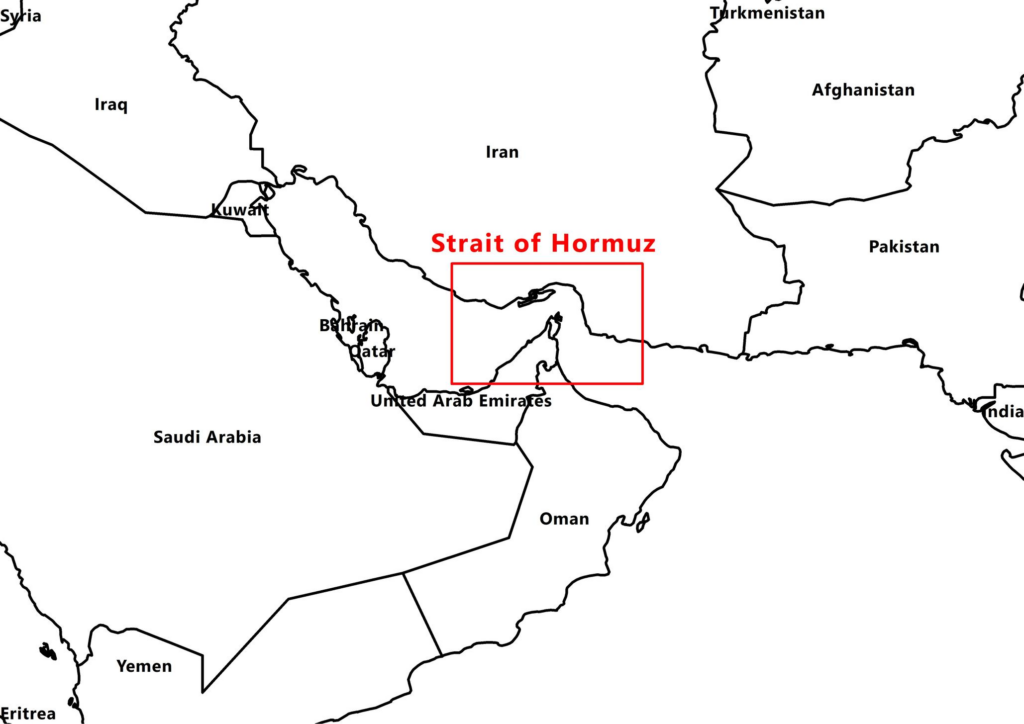
Strategic Failure of the United States
Donald Trump’s policy toward Iran is a classic example of strategic failure. Instead of seizing a favorable opportunity, he chose escalation, leading to a loss of advantage.
Iran, on the other hand, has demonstrated a different approach — one based on patience, resilience, and realism. In a world where strength is often confused with effectiveness, this case shows that strategic maturity can prevail.
This story is not just a conflict between two countries. It is a lesson in how overconfidence in strength can lead to failure — and how composure can be turned into an advantage.


