

The economic and military thriller unfolding in the warehouses of the US Pentagon is truly chilling. The numbers do not just tell the truth, but scream about a danger that humanity has had decades to face. The American superpower, this invincible war machine, seems to be “bleeding” from ammunition and billions, while its enemies lurk.
The war that broke out with Iran in late February 2026 was not just a military conflict; it was an economic and logistical “black hole” that threatens to swallow the global dominance of the United States. In just 38 days of stormy hostilities, the American war machine consumed reserves intended for decades or for a hypothetical World War III with China. The price? An astronomical bill of $35 billion, an expense that is equivalent to almost a billion dollars a day!
The “fire” that devours Stealth missiles
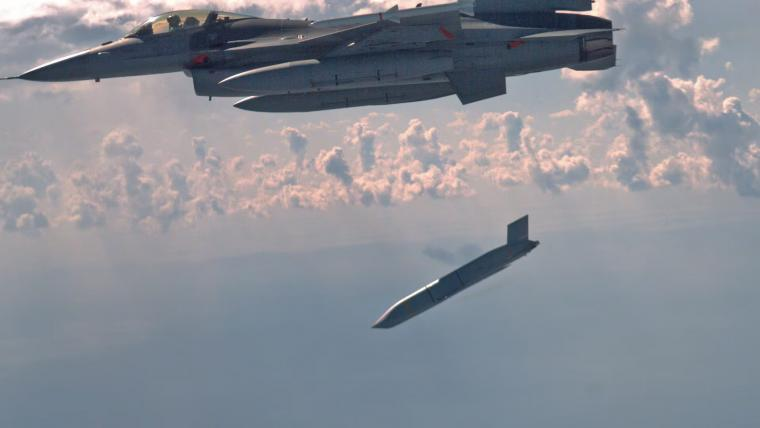
The dramatic truth hidden behind the walls of the Pentagon is that the arsenal is “drying up” dangerously. The US has already launched about 1,100 stealth cruise missiles (JASSM-ER), ghost weapons worth $1.1 million each, which were kept as “apples of an eye” for a possible conflict in the Pacific. Today, stocks of these critical missiles have fallen to a marginal level, with only 1,500 remaining in storage.
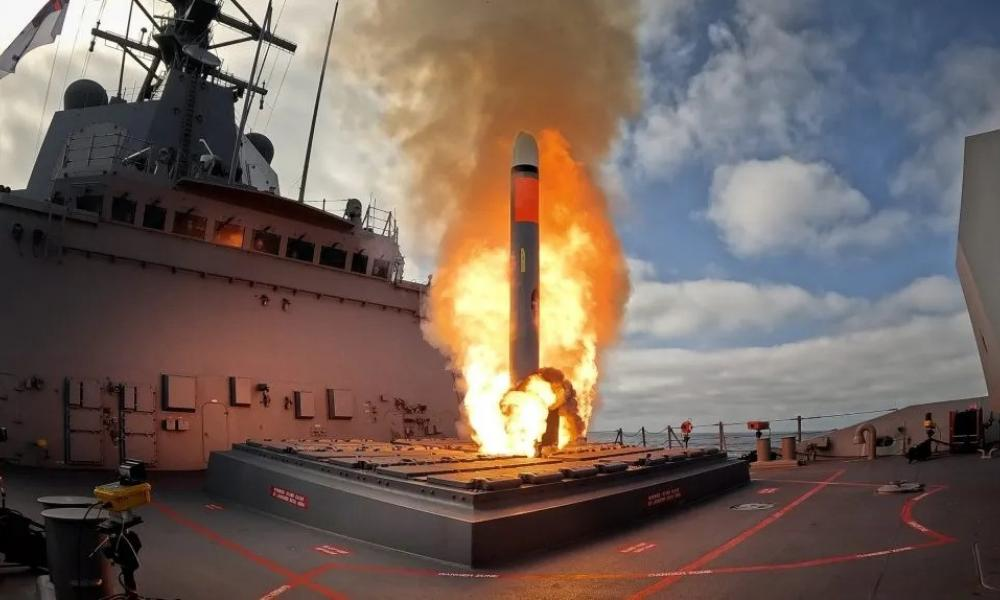
The situation with the legendary Tomahawks is even more heartbreaking. More than 1,000 missiles have been launched — a number equivalent to ten years of annual purchases! Every time a Tomahawk tears through the sky, $3.6 million goes up in smoke, leaving behind a gap that the defense industry will need years, perhaps decades, to fill.
The Bending Shield: The Patriot Drama
Even defense has become a financial nightmare. To thwart Iranian attacks, the United States has deployed more than 1,200 Patriot missiles. At a cost of $4 million per interception, the Pentagon has spent twice as many missiles in a few weeks as it will produce in all of 2025. It’s a race to the bottom where production can’t keep up with destruction, leaving America’s air defenses exposed and vulnerable.
The strategic stripping of Europe and Asia
To maintain this war front, the US was forced to commit a strategic “crime”: to strip Europe and Asia. THAAD and Patriot air defense systems were hastily transferred from South Korea to the Middle East, leaving allies in the Pacific unprotected against North Korea and China. In Europe, NATO’s eastern wing is seeing its stocks of drones and ammunition disappear, while Russia watches this gradual weakening with interest.
13,000 targets and a “black hole” of funding
Although the Pentagon boasts of hitting 13,000 targets, the real scale of consumption is much greater. Targets are hit again and again to ensure their destruction, swallowing tons of ammunition. And while defense companies like Lockheed Martin are seeking long-term contracts to increase production, Congress remains mired in bureaucratic delays, refusing to approve funding to replenish the empty stockpiles.
Unforeseen Casualties and the Shadow of the Houthis
As if missiles weren’t enough, war also brings humiliating casualties. During a SEAL rescue operation, two valuable MC-130 transports and three helicopters were destroyed by the Americans themselves to prevent them from falling into enemy hands, adding another $275 million to the damage. Meanwhile, Operation Rough Rider against the Houthis in the Red Sea has already burned through more than $1 billion, proving that the pace of operations is now exhausting both manpower and equipment.
Is this the end of omnipotence?
The conclusion is stark: The United States may remain the most powerful military in the world, but the war with Iran has shown that there are limits to that power. When a high-intensity war demands billions a day, the West’s industrial base seems unable to keep up. Washington faces a tragic dilemma. How will it protect Europe and Asia when its stockpiles in the Middle East are empty?