



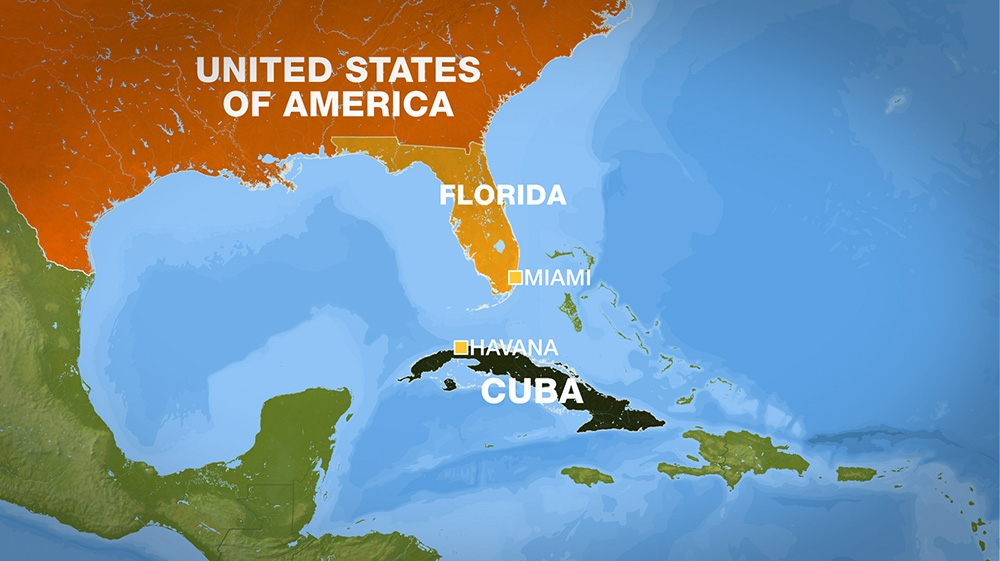
Donald Trump’s administration appears to be opening a new, dangerous front — this time in Cuba. Instead of de-escalation, Washington is opting for a strategy of constant tension, confirming the image of a superpower that invests in conflict as a key foreign policy tool.
According to reliable sources of the Liberal Globe, high-ranking officials in the Pentagon have received orders directly from the White House and the US president’s team to intensify preparations for possible military operations against Cuba.
This is a development that cannot be seen in isolation: it is part of a broader pattern of American aggression, where diplomacy is being replaced by threats, sanctions and military force.
Personal obsessions and dangerous decisions
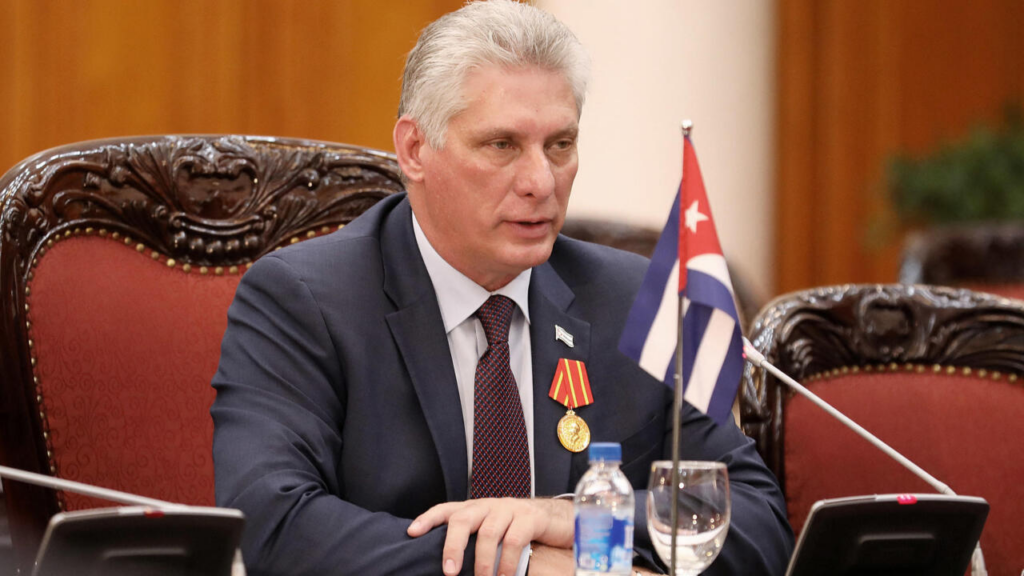
Donald Trump’s stance seems to be determined not only by strategic calculations but also by personal obsessions. Cuban President Miguel Díaz-Canel’s open defiance of U.S. threats appears to have caused deep concern in Washington.
Even more worrisome is the possibility being considered: the kidnapping of members of the Cuban leadership, modeled after regime change operations such as those targeting leaders like Nicolás Maduro.
If confirmed, such an intention would not only constitute a violation of international law — it would be a dangerous slide into practices reminiscent of the dark days of the Cold War.
Economic strangulation as a tool of policy
The United States’ policy toward Cuba is not limited to military threats. The near-total energy embargo imposed on the island has led to a serious humanitarian crisis. Even within the United States, criticism is intensifying.
Senator Tim Kaine has openly denounced this policy, pointing out that Washington has essentially shifted responsibility for the suffering of the Cuban people from the Cuban government to the United States itself.
His statement that such a policy would be considered an “act of war” if directed against the United States reveals the hypocrisy that characterizes the American position.
Fabricated pretexts and geopolitical games
As is often the case, escalation is accompanied by the production of “justifications”. The accusation that Cuba is allegedly supporting Russia militarily in the war in Ukraine is being used as a new argument to increase pressure.
However, even American reports themselves admit that there is no clear evidence. Nevertheless, this narrative is being exploited politically, as was done in the United Nations, to justify the continuation of an embargo that has lasted more than six decades.
The permission to transport Russian oil to Cuba and Havana’s moves to release prisoners and implement economic reforms indicated a possibility of rapprochement.
However, these developments seem to be undermined by internal conflicts within the American administration.
US Secretary of State Marco Rubio, known for his hardline stance in favor of regime change in Cuba, is reportedly an obstacle to any meaningful diplomatic progress.
An Extremely Dangerous Distraction
The possibility of military action in Cuba cannot be seen in isolation from the broader crisis facing the United States in the Middle East.
The war in Iran has already cost lives, raised energy prices, and strained the economy. In this context, a new front could serve as a political “diversion” — an attempt to change the public agenda.
It is a tactic that has been used repeatedly throughout history, but rarely without serious consequences.
The US wants to heal its wounded prestige with a military success in Cuba
Behind the rhetoric of “security” and “stability,” a deeper and more disturbing motive for the United States’ escalation towards Cuba is apparent: the need to restore its wounded geopolitical prestige after the disastrous failure in the war with Iran. The war in Iran did not develop as the Donald Trump administration had expected.
Instead of a quick show of force, it turned into a prolonged and costly stalemate, with significant losses and a serious blow to the image of American supremacy. In such circumstances, history shows that great powers often look for an “easier” front to reassert their power.
Cuba lends itself to this role. This is a much weaker adversary, geographically close and already economically isolated due to the US embargo.
Dangerous plans
A successful military operation there could be presented as a “victory”, compensating politically and communicatively for the failures in the Middle East.
However, such a strategy is not about security or democracy – it is about image and power. Choosing a smaller and more vulnerable target to cover up a previous failure reveals a dangerous logic of show of force, where the human consequences are secondary.
If this reading is confirmed, then the possible intervention in Cuba would not be just another episode of US foreign policy, but a typical example of how geopolitical defeats can lead to new, even more dangerous conflicts.
