




The inclusion of five Turkish companies in this year’s list of the world’s top 100 defense companies underscores Turkey’s impressive rise as a major arms producer.
But what is more important is that the rapid development of Turkey’s defense industries and the growing global acceptance of its products have led to many collateral benefits, such as the consolidation of President Recep Tayyip Erdogan’s regime without any fear of military challenge, while the Ankara pursues a militarized foreign policy in its neighborhood as it manages flexible geopolitical alliances.
The August issue of the “Defense News” magazine lists the top 100 defense companies in the world, and in it five (last year there were four) Turkish companies are:
1. ASELSAN (42, up from 47 last year): producer of defense electronics, especially communications and sensors.
2. Turkish Aerospace Industries (TAI or TUSAS) (50, out of 58): leader in Turkish defense aerospace
3. ROKETSAN (71, out of 80): The producer of unguided rockets and guided missiles has seen revenue increase largely due to the integration of its products into Turkish unmanned systems.
4. Machinery and Chemical Industry (MKE) (84, new): producer of small arms, artillery and ammunition
5. Military Factory and Shipyard Enterprise (AFSAT) (94, new): production and overhaul of aircraft, naval and land systems.
Next are unmanned aerial vehicles (UAV)
It is interesting that the most dynamic and much-discussed sector of the Turkish defense industry – unmanned systems – has not yet entered the “top 100 companies list”, but the way TB2 Bayraktar and Akinci unmanned aerial vehicles are progressing and have in high demand in various global hotspots, it’s only a matter of time before they figure in the prominent list.
Turkey now exports weapons from Chile to South America to Indonesia in Asia. It supplies systems to countries in Africa, the Middle East and the Far East, as well as within NATO. By transferring its technology, Turkey also favors joint production in other countries.
Examples in this category are:
- Kazakhstan,
- the Kingdom of Saudi Arabia,
- malaysia,
- the UAE,
- Azerbaijan,
- Pakistan and
- Indonesia.
According to information, Turkish manufacturers manage to provide training, exceeding and beyond their competitors. They ensure that their company’s staff are based in the importing countries for a year or more, ensuring comprehensive support.
This level of commitment and dedication has earned the trust and loyalty of countries, particularly the Arab world, where Turkish weapons are now in the greatest demand.
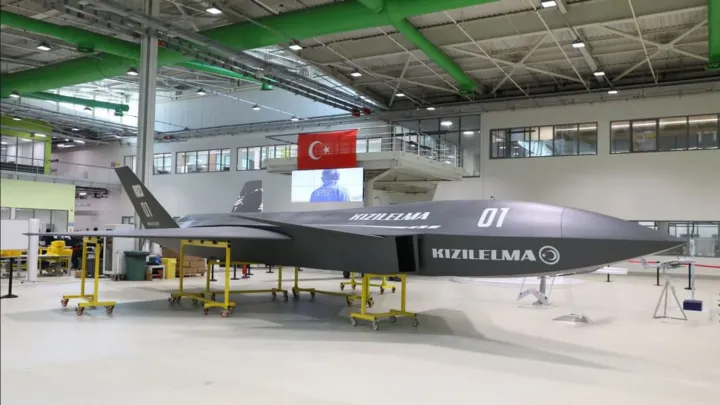
From a major recipient of arms now exporting worldwide
Not long ago, Turkey was the third largest recipient of arms in the world. But since the Justice and Development Party (AKP) came to power in 2002, Turkey’s domestic defense industry has grown at an impressive pace, making the country the 12th largest arms exporter, according to data from the Stockholm International Peace Research Institute (SIPRI ).
It has significantly reduced its reliance on foreign military imports from about 80 percent in 2004 to about less than 20 percent now.
Engaging in defense partnerships offers Turkey many strategic benefits. It has enhanced Turkey’s regional influence, enhancing its role as a pivotal player in the Middle East and North Africa (MENA) landscape.
As a major source of arms, made possible by efficient domestic defense industries, Turkey has been able to secure many bilateral agreements in its proactive foreign policy maneuvers in this part of the world.
For example, Turkey signed a defense deal with Libya in 2020, which created such confidence in Tripoli that it led to the subsequent signing of an agreement on hydrocarbon reserves in 2022.
Similarly, Turkey’s steady support for Azerbaijan, a perennial priority on its foreign policy agenda, during the 2020 Nagorno-Karabakh war was heavily dependent on the supply and development of Turkish defense industry products, notably Bayraktar TB2.
With Azerbaijan’s victory over the forces from Armenia, Turkey’s regional profile was further enhanced.
Similar examples, such as the Qatar crisis and the Syrian war, have strengthened Turkey’s regional position as a decisive contributor to regional stability, fostering avenues for more cooperation in different fields. This was essentially due to Turkish defense exports.
After the 2021 al-Ula agreement, which ended the 2017 Gulf crisis and blockade against Qatar, relations between Ankara, Abu Dhabi and Riyadh improved significantly.
Turkey’s rise as a defense manufacturer seems perfectly aligned with the strategic goals of the leading Gulf countries.
Turkish defense products are not only high-performance but also competitively priced, making them an attractive option for these countries, which are otherwise dependent on Western weapons.
Today, Saudi Arabia is the largest supplier of Turkish military equipment — more specifically, UCAVs.
In what is said to be Turkey’s “biggest defense and aerospace export contract” to date, Saudi Arabia has agreed to buy Baykar’s next-generation Akinci UAV worth more than $3 billion.
Between 2018 and 2022, Qatar, Oman and the United Arab Emirates were the top three customers of Ankara’s defense industry products, accounting for 20%, 17% and 13% of Turkey’s total arms exports.
Now, with Turkey ready to build weapons as a partner of these countries, there is an added advantage.
Normalization with Egypt in the background of the defense industry
Turkey’s arms industry again played a role in normalizing relations between Turkey and Egypt.
In a historic meeting between Presidents Erdogan and Abdel Fattah El Sisi in Cairo in February 2024, Turkey and Egypt agreed to jointly pursue strategic-level relations. The relationships that had been damaged after 2013 are now on an upward trajectory at an overall level.
But what is notable here is that this summit between the two leaders was preceded by announcements of talks on a major sale of Baykar UAVs to Egypt.
The latter seems poised to become a production center for Baykar, with one of the largest armies in the Arab world and favorable working conditions for production.

Turkish weapons and foreign policy
The Turkish defense industry is also said to have given Ankara the power to have an assertive foreign policy and take a different stance on the Russia-Ukraine war, despite the country being a member of NATO.
The sale of Bayraktar TB2 drones to Ukraine, while maintaining open communication channels with Moscow, reflects Turkey’s diversified strategic approach, which would not be possible without developments in its defense industry, it is said.
The development of the Turkish defense industry has also played an important role in providing political stability to Turkey, whose political culture has historically been based on a keen sense of militarism since the founding of the Republic.
There are political analysts who argue that since Erdogan came to power in 2001, his strong political dominance, which, in turn, has seen the military’s influence in politics diminish, as a conscious government policy, is due to many factors. , prominent ones that have been the success of the country’s domestic defense industry.
Initially, Turkish defense companies were largely owned and operated by endowments established by the Turkish Armed Forces, such as HAVELSAN and ASELSAN.
Over the past decade, the range of companies operating in the industry has expanded exponentially, with the entry of private sector companies such as the renowned UAV maker Baykar Technologies, led by Erdogan’s son-in-law, chief technology officer Selçuk Bayraktar.
Baykar’s signature product, the TB2 unmanned aerial vehicle (UAV), has become synonymous with Ankara’s expanding security footprint and has grown into an important export tool with a wide range of government customers.
All this seems to have made the Turkish military elites happy and less disposed to political power.
There is now a seemingly reformed partnership between politicians, the security bureaucracy and the armed forces.
Erdogan’s political campaigns these days rely heavily on the success of the defense industry, which plays a large role in the national discourse of the ruling coalition.
According to the EurAsian Times, Erdogan did not only depend on the arms industry for his election victory in May last year. he had also given several clues as to who his likely political successor would be.
And that heir is widely believed to be the son-in-law of Selcuk Bayraktar, co-owner of Turkish defense company Baykar, maker of the TB2 Bayraktar drones.
Production, but, from imported high-tech products
However, despite all the positive effects that the Turkish arms industry has on the country’s politics, economy, defense and foreign policy, there are weaknesses. Specifically,
- First, the Turkish arms industry depends on very heavy imports of high technology and software, especially semiconductors and microchips, which are procured from foreign companies.
- Second, the Turkish military-industrial complex lacks a critical mass of domestic energy sources, which it is forced to import. This explains why it cooperates with Russia, a major source of energy.
- Third, Turkey has a shortage of skilled human capital, largely due to issues in higher education. Turkey reportedly does not have enough students whose standards are on par with their counterparts in the West and Russia, particularly in STEM (Science, Technology, Engineering and Mathematics) subjects.
- Fourth, high-tech products constitute a relatively low share of Turkish exports. Apparently, more than half of the gross value generated in the Turkish defense industry comes from low and medium technology products.
- Fifth, a recent study points out that rising inflation in the country, which has led to monetary tightening, is a major challenge. Domestic bank loans have become less attractive for small business development to major defense industrial players.
With the above bottlenecks, Turkey’s defense industry still has a long way to go to match that of the US or even Russia.
But we have to admit that what it has achieved so far is quite impressive given its expanding global footprint.
