
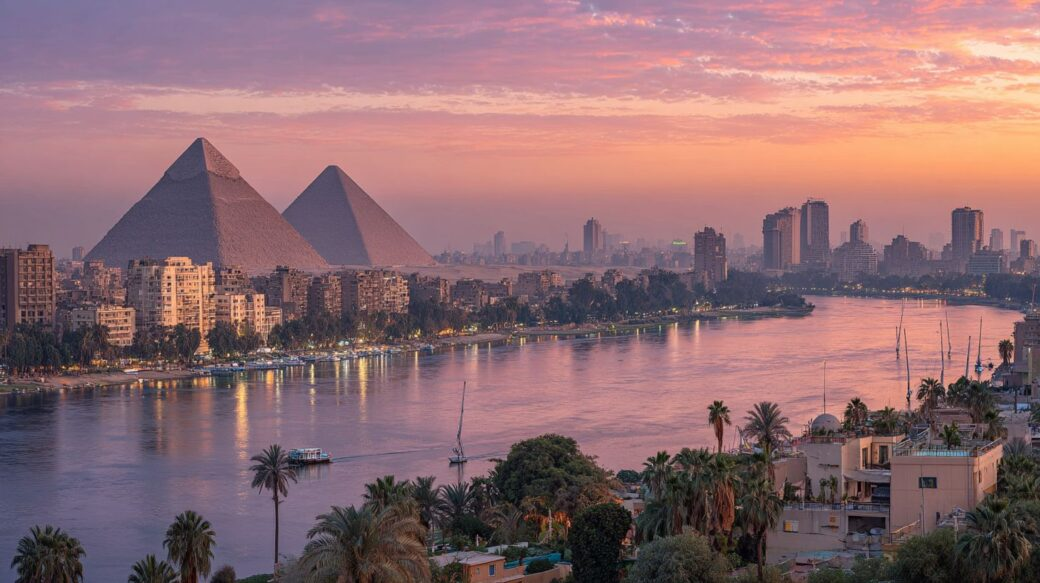
The opening of the largest Archaeological Museum in the world, the ever-expanding road networks and the large investments by luxury hotel chains have placed Cairo on an incredible trajectory of development. For years, extensive redevelopment projects have taken place in Islamic Cairo and the old city, while work has already begun on the transfer of the administrative center, 45 km. outside the capital. A huge project as this new area (New Administrative Capital) that is being created will be fully autonomous, will have easy access to the center and its area will be larger than many capitals and large cities in Europe.
The Paris of the Nile
Cairo has a charming color with great contrasts, buildings that look like a scene from the end of the 19th century, multi-story modern towers, but also areas with apartment buildings that seem unfinished while being inhabited by dozens of large families. The old city has a strong Belle Époque architecture and in the past had the title “Paris of the Nile”.
Also known as Khedival Cairo or Wust al-Balad, the city was built mainly during the reign of Khedive Ismail Pasha (1863-1879), with its development peaking in the late 19th and early 20th centuries (around 1870-1920) – eminent French and Italian architects were even invited and it was designed with the magnificent image of Paris as a model. The area stretching from Tahrir Square to the Kasr El Nil bridge is filled with buildings with Beaux-Arts, Art Nouveau and Neo-Baroque elements. Between the world wars, Cairo was the cosmopolitan capital of the Arab world.
Cultural revival
Cairo has experienced an impressive surge in arts and cultural activities in recent years, transforming it into a dynamic hub of contemporary creation in the wider Middle East. This revival is fueled by a combination of historical heritage, social need for expression and new investment. It is a fact that after the years of unrest – from 2011 onwards – artists have used art as a means of connection, hope and change. There is a shift towards conceptual art and painting, with increased interest from collectors, which is motivating creators.
High-profile events such as Art Cairo connect the local and international scene, while historic buildings are transformed into cultural centers, serving as incubators for the emergence of new creators – in Zamalek alone, for example, there are more than 30 art spaces. At the same time, the multifunctional ARD institute was founded in 2022, which offers hospitality to artists, has workshops and organizes exhibitions of their creations.
Walking in the city
The current population of Greater Cairo – approximately 22 million – is three times that recorded in 1984 – experts and international organizations believe that it may exceed 24 million. Imagine what happens around Tahrir Square or in old Cairo, where the famous Khan el-Khalili bazaar is located, which is sometimes so crowded that you can’t move through its labyrinthine alleys.
But also in the vast market of the Attaba area with its few tourists, which is the largest in the entire Middle East. Traditionally, it is a city that “does not sleep” in an almost literal sense, as cafes and many shops remain open until the early hours of the morning. But this has always been the charm of Cairo, the great extroversion of its residents and their need to communicate. If you don’t walk enough in Cairo, you lose much of its uniqueness and the changes you encounter from area to area. Recently, the government imposed strict restrictions on the opening hours of shops and the result is certain to lead to even busier streets.
Gastronomic revolution and lifestyle change
The explosion of bars, restaurants and international cuisine in Cairo over the past two years has been a dynamic “gastronomic revolution” that reflects significant social and economic changes. We are seeing a strong trend towards fusion cuisine, which combines local ingredients with international techniques and flavors, with new restaurants opening in unconventional spaces that break away from traditional models. In a small space in the city center, new chef Dina Hosni offers a seven-course dinner in an improvised kitchen that celebrates the country’s culinary culture.
Cairo’s restaurant scene is experiencing rapid growth, with chefs ranging from self-taught to culinary school graduates, as well as successful internationals discovering a new, promising market. The famous Wolfgang Puck has opened the Spago restaurant, while a Nobu restaurant and hotel in New Cairo are expected to open soon. The modern new city located east of the capital offers high-end infrastructure, gated communities, modern shopping malls, international schools, universities and green spaces, making it a leading residential and business destination.
But also many more international standard restaurants in luxury hotels, as well as cozy smaller ones with a multicultural color in Zamalek, Maadi and Heliopolis. In fact, the Cairo Gastronomy Week has been established by Hoda El Sherif, a dynamic woman who is the inspirer and creative director of Head At Flavor Republic, a creative agency that promotes gastronomic events and productions.
However, to discover Cairo as a “local” and escape the beaten track of tourists, you need to immerse yourself in the daily life, history and hidden corners of the city. Do not hesitate to sit in a traditional cafe because you will miss a real experience and of course try authentic Egyptian food in an old restaurant such as: Hawashi El Refaey, Fatari el Hussein, Naguib Mahfouz Café, Coshary Abou Trek and Abu el Sid, all in the center and its surroundings.
Moreover, Egypt’s culinary culture is one of the oldest and most continuous culinary traditions in the world, with a history that exceeds 5,000 years and is a living part of the Egyptian identity, inextricably linked to hospitality, religion, community and everyday life.