



The war in Iran and its negative development seem to be further shaking the US fiscal position, according to the data of the new budget, while the direction that emerges is that the White House’s goal is to transform the economy into a war economy.
US President Donald Trump’s plan in the framework of the fiscal year 2027 budget to increase total military spending by more than 40% compared to the current fiscal year is causing strong reactions from friends and foes.
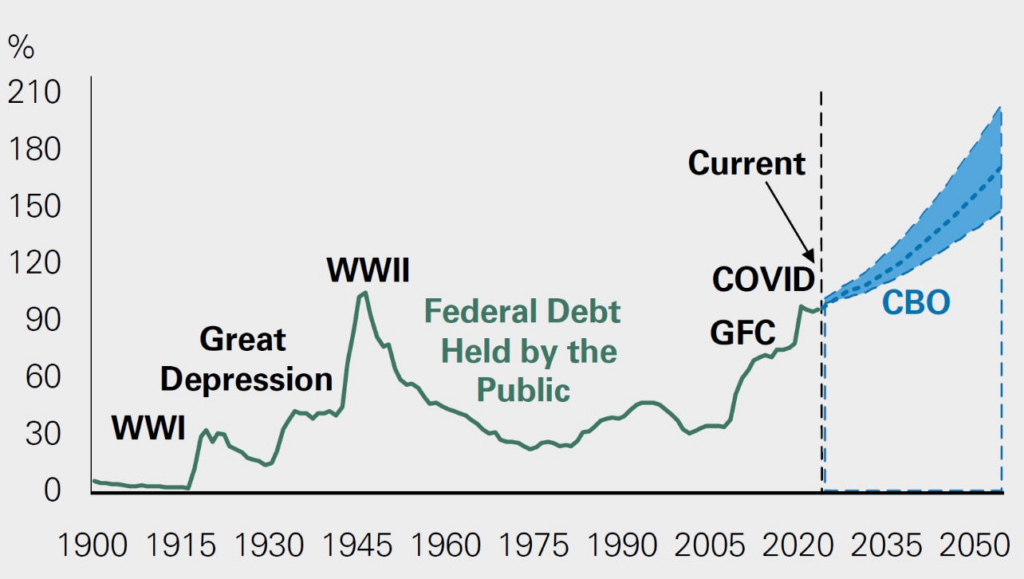
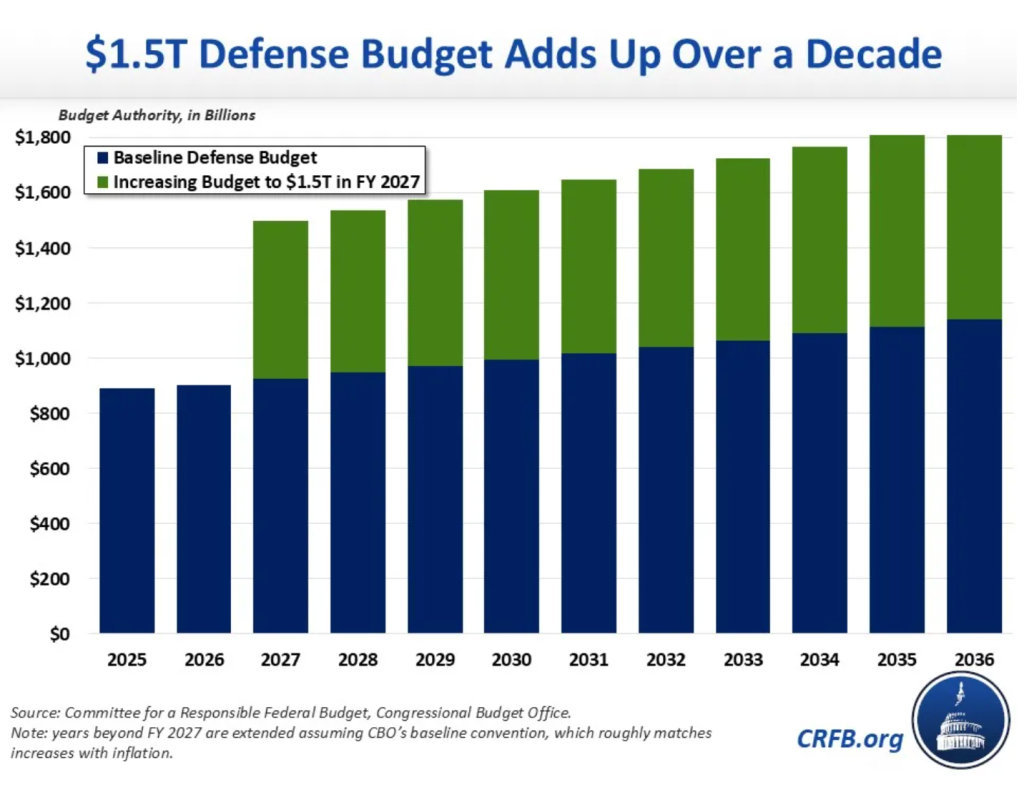
The budget document released by the White House on Friday, April 4, 2027, foresees military spending of $1.5 trillion for the next fiscal year — an unprecedented amount that, if approved by Congress, would add almost $7 trillion to the US national debt over the next decade.
The plan includes about $1.15 trillion in basic U.S. military spending, as well as $350 billion in supplemental funding “that Republicans could approve through a budget reconciliation bill.”
A budget reconciliation bill is a special type of legislation in the U.S. used to make fiscal measures (spending, taxes, deficit) pass more easily through Congress. The Pentagon has asked Congress for at least $200 billion for the war with Iran.
The budget, which would increase overall US military spending by more than 40% compared to the current fiscal year, also reportedly includes investments in the so-called “Golden Dome” missile defense system, a program that critics have called wasteful and ineffective.
Earlier this week, Trump implied that the US federal government cannot afford to fund child care and other domestic social programs because it “fights wars” – the intent to turn the economy into a war economy based on the White House’s geopolitical priorities is clear.

If approved as requested, spending $1.5 trillion on the Pentagon—in a single year—would make America weaker, funding a flawed strategy, supporting outdated weapons programs, and crowding out other necessary public investments.
There is a broader concern within the Republican party, where cracks are beginning to appear regarding the management and especially the financing of the conflict with Iran.
More and more congressmen and senators are expressing skepticism about the prospect of spending hundreds of billions of dollars to prolong the conflict, while many refuse to approve any additional funding without a clear and comprehensive strategy from the White House.
In this context, the issue of constitutional legitimacy and political accountability is returning to the forefront, as the internal consensus in the US seems to be tested as the conflict in the Middle East deepens.
Military spending fails 8th consecutive audit
In light of the White House proposal, a broad coalition of nearly 300 organizations sent a letter to members of Congress on Thursday, April 2, urging them to reject Trump’s request and any other proposed budget increase for the Pentagon, which recently failed its eighth consecutive audit.
“We must invest in programs that meet critical human needs in our communities. Instead, we have drastically reduced these programs,” the organizations wrote, pointing to record cuts to Medicaid and food assistance approved last year by Trump and Republicans in Congress.
“The Pentagon is not accountable to American taxpayers, having never successfully passed a financial audit, while more than half of its budget (54%) is paid to corporate military contractors, whose profits are soaring. Further massive increases (in spending) would be blatantly irresponsible,” they continued.
The Pete Hegseth Scandal and Insider Trading
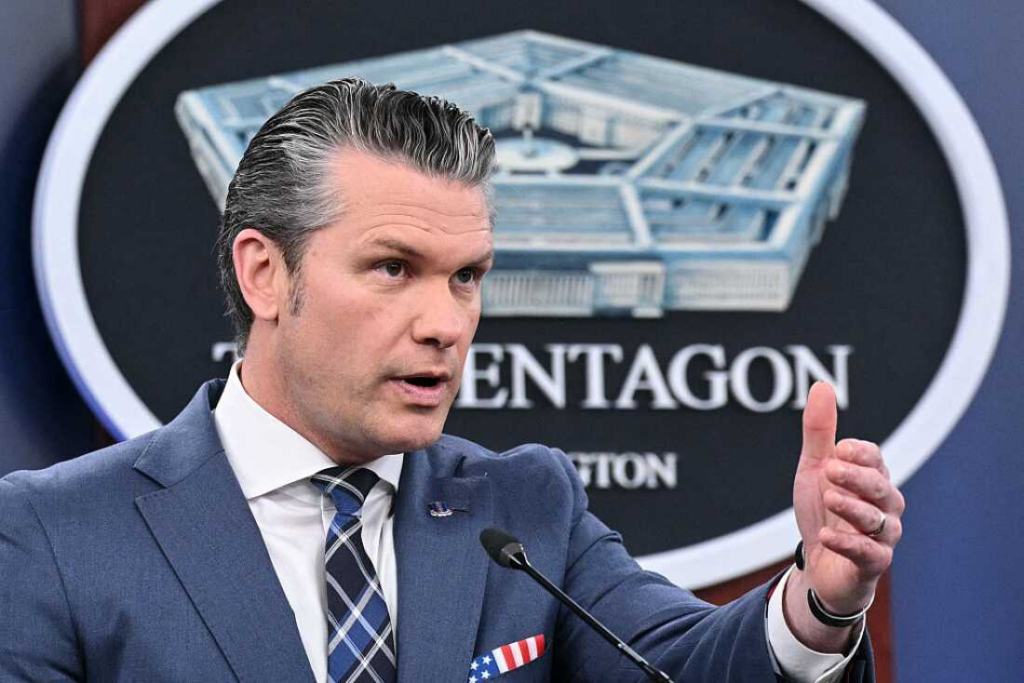
Washington is facing a potentially explosive scandal, given an emerging case of possible insider trading and conflict of interest, centered on US Defense Secretary Pete Hegseth (Financial Times publication).
The case concerns an investment move that was allegedly planned a few days before the escalation of hostilities with Iran, at a time when markets were already “smelling” conflict.
According to the publication, a broker who managed Hegseth’s funds through Morgan Stanley approached BlackRock in February, considering investing millions of dollars in an ETF linked to the defense industry.
The most concerning element is not only the size of the investment, but also its timing: the move came just before tensions between the US, Israel and Iran escalated—a development that, as is well known, almost always leads to a rise in defense stocks.
Although the investment ultimately did not materialize—due to technical limitations, as the specific ETF was not available to Morgan Stanley clients—the issue does not seem to end there.
On the contrary, the fact that such a placement was considered under these circumstances raises serious questions about the intent and whether there was an attempt to exploit privileged (inside) information.
The potential political implications are significant. Pressure for parliamentary scrutiny and possible investigations into conflict of interest are already apparent, while the case may further burden the political climate in the US at a time of intense international crisis.
In times when the credibility of leadership is critical, even the suspicion of exploiting confidential information can have disproportionate consequences.
The Trump Sons’ Anti-Drone Scandal
A drone company linked to Eric Trump and Donald Trump Jr. is trying to sell weapons systems to Gulf states, raising concerns about a conflict of interest as the Trump family benefits from a war their father started.
A drone company backed by President Donald Trump’s two eldest sons is trying to sell to Gulf states as they face retaliation from Iran.
The sales effort positions the company to potentially profit from a war their father started, as Iran exercises its right to self-defense against US-Israeli aggression.
Florida-based Powerus, which last month announced the affiliation of Eric Trump and Donald Trump Jr., is promoting drone interceptors to Gulf countries that have become targets of Iranian retaliation precisely because they host US military bases used for bombing Iran.
Drone interceptors are devices or systems designed to detect, track and destroy unwanted drones before they reach their target.
War Profits and Intertwined Interests in Defense Spending
The president’s eldest sons have expanded their business ventures beyond hotels and golf courses since their father returned to the presidency.
The companies they have invested in range from cryptocurrency ventures and betting companies to federal suppliers that make missile parts and rare earth supplies.
The latest Trump venture is targeting $1.1 billion earmarked for the development of U.S.-made armed drones, filling a gap left by the Trump administration’s ban on imports from China.
The incident highlights a long-standing and deeper problem: When geopolitical tensions meet financial markets, the line between strategic decision and speculation becomes extremely thin. And it is precisely on this line that trust in institutions is being tested, perhaps more than ever.
This will be the first presidential family to make a lot of money from a war — a war for which they did not get approval from Congress.
