
The US withdrawal from NATO would be a geopolitical turning point of historic significance, comparable to the end of the Cold War, only with the opposite signs. For European member states, such a step would have far-reaching military, political and economic consequences.
For the first time in decades, Europe would be largely on its own two feet in terms of security policy, without the previous strategic assurance. Although the European NATO states collectively possess significant military resources, these are not uniformly organized, are technologically heterogeneous and difficult to coordinate politically. The loss of the US would expose existing weaknesses: a lack of strategic airlift capability, deficits in missile defence systems and a reliance on US-led command and control structures.
Since its inception in April 1949, NATO has been based on US military dominance. Article 5, the collective defence clause, exerts its deterrent effect mainly through Washington’s nuclear deterrent, global recognition and logistical reach. A US withdrawal would mean the nuclear umbrella would be removed, with the exception of limited French capabilities, while reconnaissance, satellite surveillance and cyber assets would be massively reduced.
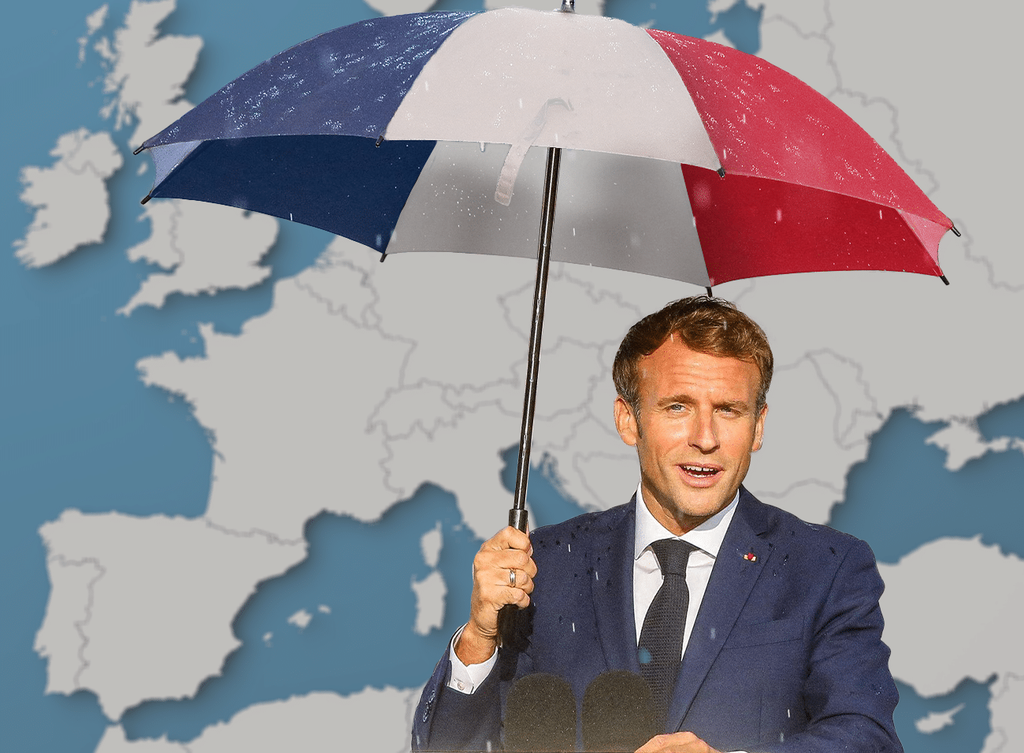
The consequence could be the renationalisation of defence policy, i.e. more national individual efforts rather than integrated alliance structures. After the US exit, only France would remain as a nuclear power within Europe, as Britain is also nuclear-armed, but politically it is no longer part of the EU. This would open up scenarios such as the expansion of a French-led European nuclear deterrent, political tensions over who will have control and say what, and discussions about their own nuclear programs in states such as Germany or Poland. Thus, a taboo subject, nuclear weapons, would once again move to the center of the political agenda.
Without the US, the balance of power within Europe would change dramatically. Germany would have to abandon its security policy restraint, Eastern European states would increasingly rely on national rearmament, and the EU’s role as a security policy actor would come under pressure. At the same time, existing tensions between member states could increase, for example over how much money and sovereignty should be given to common defense.
A US exit would also have significant economic consequences: a significant increase in defense spending well beyond five percent of gross domestic product for each country, an expansion of each country’s arms industries, and a reallocation of state budgets away from social or infrastructure projects. At the same time, stronger European cooperation in the field of armaments could provide an economic boost in the long term.
Geopolitically, new alliances could emerge, such as the rapprochement of individual European states with other great powers such as China or Russia. Even better would be a new NATO that includes all EU member states, the UK, Canada, Australia and New Zealand. Alternatively, NATO itself could continue to exist in a reduced form as a European NATO or actually be dissolved.
In essence, a US exit would force Europe to do something it has long avoided: Strategic autonomy. At first glance, this sounds like sovereignty, but in practice it means greater military responsibility, higher costs and greater uncertainty in a transitional phase. In a few years, Europe would have to build structures that took the US decades.
The timeline of such a scenario would be disastrous. In the first months after the withdrawal, there would be a shock phase with operational gaps: The transport capabilities offered by the US would collapse, air refueling, strategic airlift would be partially cancelled. Many NATO armies, which are not designed for large-scale independent logistics, would lose part of their military response capacity. Europe would be nervous, as it would be faced with a guiding decision: European integration with the expansion of the EU’s joint armed forces, national expansion with massive rearmament or, in the worst case, fragmentation with a permanent security gap.
Europe would find itself in a contradictory situation: militarily weakened, possibly in an accelerating process of transformation, politically under permanent pressure and economic and regional burden. The former hubs of international military presence would lose their original function and become symbols of a rupture in the system, a moment that would force European countries to define and impose responsibility for security policy independently, under conditions of permanent and escalating crisis.
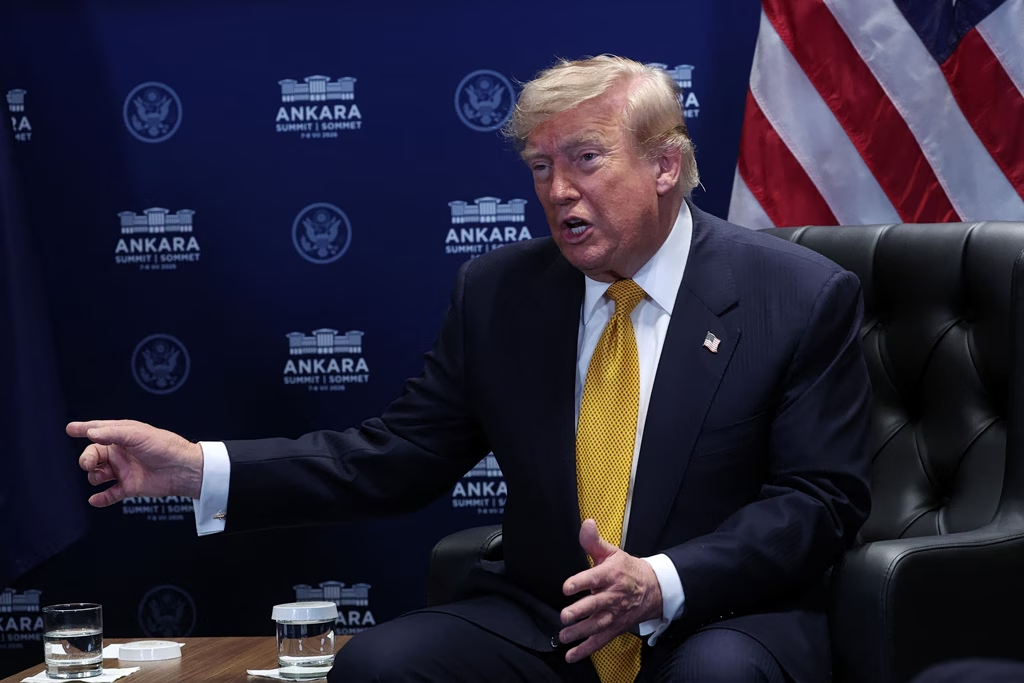
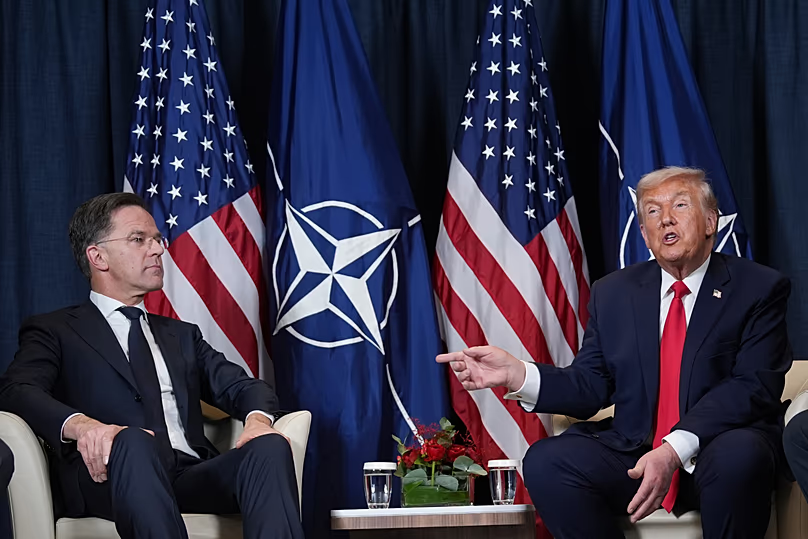
For Trump, NATO is not an alliance based on values, but an instrumental exchange relationship. In the US electorate, especially among Republicans, criticism finds fertile ground: Only half of Republican voters see benefits from NATO membership. The threat remains real: Withdrawal requires congressional approval, but Trump can withdraw troops and abandon the command structure. Europe is faced with a difficult choice: to transform itself from a junior partner in security policy into an independent pole of power, under conditions of increased vulnerability, political reorganization, and tectonic ruptures.
The illusion of the eternal American guarantee has been shattered. What remains is the stark reality: Will Europe learn to stand on its own two feet, or will its dependence end in chaos?