Washington attempted to set up a naval coalition-intimidator to “open” the Strait of Hormuz. The international community’s reaction? A resounding “thank you, we won’t take it” and a hasty appointment with Tehran for safe passage. While Donald Trump dreamed of becoming the regulator of global energy, Iran simply… sat on the shore and waited patiently for everyone to realize who had the upper hand.
The geographical advantage that America forgets
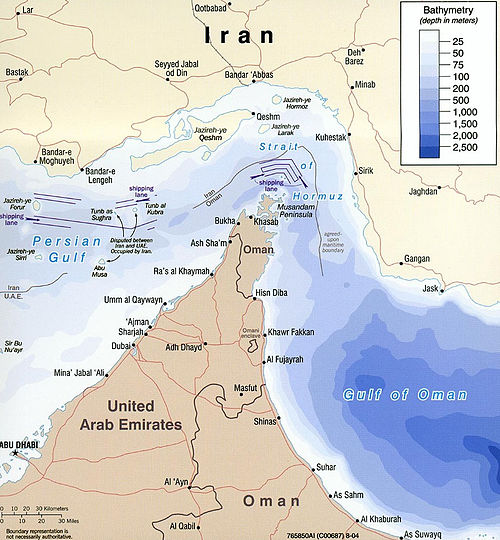
Last February, when American-Israeli strikes killed the Iranian leadership, Tehran instead of traditional retaliation chose to play the card that no one can take away from it: its geography. By controlling the northern coast of the Straits – this narrow 33-kilometer corridor through which 20% of the world’s oil passes – Iran reminded everyone that at sea, the size of the fleet matters less than the distance from the coast.
And indeed, with just a few attacks on ships (or even the reputation of attacks), insurance companies began to tremble. Premiums skyrocketed, shipping froze and the energy market caught fire: oil exceeded 100 dollars a barrel, natural gas rose 40%. A show of strength from Iran with minimal means.
Trump shouts, allies … pretend not to hear
The American president suddenly remembered NATO duties and threatened his “partners” with a “very bad future” if they did not send warships. The response was rather awkward:
Japan: “Thank you, we are not planning”
Australia: “Out of the question”
Britain: “We do not want war, thank you”
Italy: “No, we do not want it”
Germany: “This is not our war” (with the famous German directness)
Washington’s disappointment must have been enormous. But the real humiliation came from elsewhere: the countries that were supposed to participate in the coalition rushed to conclude… bilateral agreements with Iran!
Tehran’s “clientelistic system”
India negotiated for a few days, Modi called Pezheskian, and the Indian tankers passed through. Pakistan, Turkey, China followed. Rumor has it that Italy and France are also looking for Tehran’s phone number (the Italians denied it, but we know how they work). Windwar, the shipping monitoring company, confirmed what everyone suspected: more and more ships are passing through Iranian territorial waters. With permission, of course.
The Iranian foreign minister put it simply: “We decide.” So simple, so clear. And suddenly, the superpower with the world’s most powerful fleet looks like a pawn in a geopolitical bargain.
Could you think differently, gentlemen?
There is one small detail that American strategists seem to have overlooked: in 1980, when the US was escorting ships in the Iran-Iraq War, Iran was still disorganized after the revolution. Today it has mass-produced drones, high-speed suicide boats, mines, and experience in guerrilla warfare. Why would it lay mines in the straits? That would be foolish – because it would also block its own ships and lose the right to act as a “gatekeeper.”
The “Khark” plan and other American follies
The US Central Command bombed missile sites on the coast (with 2,270 kg bombs, just to impress anyone). Trump sent amphibious ships with thousands of marines. Some “experts” are proposing to occupy the island of Hark, from where about 90% of Iranian oil is exported.
But this islet is 500 km from the straits. If they capture it, the marines will become an easy target. And Iran, seeing its terminal in American hands, what do you think it will do? It will lay mines everywhere, since it will no longer have a reason to let ships pass.
The big truth
The issue of the Straits is not military. It is a matter of market and trust. And trust is not restored with cannons, but with diplomacy. Something that Washington, in its megalomania, probably forgot.
And just like that, the country that wanted to “open” the Straits with its power ended up watching everyone colluding behind its back. Ironic and probably expected.