
Evaluating with composure the events in the Persian Gulf and the brutal attack of the Americans and Israelis against Iran… the conclusion is one: the Americans do not win and Iran does not lose…
Trump, the American President, realized that all this is a dead end and is looking for a way out without damaging the prestige of the United States and without causing chaos in the Monarchies of the Persian Gulf who have slowly realized that the American bases are a cause of evil and not a deterrent.
When American Generals urged Trump to withdraw from the Persian Gulf, the American President thought of a clever plan: he needed a “disengagement coalition” that is, to involve other countries so that the US would not be burdened with the failure in the Strait of Hormuz, which is now fully controlled by the Iranians and the Iranian Revolutionary Guard Corps (IRGC).
The Americans do not need Europe’s rotten ships, but they needed Europe and NATO as a collective body to disengage from the Persian Gulf, but Europe… sold out Trump.
The treacherous Europeans have emptied Trump
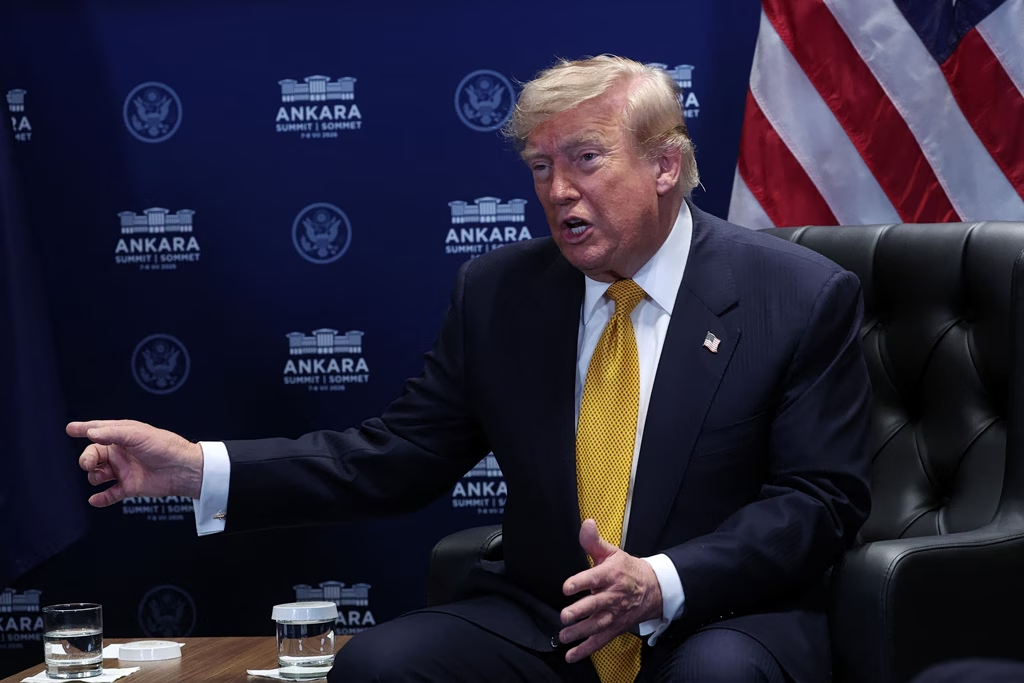
Trump’s European allies are celebrating in silence. There is a lot of talk right now about Trump publicly asking NATO countries to join the “disengagement coalition” and send their warships and technical vessels to clear mines in the Strait of Hormuz, as well as to provide further escort to merchant ships currently concentrated in their positions in the oil monarchies of the Persian Gulf.
Trump…escalating… is ready to show his anger to the Europeans
Trump started off in a relaxed manner and suggested that the countries concerned ensure the safety of their ships’ passage themselves (with his help), because “this has always been a collective effort.”
There was no response and Trump started to get a little nervous: “Many countries, especially those affected by Iran’s efforts to close the Strait of Hormuz, will send their warships along with the United States of America.”
The UK is quietly taking its “revenge” as Trump wants to absorb Canada as the next state of the US, breaking up the British Commonwealth. France, Germany and the Scandinavian countries “laughed” because Trump wanted to buy Greenland and now he is asking them for their help.

The stakes
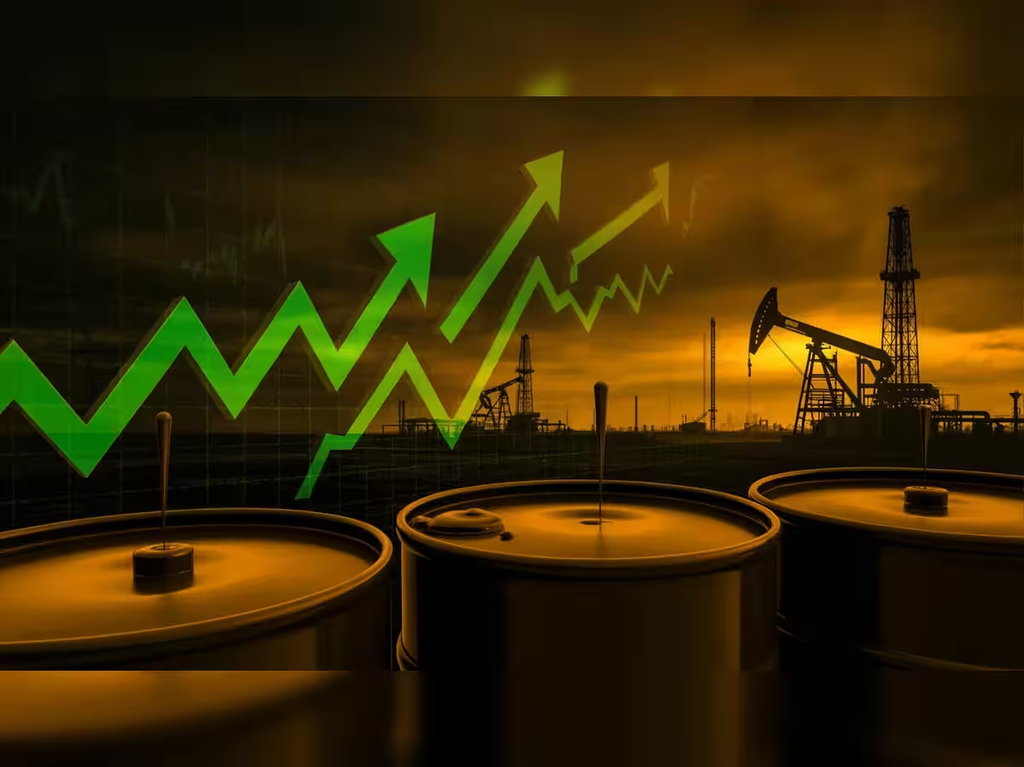
The standoff between the United States, Israel, and Iran is not just another crisis in the Middle East. It is the “final battle” for control of the Strait of Hormuz, a passage through which about 20 percent of the world’s oil supply passes.
It all comes down to who controls the Strait of Hormuz; if Iran retains the ability to control or even influence the passage of ships, then, regardless of military developments, the United States will be considered defeated.
Such an American strategic fiasco, if it occurs, would resemble Britain’s humiliation in the Suez Crisis of 1956, an event that marked the end of its role as a global imperial power.
This is a pattern that has been repeated for centuries: a rising power challenges the dominant one in a crucial trade passage and the entire world watches, with capital and alliances moving rapidly towards the eventual victor.
Domino of developments
When a superpower is already financially stressed and at the same time shows weakness in a critical geopolitical confrontation, then the consequences are profound and multifaceted: the confidence of allies and lenders is shaken, the dollar is threatened as a global reserve currency, government bonds are under pressure and the value of the currency declines, especially against gold.
At the same time, the situation in the Strait of Hormuz remains extremely murky and dangerous. The passage is reportedly effectively closed for the third consecutive week, with very few ship crossings recorded. The statements of the protagonists intensify the uncertainty.
Donald Trump attacks allies for lack of support and shortly afterwards declares that the US does not need anyone, while on the other hand Iranian Foreign Minister Abbas Araghchi claims that the Straits are open, but not for “enemies”.
At the same time, the question is whether Iran has proceeded to mine the area, a development that would mean a dangerous and possibly irreversible escalation. Agreements in such conditions are essentially worthless. In his assessment, the conflict is inevitably led to its harshest and most dangerous phase.
Asymmetry of motives
Particular emphasis is placed on the asymmetry of motives between the two sides. For Iran, the war is existential in nature, as it is linked to the survival of the regime, national identity and religious faith.
In contrast, for the US, the issue is more linked to economic pressures, such as fuel prices, and domestic political costs.
Tehran’s strategy will be to prolong the conflict and exhaust the US, repeating a pattern that has already been observed in previous military engagements by Washington, such as in Vietnam, Afghanistan and Iraq.
Meanwhile, another front is opening in the economic field. There are indications that Iran is considering scenarios that could undermine the dominance of the petrodollar, allowing passage only to tankers that trade in yuan instead of dollars. Such a development could cause serious tremors in the global financial system.
Donald Trump has already called on allies to participate in a multinational mission to protect shipping, but the response remains limited.
The crucial question is whether the US will be able to impose control and restore free passage, or whether it will face a historic defeat. Both sides know that the final showdown, the one that will determine the winner and the loser, has not yet been given. And with it, it may decide not only the outcome of a conflict, but the end of an entire era.