
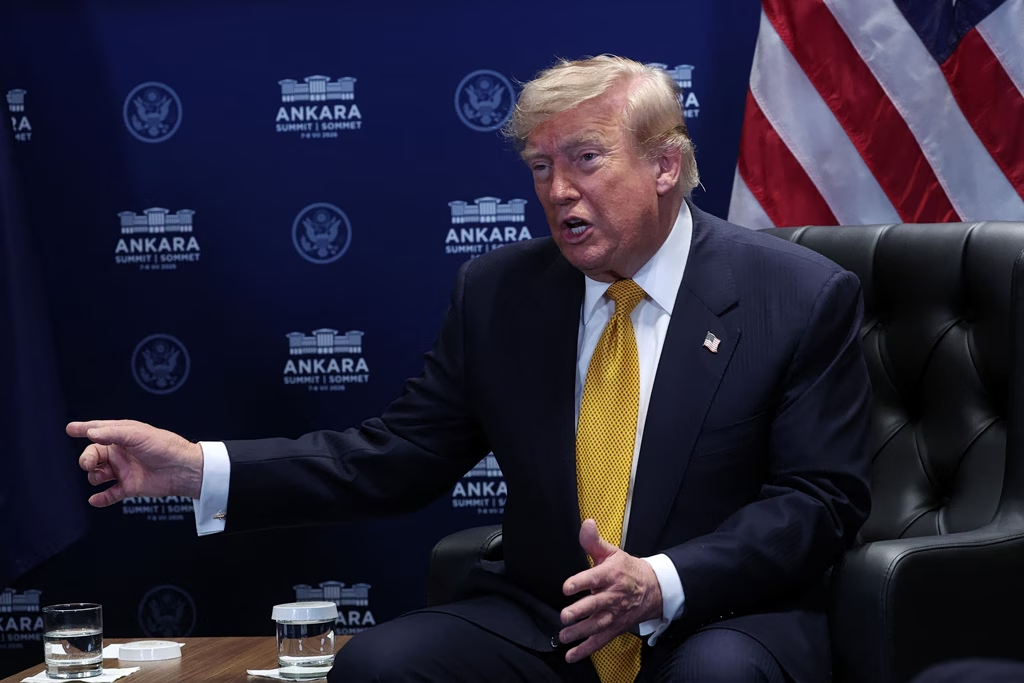



In February 2026, the Middle East is once again at the center of a conflict that is developing into a regional conflagration. The American-Israeli strikes against Iran, as part of Operation Epic Fury, are not an ordinary military operation. They are an attempt to upset the balance in a region already suffering from contradictions. As events unfold, few are asking themselves: who is really benefiting?
A conflict without American benefit
Washington, despite its military involvement, has no real reason to be in this war. On the contrary, it is already paying a heavy price. In the first hours, six American soldiers were killed, while bases in Iraq and Kuwait are receiving continuous attacks. Iran responds, and the United States finds itself exposed on a front that it proves to be out of control.
The question is simple: what does America gain? The answer is almost nothing. The idea that a pro-American regime can be imposed on Tehran seems unrealistic, at a time when Washington itself is politically unstable and militarily overstretched. This war serves other purposes, not American ones.
Israel is playing the big game
Behind the operations, a plan is being outlined: Israeli hegemony in the Middle East. For years, Israel has envisioned a new regional order where it will set the terms. For this to happen, those who stand in the way must first be neutralized. Iran is the main target, along with its allies. Hezbollah, the Palestinian organizations, any force that refuses to submit must be eliminated.
The logic is relentless: sovereignty is not shared. Israel wants to be the absolute regulator of developments.
The Gulf monarchies in the crosshairs
But the plan also has a second stage. Once the enemies are neutralized, Israel will need to expel its… allies. Namely the USA.
Why? Because as long as the Americans maintain bases in Saudi Arabia, Bahrain, Qatar, Kuwait, UAE, Oman and Jordan, Israel cannot be the dominant player. These bases are points of American power that limit Israeli plans.
And here begins the tragedy for the monarchies. The Gulf states are vulnerable. They do not produce food, they get their water mainly through desalination, their economies are based on oil facilities. Their potential destruction from Iranian retaliation will be irreparable. The Iranians have already hit targets in Saudi Arabia and Qatar.
The US reaction? Tepid to non-existent. Qatar and the UAE are already pressuring Trump to stop the war. They understand that they are becoming scapegoats on behalf of Israel. The rift that is opening up between Washington and the Arab capitals is deep. And Israel is rubbing its hands: the American withdrawal from the region now seems like a matter of time.
Europe in the energy vise
The escalation does not leave Europe unaffected. The Strait of Hormuz, through which 20% of the world’s oil passes, is a flammable zone. Any tension raises prices. Brent could exceed $100, natural gas could skyrocket, inflation could return more sharply.
And as if that were not enough, a new wave of refugees seems inevitable. Turkey is already preparing for mass flows from Iran in the event of a collapse. Europe, which has not recovered from previous crises, will find itself faced with an explosive mix of energy precision and migratory pressures. Its resilience will be severely tested. And it is certain that the current leadership of the EU is incapable of facing such serious challenges. The EU so far he has been paraphrasing about the Middle East and obsessively insists on looking at Zelensky with love.
Temporary hegemony and the fatal mistake
Let’s assume that Israel achieves its goal. Let’s assume that it exterminates its enemies and expels the Americans. How long can this hegemony last?
Geopolitics has rules that cannot be abolished. Israel has a population of 9 million. The Arab monarchies have enormous wealth, populations that are many times larger, and control of energy resources. The balance is clearly against Israel.
When the Arab states realize that they have been used, that the US has withdrawn, that Israel is left alone against them, the reaction will be harsh. American aid to Israel, already reduced due to the rift that has been created, will no longer be a given.
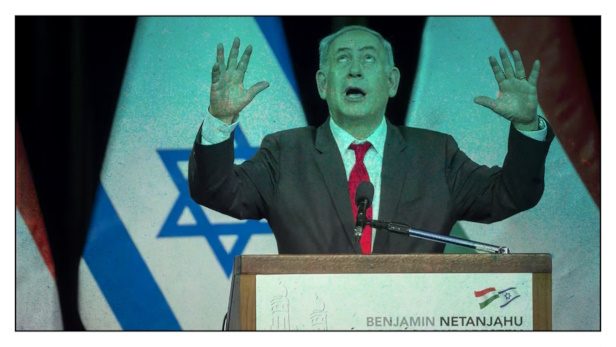
Netanyahu, with his obsession to become a modern-day King David, seems to be building a castle in the sand. His plans are grandiose but also paranoidly fragile. And when they collapse, the blow to Israel will be the heaviest since its founding. For no hegemony can rely on military power alone when half the world is against it.
The US deception, already apparent through the pressures from Qatar and the UAE, will gradually lead to the two countries’ distancing and the axiom that Israel is the US’s greatest ally will be forgotten.
Overextension, underestimation of adversaries and misrecognition of geopolitical balances always lead to downfall. This war, instead of consolidating Israeli dominance, may signal the beginning of its end.
