
The photo circulating on social media, featuring Elon Musk, Mark Zuckerberg, and convicted sex offender Jeffrey Epstein at the same table, is not simply a snapshot of powerful men socializing. Instead, it functions as a symbolic depiction of a world where power has shifted from democratic institutions to closed circles of economic and technological elites who decisively influence the course of the planet.
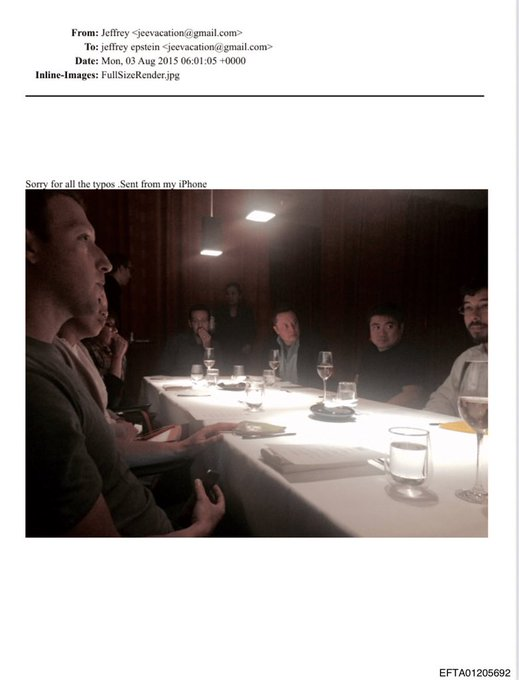
Epstein, a man convicted of horrific crimes and linked to a network of powerful figures, was perhaps the most extreme reminder of how economic and social elites can operate for years with near-total impunity. The fact that figures who now control tech giants were in social circles associated with such figures raises legitimate questions about how the global system of power works.
Billionaires who govern without being elected
Musk and Zuckerberg are not just businessmen. They have become political actors without democratic legitimacy. Through the platforms they control, they determine the flow of information, influence political developments and shape social perceptions.
Their decisions can influence elections, amplify or limit political voices and shape global public debate. It is a form of power that no society consciously chose, but was imposed on it through the uncontrolled growth of technological monopolies.
Platforms as tools for controlling society
Social media are no longer simple communication applications. They are mechanisms that determine what information is displayed, what is suppressed, and what becomes a global narrative. Algorithms designed in closed corporate offices influence the way citizens perceive reality.
The concentration of so much influence in private companies sets a dangerous precedent, where information and public debate depend on business interests rather than democratic processes.
Economic power as a mechanism for political domination
Technology giants have the ability to influence governments, shape regulatory frameworks, and determine the direction of the global economy. The enormous concentration of capital allows a few people to operate as supranational players that often exceed the power of many states.
This reality reinforces social inequality and creates a system where political power gives way to economic power.
The Global Elite and the Disengagement from Society
Tech billionaires are often presented as visionaries leading humanity into the future. In practice, however, their decisions are made within closed power networks, without transparency and without meaningful social control.
The distance between these circles of power and the everyday lives of citizens is constantly growing. While societies face economic crises, energy insecurity and social inequalities, technological elites discuss space colonization, artificial intelligence and new markets, often without considering the social consequences of their choices.
The need for a political and social response
The concentration of such power in a few hands is not just an economic issue. It is a question of democracy. Societies are called upon to decide whether to allow global politics and information to be transformed into the arena of action of private empires.
The demand for stricter control of technology giants, transparency in data management and the limitation of monopolistic practices is not an ideological obsession. It is a matter of protecting the democratic functioning of societies.
The photograph that has caused so many reactions is not just a snapshot of powerful figures. It is a reminder that power in the 21st century is changing form and is concentrated in individuals who are not accountable to any citizen. And as long as societies remain spectators, democracy will retreat before the dominance of the global economic and technological elites.