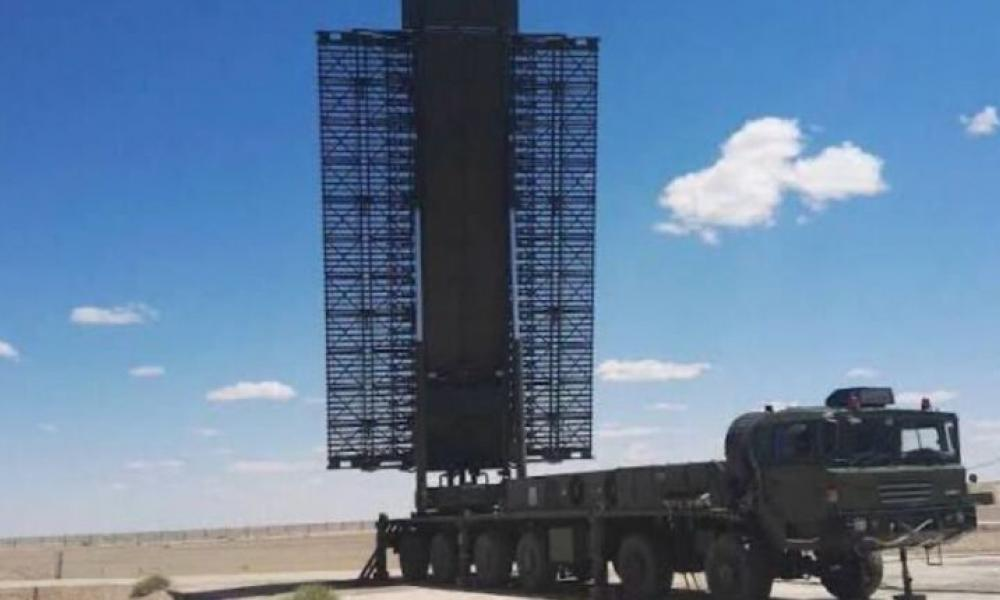
The Chinese have secretly transferred anti-stealth radar and air defense systems to Tehran, which are reportedly capable of detecting or shooting down American bombers.
The US fears that Iran will use powerful Chinese weapons against US military assets in the Middle East, and this has angered Trump, who yesterday again threatened the Iranian mullahs. The deployment of China’s long-range YLC-8B quantum anti-stealth radar to Iran marks a strategic shift in the Middle East’s air defense architecture, directly challenging the US and Israel’s reliance on fifth-generation stealth aircraft and reshaping the dynamics of regional deterrence.
The transfer of China’s YLC-8B strategic three-dimensional radar to Iran represents a decisive escalation of Beijing’s military-technical support to Tehran, “the YLC-8B is one of the few radars of its type in the world that can continuously detect and track a Western fifth-generation aircraft at a long distance,” radically reshaping regional air power assumptions.
Emerging claims by US intelligence agencies that China has delivered multiple YLC-8B radar systems (each capable of detecting targets at a distance of 700 kilometers) signal a strategic recalibration in the Middle East’s air defense architecture that directly challenges US and Israeli plans, centered on stealth against Iranian territory.
This transfer of Chinese weapons systems takes on increased significance after the recent 12-day conflict between Israel and Iran, which exposed the vulnerabilities of Tehran’s air defenses, prompting an urgent effort by Iranian military planners to rebuild and enhance detection levels to counter advanced low-observability platforms and long-range attack profiles.
The YLC-8B, developed by China’s Nanjing Institute of Electronic Technology, is specifically designed to counter threats from stealth aircraft and ballistic missiles through low-frequency UHF band surveillance, undermining the effectiveness of the radar absorption configuration used by platforms such as the F-35 Lightning II and B-2 Spirit.
Integrating such radars into Iran’s multi-layered air defense network, which already includes Russian-supplied S-300PMU-2 systems and domestically produced Bavar-373 interceptors, could significantly extend detection timelines, allowing for early warning, more effective distribution of interceptors, and reduced vulnerability to surprise long-range attack operations.
Beyond the immediate tactical implications, the reported radar transfer reflects a broader convergence of Chinese and Iranian strategic interests, with Beijing seeking to protect energy supply routes and challenge U.S. air supremacy, while Tehran aims to deny adversaries undisputed air superiority over its nuclear, military, and industrial infrastructure.
Collectively, these developments suggest a structural shift in air defense dynamics in the Middle East, where Chinese sensor technology may increasingly support Iranian deterrence, forcing Washington and its allies to reassess operational assumptions long based on stealth dominance and superiority in electronic warfare.
The YLC-8B Radar transfer also signals Beijing’s willingness to use high-tech sensor exports as a strategic lever rather than a commercial transaction, effectively allowing China to indirectly shape regional air power balances by undermining the operational advantages of Western stealth platforms without deploying its own forces or overtly violating escalation limits.