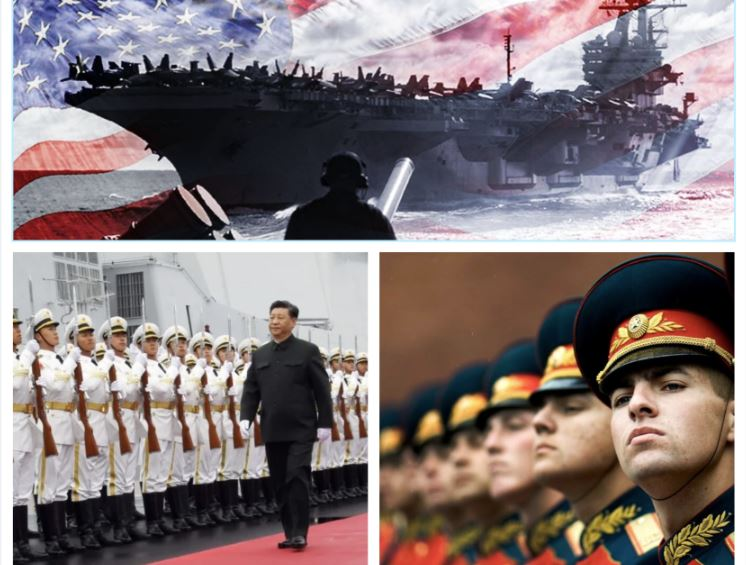
As the United States is increasingly seen as an unreliable partner, middle powers are taking a leading role, actively promoting their own agendas and shaping the future of the international system.
From a unipolar moment to a volatile transition
Over the past decade, US-led unipolarity has been gradually giving way to a new international system that combines elements of US-China bipolarity and multipolarity. This transition has been accelerated by the United States’ withdrawal from its traditional leadership role under Donald J. Trump, as well as by the weakening of international norms, both due to the US’s capture of Nicolas Maduro and Russia’s invasion of Ukraine.
The instability of today’s world order has allowed several middle powers—including Indonesia, Brazil, Turkey, and Vietnam—to gain more influence than ever before. Taking advantage of the fluid international environment, they are advancing their own interests, increasing their strategic autonomy, and attempting to set the rules in their regions.
A New Competition, Not a New Cold War
Today’s U.S.–China competition differs fundamentally from the Cold War between the United States and the Soviet Union.
1. it is not characterized by the same ideological tensions that in the past pushed governments to openly side with one superpower or another.
2. China is an active participant in and has benefited significantly from the liberal international system that the United States created after World War II, a system that the United States itself, under Donald Trump, is now undermining.
3. while the Soviet Union was primarily a military threat to the United States, China poses both a military and an economic threat.
4. all of this has led to deep economic interdependence between China, the United States, and their allies.
At the same time, the very nature of the middle powers has changed. Today, they maintain functional relations with both the United States and China, have stronger industrial bases, and greater economic and military weight than in the past. The demographic and economic trends of the 21st century have allowed them to further enhance their power and autonomy vis-à-vis the traditional great powers.
The Art of Strategic Balancing
All of these factors have allowed middle powers to adopt a more transactional and pragmatic approach to their relations with the two superpowers. They seek positive and functional relationships with both the United States and China, but without limiting their strategic autonomy through excessive attachment to either.
As long as the benefits of this “balancing” outweigh the costs, middle powers will continue to leverage their independence to their own interests, seeking to maintain as much distance as possible from both Washington and Beijing.
Even traditional U.S. allies have moved against American interests when they have judged that doing so better serves their own needs. The United States’ allies maintain extensive trade relations with China for economic gain, while South Korea is seen as an uncertain partner in the event of a potential military conflict over Taiwan.
This trend is particularly evident in Turkey, a NATO member since 1952, which has seen its relations with the West deteriorate, while at the same time moving against Western interests by importing Russian oil and delaying the accession of Sweden and Finland to NATO.
India, while competing with China and cooperating with the United States on security issues – such as through the Quadrilateral Security Dialogue – does not follow the same line towards Russia, from which it imports large quantities of energy and weapons systems.
As the United States is seen as an increasingly unreliable partner, middle powers are also taking initiatives to promote their own regional agendas. This manifests itself sometimes through strengthening multilateralism and shaping new rules, as when Japan took the lead in rescuing the Trans-Pacific Partnership after the US withdrawal in 2017, and sometimes through direct action, such as Poland taking the lead in military support for Ukraine.
Turkey: A Model of Strategic Autonomy
Turkey is a typical example of a modern middle power. During the Cold War, under direct threat from the Soviet Union, it was a staunch ally of the United States, hosting US missiles, joining NATO, and sending troops to the Korean War.
Today, Turkey remains a member of NATO and relies heavily on Western capital for financing and investment. However, its geopolitical environment has changed radically since the end of the Cold War. No longer threatened by a hostile superpower on its borders, it is less dependent on the West for its security, and has become more populous, economically, and industrially powerful.
This has allowed it to pursue a much more independent foreign policy, often bordering on conflict with its official allies. It has opposed American support for the Kurds in Iraq and Syria, purchased the Russian S-400 anti-aircraft system in 2017, and, after Russia’s invasion of Ukraine, used Sweden’s and Finland’s accession to NATO as leverage to extract concessions from the West.
Turkey’s increased strategic autonomy has also allowed it to play a mediating role in modern conflicts, as seen with the Black Sea Grain Initiative and Trump’s peace plan for Gaza.
At the same time, it is leveraging its economic and industrial power to extend its influence into what it sees as its natural neighborhood: the Balkans, the Middle East, the Caucasus, and Central Asia. It has been militarily involved in Syria, Iraq, and the Nagorno-Karabakh conflict, and has invested heavily in the Syrian war, hosting millions of refugees and funding the opposition forces that eventually toppled the Assad regime.
The Inevitable Path to a Multipolar World
Even if the trend of American isolationism is reversed, the global shift toward greater multipolarity at the expense of American autocracy—and the structural forces that drive it—is not going to stop.
The current actions of the middle powers offer a clear picture of the world that is taking shape. As the international system becomes increasingly unpredictable and fragmented, middle powers will continue to seek stability and coherence for themselves, where it serves their interests. The world will no longer be defined by American hegemony or by rival blocs as in the Cold War.
Instead, regional balances will increasingly be shaped by middle powers filling the void of a relatively weaker and retreating America, according to their own interests.