

While the West is divided and the consultations to end the war in Ukraine are turning into an endless “carousel”, Russia seems to be “checking” smugly “boxes” on its revisionist agenda.
With the “general” Winter as an ally again, Russian President Putin is now talking about “liberating” not only Donbas in eastern Ukraine, but also “Novorossiya”.
A term that refers to the administrative region of the same name that was once part of the Russian Empire.
Today it corresponds to the entire southern part of Ukraine, which would risk shrinking into a landlocked state in this scenario, without access to the Black Sea.
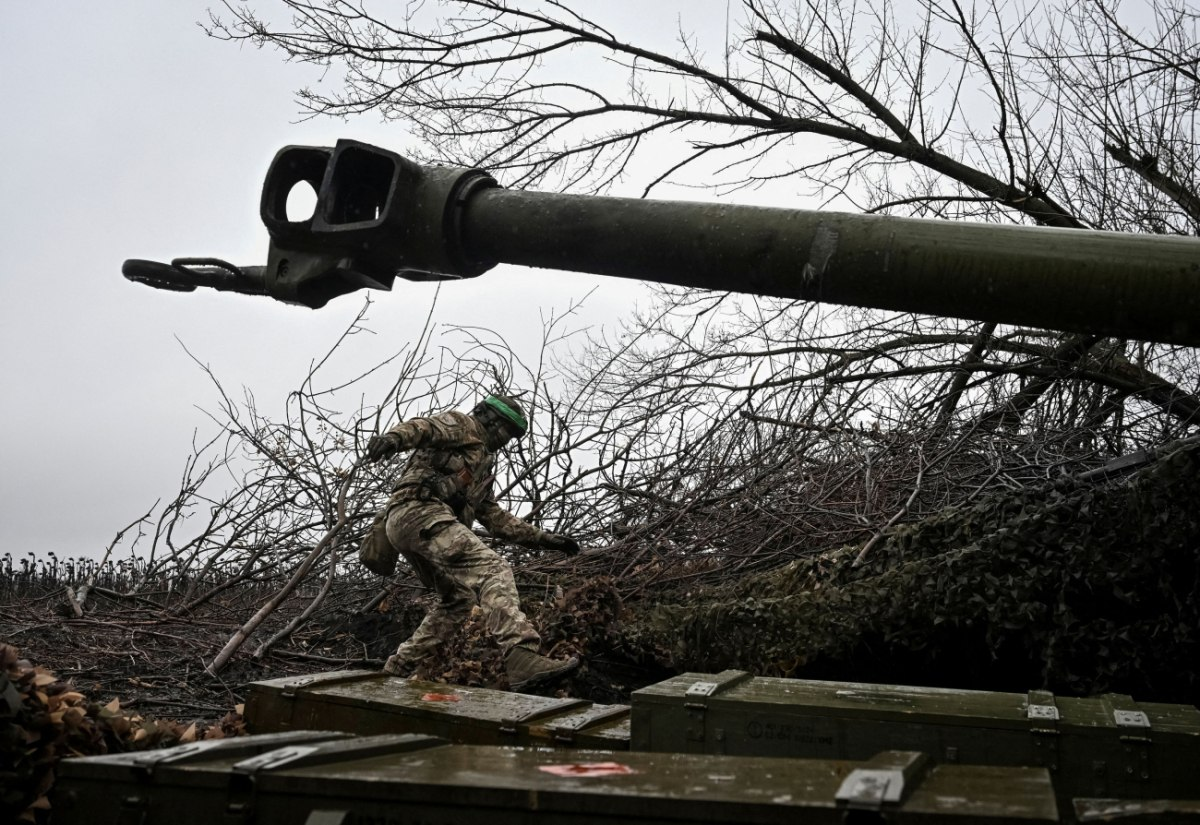
But amid casualties and recruitment difficulties as the war enters its fourth year, Russia is increasingly turning to foreigners to bolster its military.
According to Kiev, Moscow has already recruited at least 18,000 foreign fighters from 128 countries. An additional 3,388 nationals of other countries have been killed fighting for Russia, according to the Ukrainian Headquarters for the Coordination of the Treatment of Prisoners of War.
The figures released the other day by its secretary, Brigadier General Dmitry Usov, did not provide a detailed description, and the vast majority of the foreign fighters reported were likely from North Korea.
In this case, they were sent to the front lines by Pyongyang as part of a bilateral military cooperation agreement between Moscow and Pyongyang.
But the Kremlin is no longer content with them.
Recently, not coincidentally, it has facilitated the issuance of visas and Russian passports for foreigners, as an enticement to join the Russian armed forces.
The hefty fees, residence permits and the promise of Russian citizenship – or the threat of its withdrawal – have become key tools of a targeted and now intensifying social media campaign.
Expendable Fighters Get Paid Big
A new analysis by OpenMinds—a “defense technology company,” as it says on its website, “built from battlefield experience in Ukraine” and now working “with more than 30 governments and organizations around the world, including NATO member states, leading defense and research institutions”—outlines an aggressive foreign recruitment campaign by Moscow (“Russia Broadens Its Efforts to Recruit Foreigners for the War in Ukraine”).
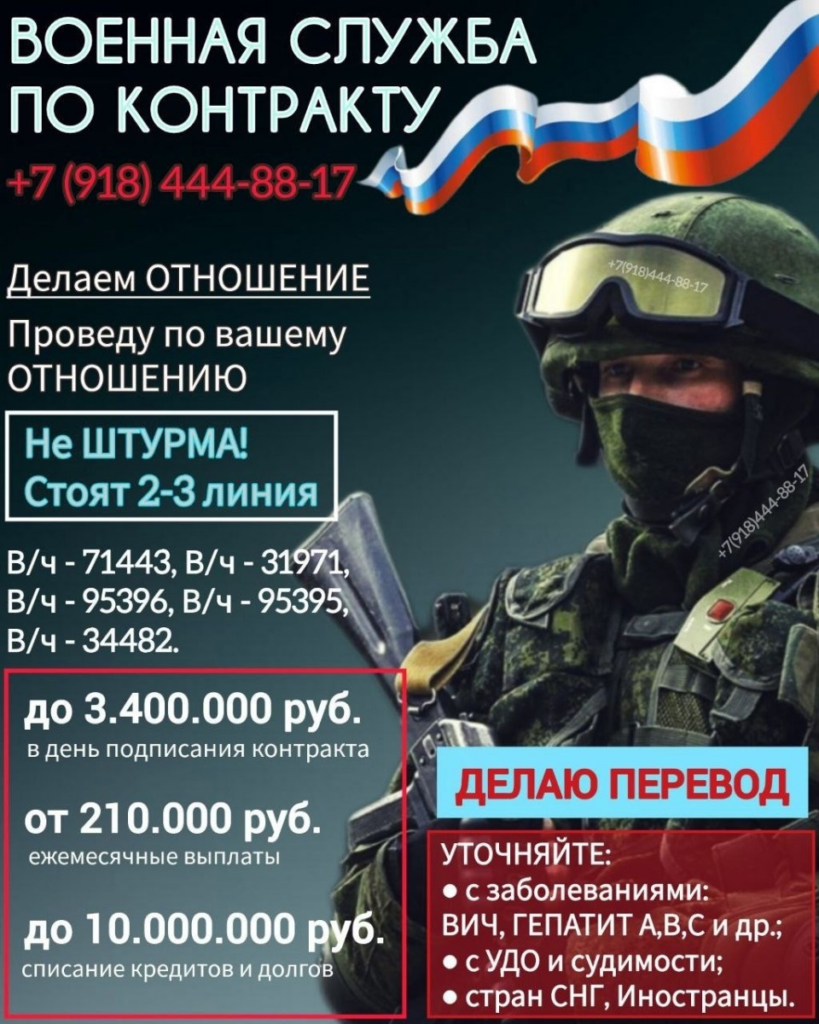
It finds that the number of advertisements promoting contract military service in Russia, specifically targeting foreigners, has increased exponentially.
Today, they are estimated at more than 4,500 per month, while at the beginning of 2024 they were less than 100.
Indicatively, they constitute one in three posts on VKontakte, the most popular Russian social networking site, when last year they barely accounted for 7% of advertisements on that platform.
Most of them are aimed at Russian-speaking former Soviet republics, in the geographical region of Russia.
However, those targeting citizens of countries in the Middle East, Africa and Southeast Asia are increasing.
Newly recruited foreign fighters will receive “up to 3.4 million rubles on the day of signing the contract” and assistance “up to 10 million rubles for the cancellation of loans and debts,” one advertisement states.
Others offer a monthly salary of 210,000 rubles, more than 2,200 euros in your pocket.
For those interested, it is usually infinitely many times what they could earn working in their homelands.
However, the hefty salaries often hide pitfalls.
Of the nearly 200 foreigners from 37 countries who were captured by Ukrainian forces while fighting on the front lines on behalf of Russia and are now being held as prisoners of war, many spoke of deception and blackmail.
Several said they were sent by Moscow to the front without adequate training and despite initial assurances that, as inexperienced recruits, they would remain in the rear.
Angry Reactions
The recruitment of foreign fighters is nothing new, neither in the long list of modern wars, nor now on the fronts of Ukraine.
Since the beginning of the full-scale Russian invasion in 2022, Kiev has been assisted by crowds of foreigners, forming entire legions.
Although their exact number remains unknown (as well as their qualifications), it is estimated that they number in the thousands, despite official bans from their countries of origin on participating in the fighting.
Unlike Russia, however, on Ukrainian soil they present themselves as volunteers on the side of the pro-Western country – fighting for its independence and sovereignty.
In the case of Moscow, the motivation of the foreigners who are recruited is primarily economic. It is not only about the high salaries offered, but mainly the promise of obtaining Russian citizenship.
For many, the Russian passport is a “ticket” to the labor market abroad and the future assurance of a decent income.
The recruitment rates of the last few months by Russia have now increased so much that one after another countries from various parts of the world – even those that have close relations with Moscow – are now reacting strongly.
In November alone, Jordan (counts at least two dead recruits in the ranks of the Russian army), Kenya, South Africa, and even India have expressed strong displeasure over the recruitment of their citizens.
Similar reactions had been made by Sri Lanka and Nepal, while Cuba announced an operation to crack down on recruitment and human trafficking networks, as it said, after discovering that its citizens were fighting alongside the Russians in Ukraine.
The Russian embassy in Tehran recently described as “criminal forgery” leaflets circulating in the Iranian capital, calling on men aged 18-45 to join the Russian army.
They promised contracts “directly under the Ministry of Defense”, high salaries and free housing and medical care.
Hordes of Desperate
According to the Danish Institute for International Studies (DIIS), the tightening of immigration policy in Europe is not without its responsibilities.
“This opened the way for Russia,” it points out, as “for some of the [foreign] fighters, the war in Ukraine was just another career opportunity.”
To this end, it cites interviews with some of those currently held as prisoners of war in Ukraine.
“I knew about the risks, but I decided not only for the money, but because first and foremost I want a Russian passport,” said one.
“Since I was a child I dreamed of going to Europe or the USA,” says another. “I tried to emigrate to Serbia and from there to the Netherlands, but I didn’t succeed.”
Similarly, a third explains that Russia was his only choice, after “I was rejected by many other countries.” For the Kremlin, all of the above are details. After all, what they want is to get “the job done.”


