



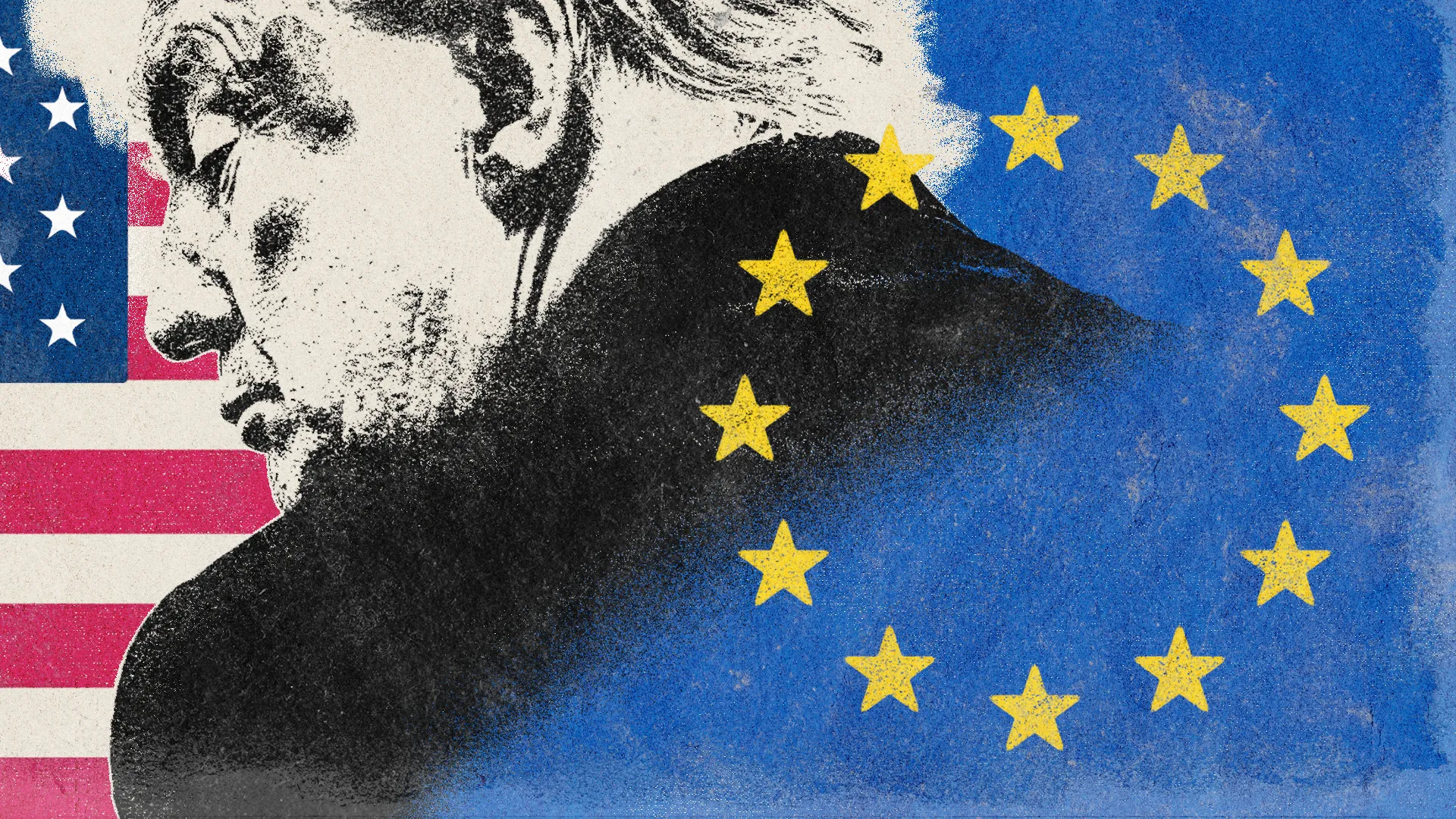
The aftershocks from the release of the US strategic priorities continue. Many are talking about a new Yalta… which will not include Europe, which US President Trump considers “geopolitically non-existent”. The next step is whether this new strategic doctrine includes the division of Europe between the Russian sphere of power and the American one (for more anaysis please read the article titled “New US Security Strategy: The EU’s Insignificance in Its Decisions!“).
More specifically, the Trump administration’s new National Security Strategy (NSS) “United States National Security Strategy” was published last week, setting the general direction of US foreign policy for the rest of his term.
The strategy focuses on ending what it calls “an ever-expanding NATO”, creating “conditions of stability in Europe” and encouraging European allies to “stand on their own two feet” on security issues.
And of course, it removes Russia from the list of geopolitical enemies. The document also warns that Europe is facing “cultural decline,” with references to immigration, censorship and lack of freedom of speech, declining birth rates, and what it describes as a loss of national identity and self-confidence.
The Renewal of International Institutions
At the same time, the US government seems to be considering a radical rearrangement of the international balance of power. At the heart of it is the creation of a new international group of five countries (the US, Russia, China, India and Japan) which is already reportedly called the Core 5 (C5).
Such a structure would practically constitute a “successor organization” to the G7, eliminating the European Union from the field of major geopolitical players.
Although the deputy White House press secretary, Anna Kelly, avoided confirming the existence of such a document, security experts believe that the idea fits perfectly with the new American vision of the “balance of power” in the 21st century.
The new strategy rejects any notion of “global unity” and returns to the logic of spheres of influence and large imperial-type power poles.
The unpublished version of the NSS, defining the choice of allies, contained clearer political goals for reshaping the future of Europe and reducing the influence of the European Union.
Selected group of countries close to MAGA
The draft…. “Make Europe Great Again”, suggesting that the US should focus on a selected group of governments ideologically closer to the MAGA movement that gave rise to Donald Trump.
The unpublished version stated that Austria, Hungary, Italy, and Poland were countries with which the US should “work more… with the aim of moving them away from the European Union”.
Furthermore, it stressed that the US should support “parties, movements, and intellectual and cultural actors that seek the sovereignty and restoration of traditional European ways of life… while remaining pro-American.”
None of these expressions appear in the officially published NSS, which focuses on broader issues of strategic stability with Russia, the need for Europe to regain its self-confidence, and continued American support for democracy and freedom of expression. The official document argues that Europe’s loss of self-confidence is particularly evident in its stance toward Russia, stating: “Managing Europe’s relations with Russia will require significant American diplomatic engagement, both to restore conditions of strategic stability on the Eurasian continent and to mitigate the risk of conflict between Russia and European states.”
European leaders’ unrealistic expectations
It adds that stabilizing the continent will require “a rapid cessation of hostilities in Ukraine” to avoid escalation, restore stability, and support Ukraine’s survival as a viable state.
The text also warns that the war has increased Europe’s, particularly Germany’s, external dependence, and criticizes what it calls the unrealistic expectations of some European officials. It concludes that despite internal crises, the continent remains strategically and culturally vital to the United States.
The United States, it says, “encourages its political allies in Europe to foster this revival of spirit,” stressing that the growing influence of patriotic European parties “gives grounds for great optimism.”
Vance’s Statements at the NATO Summit in Munich
In America, there are both sides of the political spectrum. In Western Europe, there is only one side. If you have politically incorrect views, you can end up in jail, for saying too much, for example in Britain or sometimes in Germany.
It seems that the US is planning to use Italy, Austria, Hungary and Poland “as tools for the dismantling of the European Union”, integrating them into a larger, ideologically aligned group. The unpublished draft considered that European immigration policies are leading to the “extinction of its culture”, and that Washington should cooperate with European actors who seek “sovereignty” and the restoration of traditional ways of life.

