




Bulgaria will officially join the eurozone on January 1, 2026, becoming the 21st member country, following formal approval by the EU Council in July 2025. The national currency, the Bulgarian leva, will be replaced by the euro at a fixed exchange rate of 1.95583 leva per euro, with a dual circulation period in January 2026 for a smooth transition.
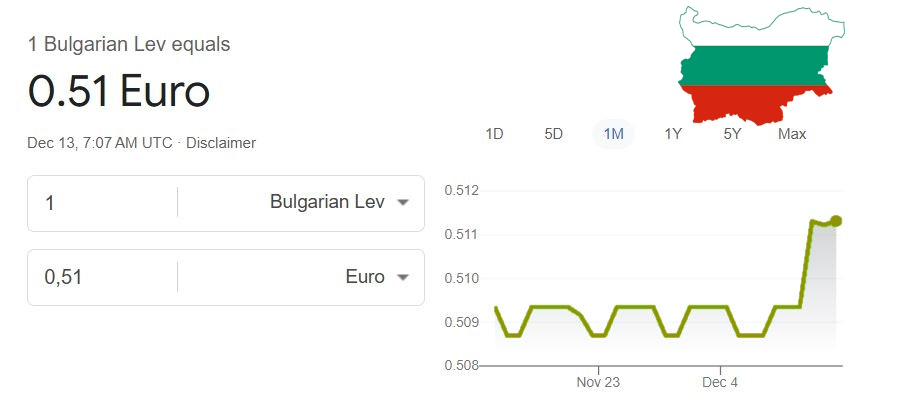
This move is supposed to offer Bulgaria greater economic stability, lower transaction costs and deeper integration into the European Monetary Union, leveraging its existing currency board and fiscal discipline. Of course, the current exchange rate of the leva against the euro is €0.51!!! It is therefore surprising that various PhDs in economics preach lower transaction costs and economic stability, when the exchange rate will explode negatively towards Bulgarian citizens…
The Bulgarian political crisis essentially began in 2020, when the decision was made to join the Eurozone. Bulgaria, after the resignation of its weak coalition government, is facing its eighth election in four years.
Bulgaria’s political landscape has seen a series of upheavals, with the collapse of this government being the fourth in just three years under the influence of GERB, the center-right party led by Boyko Borisov, whose previous terms ended amid scandals.
Since late November, mass protests have erupted in Sofia, Plovdiv and Varna, with thousands of students, workers and families blocking main roads, occupying squares and chanting slogans such as “No more mafia!” against the deep-rooted corruption that has long plagued Bulgaria, the most corrupt member state of the European Union according to Transparency International’s ranking.
The spark was the 2026 budget proposal, which included an increase in taxes on dividends from 5% to 10%, an increase in social security contributions, and cuts to public spending amid a rising cost of living exacerbated by inflation at 5.2% and public debt at 25% of GDP. In other words, the economic stability that the Euro promises for the country, in addition to its scandalous exchange rate of 1.99 to the leva, will increase taxes on dividends by 100%, increase taxes on social security, and slaughter public spending funds. Thus, Bulgaria’s “Eurozone prosperity” will come when it borrows huge funds for “infrastructure and reform” and will end up entering the IMF after a few years because the 25% foreign debt on GDP will have become, let’s say, 320%….
The Bulgarian citizens, severely afflicted by many decades of communist economy, moved on to the next phase of that “Western dream” only to see their fortunes controlled by local gangs, who now bow before the big boss and hand over their “region” in exchange for “stability”.
As much as our words may seem dramatized, we all know that this drama is entirely real. It is a modern tragedy, the tragedy of Europe, written not by Euripides or Aeschylus but by the Aeschylus of the Bank Barons.

