


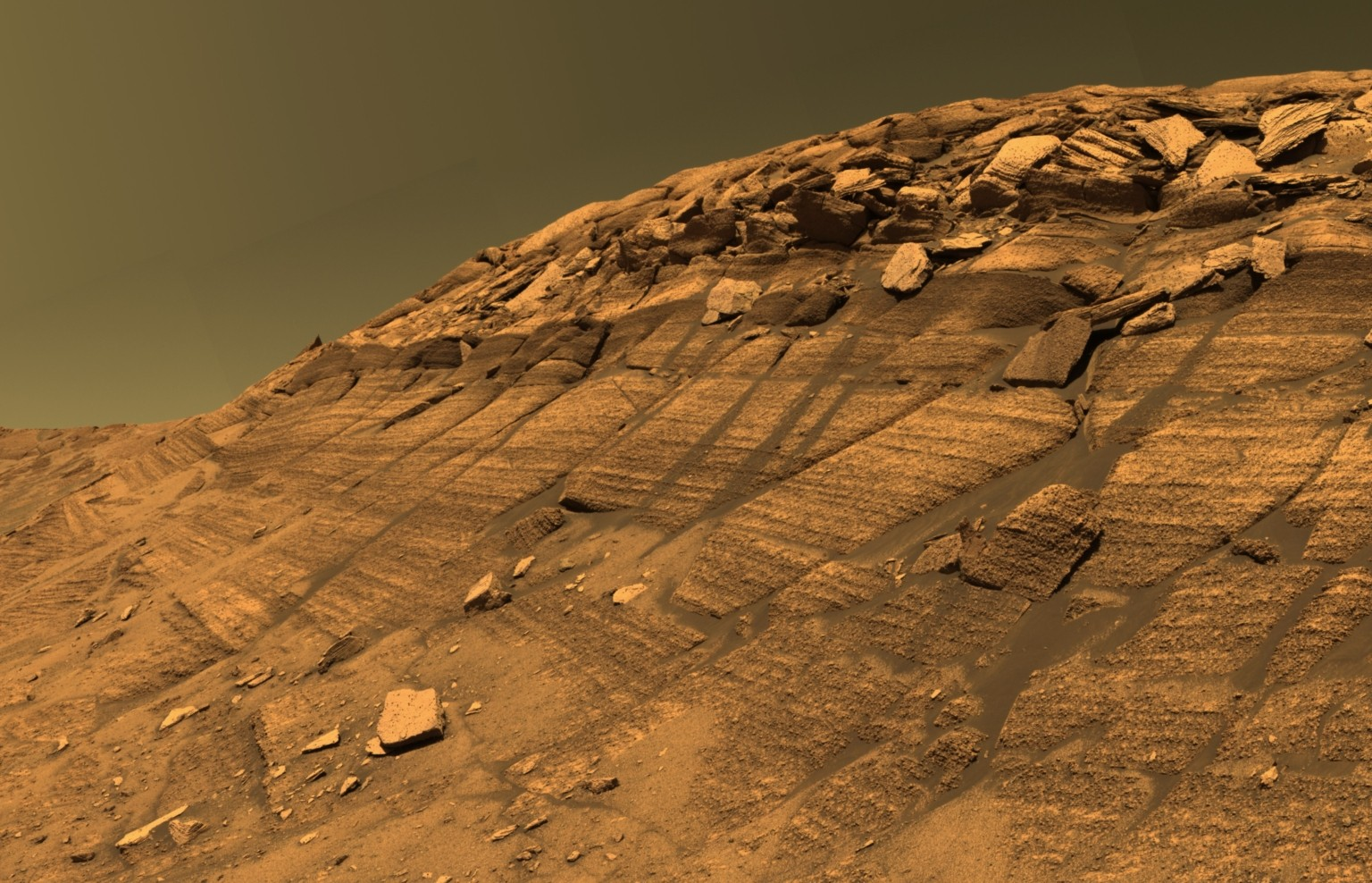
In February 2021, the robotic vehicle Perseverance – affectionately known as Percy – landed on the planet Mars, as part of NASA’s Mars 2020 mission. The goal of the program was to collect data that would reveal: whether there was ever life on the Red Planet, the climatic conditions, the geological composition and – most importantly – the possibility of a manned mission. Perseverance identified rocks with possible signs of microbial life and recorded data that testify to the existence of an ancient lake, valleys and ice in glaciers and on the ground.
The planet Mars has always held a fascination, perhaps more than any other planet. The creation of a human colony, this complex undertaking, is a dream of many, despite the enormous scientific and technological challenges. However, the possible need to move the population to other planets is pushing experts even more to study the mysteries of Mars in depth. Among the difficulties that will need to be addressed are the provision of food, water, the air whose toxicity does not allow living, the extremely low temperatures and housing solutions for future settlers. Before Mars becomes… our home, all of the above must be solved. To this end, NASA aspires to send astronauts to its surface in the 2030s.
Houses made of bacteria
But how could communities be created in such an inhospitable environment? What would be the housing solutions, at a time when transporting building materials from Earth is expensive and difficult? Researchers from the Polytechnic University of Milan in Italy propose a new method that will utilize In Situ Resources (ISRU), that is, using what Mars has to offer What is it? Bacteria(“Microbial powerhouse: Two bacteria species could cement humanity’s first home on Mars“). Utilizing local materials is the key to a sustainable human presence on Mars, the scientists comment and explain that the technique is based on the idea of building with whatever material is available on site. The so-called bio-cementation uses bacteria that produce natural materials (such as limestone) without the need for conventional cement. In a way, coral reefs are also created with their hard limestone exoskeleton, from the formation of corals and microorganisms.
How do bacteria work together?
Using data from Percy’s research on the composition of the Martian soil (regolith), scientists in their report published in Frontiers in Microbiology study what would be the most ideal building materials for the dwellings of the future, without the risk of causing interplanetary pollution. Among them, the use of two species of bacteria -Sporosarcina pasteurii and Chroococcidiopsis- with the first producing calcium carbonate and the second surviving in extreme environments, such as that of Mars. The “cooperation” of the two can pay off, transforming the planet’s soil into a solid material.
More specifically, Chroococcidiopsis withstands high radiation and lack of water. In addition, it functions as a protective cover against ultraviolet radiation, favoring the survival of microorganisms on the planet’s surface. Sporosarcina pasteurii, on the other hand, produces limestone, which “glues” soil particles together, i.e. turns Martian soil into something reminiscent of cement.
However, the positives do not end there. The collaboration of the two proves to be even more beneficial, as Chroococcidiopsis has the ability to produce oxygen, thus contributing to the development of habitats and life support for astronauts. In addition, the metabolic derivatives of Sporosarcina pasteurii, such as ammonia, could be used to develop agricultural systems, as well as to shape the soil of Mars. Essentially, this collaboration could be used as a raw material for 3D printing houses on the planet, without having to send tons of cement from Earth.
Many challenges
Although international space agencies plan to build the first human habitat on Mars in the 2040s, the dream still seems distant. Despite the promising idea, the tests that have been carried out so far are done with simulated soil and not with real regolith. Without samples from Mars, it is not known how bacteria will interact and whether the material will survive the extremely stressful conditions. To make 3D printing, habitat creation and life support a reality, collaboration between many scientific disciplines is required and it takes time, experimentation and… patience.