



Some of the world’s largest economies are at the center of a bond market storm, as investor concerns grow that governments are making the necessary reforms to reduce uncomfortably high levels of debt.
And how could they, after all, as growing social inequalities and the emergence of other major problems such as immigration lead electorates to reject these policies.
Political risk is rising and we are seeing in countries such as France or Germany – despite the temporary calm – the fiscal crisis turning into a public debt crisis (the crisis in the financial system will not be long in coming…) and all of this leading to a rearrangement of the political sphere similar to that of Greece during the turbulent era of financial support programs.
These are communicating vessels that will shape an explosive outcome. “Government debt levels are simply too high and not enough work has been done to address them,” said Thanos Chonthrogiannis, Chief economist at Trust Economics. A debt crisis may not be the main scenario, but the bells of collapse are starting to ring.
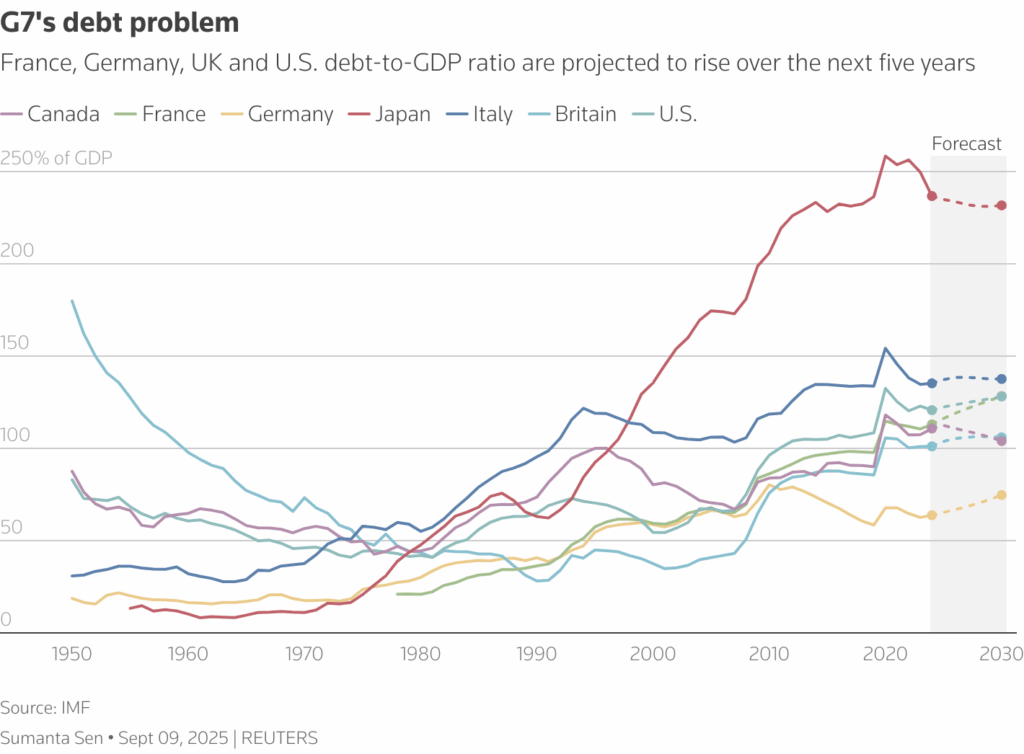
The chart shows debt-to-GDP ratios for G7 countries with projections from 2025 indicated by dotted lines.
Here are those on investors’ “red” watch list:
- FRANCE
France has shot to the top of the list of concerns. Opposition parties this week ousted center-right Prime Minister Francois Bayrou over his unpopular plans for 44 billion euros in fiscal austerity as debt has surged past 3 trillion euros.
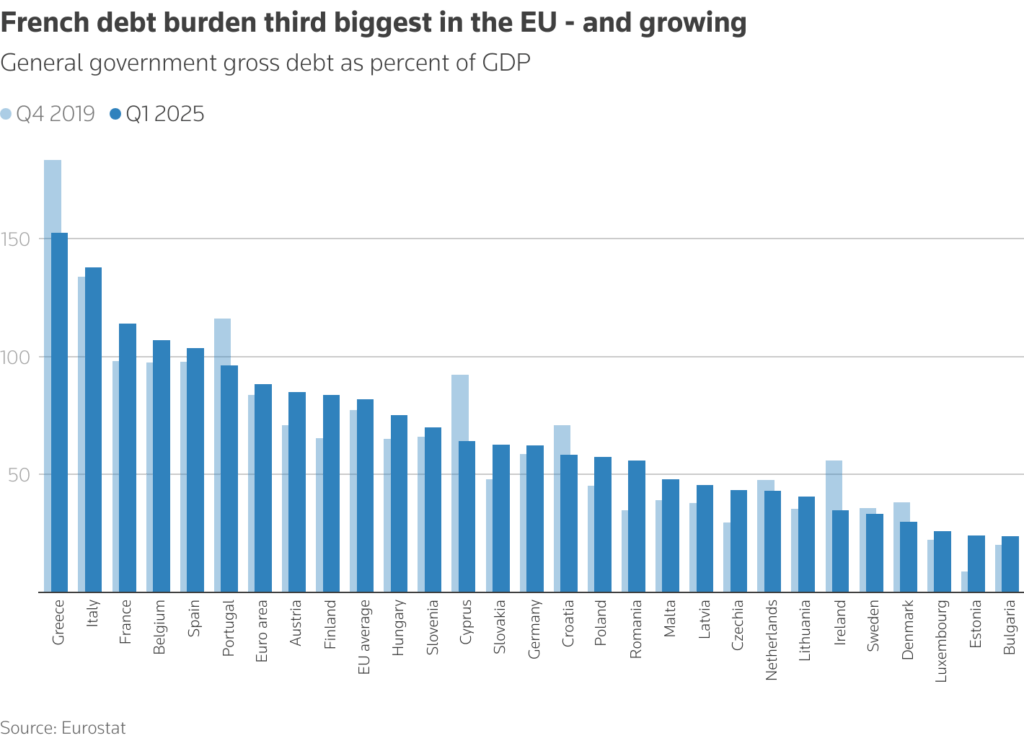
Political uncertainty means that reining in debt of more than 100 percent of GDP and a deficit almost double the European Union limit will be difficult. If growth slows or deficit reduction slackens, interest payments could exceed 100 billion euros by 2029, up from 59 billion euros last year, France’s audit office, the Cour des Comptes, has warned.
It may take a bond market revolt to force a coalition to pass a budget.
30-year bond yields have reached their highest level since 2009, the cost of long-term borrowing is higher than Spain’s, almost the same as Italy’s, and the risk of further credit rating downgrades has increased.
- UK
The reshuffle of Prime Minister Keir Starmer’s top advisers and the annual budget scheduled for November have focused attention on Britain’s ability to control its finances.
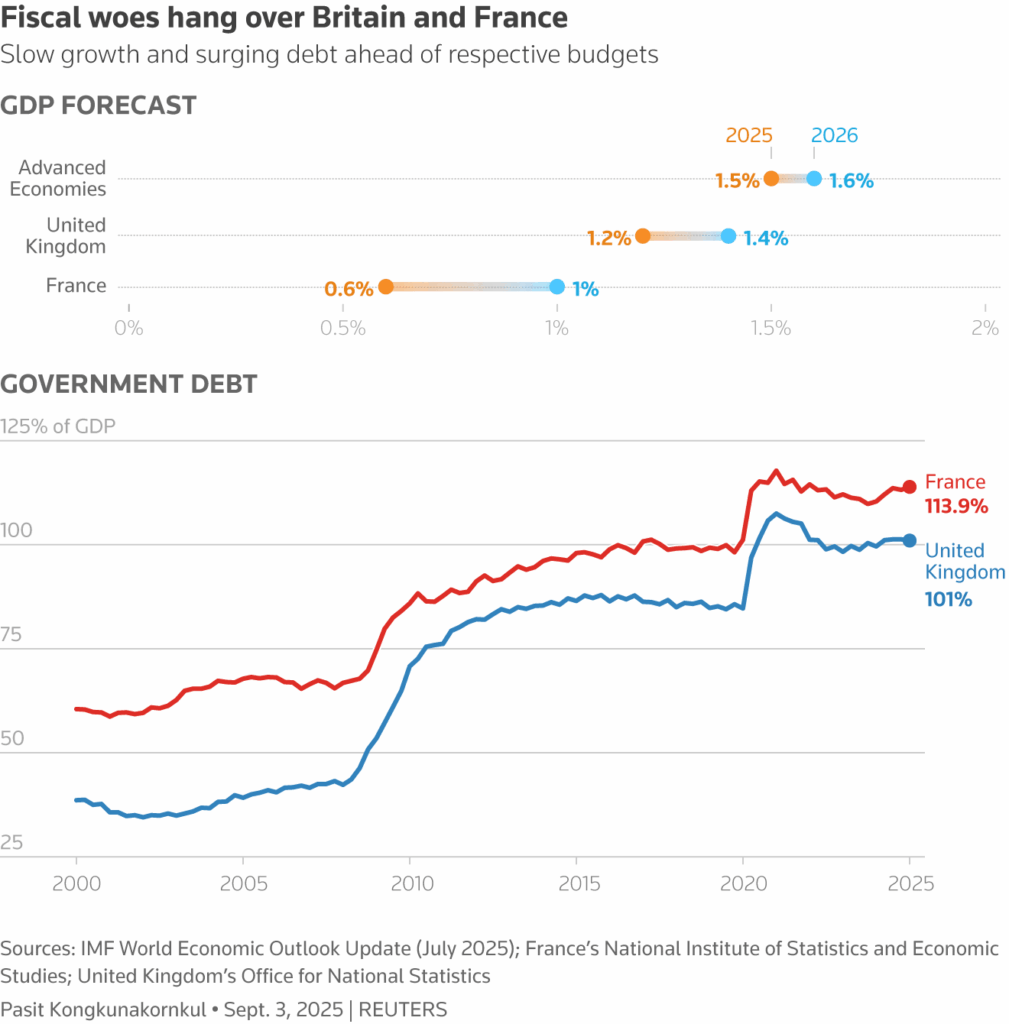
Long-term borrowing costs this month shot up to their highest level since 1998, while sterling has tumbled.
Economists say Chancellor of the Exchequer Rachel Reeves will need to raise taxes by at least 20 billion pounds ($27 billion) to make up for a revenue shortfall caused by weak growth, high borrowing costs and setbacks in spending cuts.
Britain has the highest borrowing costs and the highest inflation in the G7, making it a target for market anxiety.
Britain is a little less worrisome than the United States or France, because it is easier to find political will in the United Kingdom to make changes.
- USA
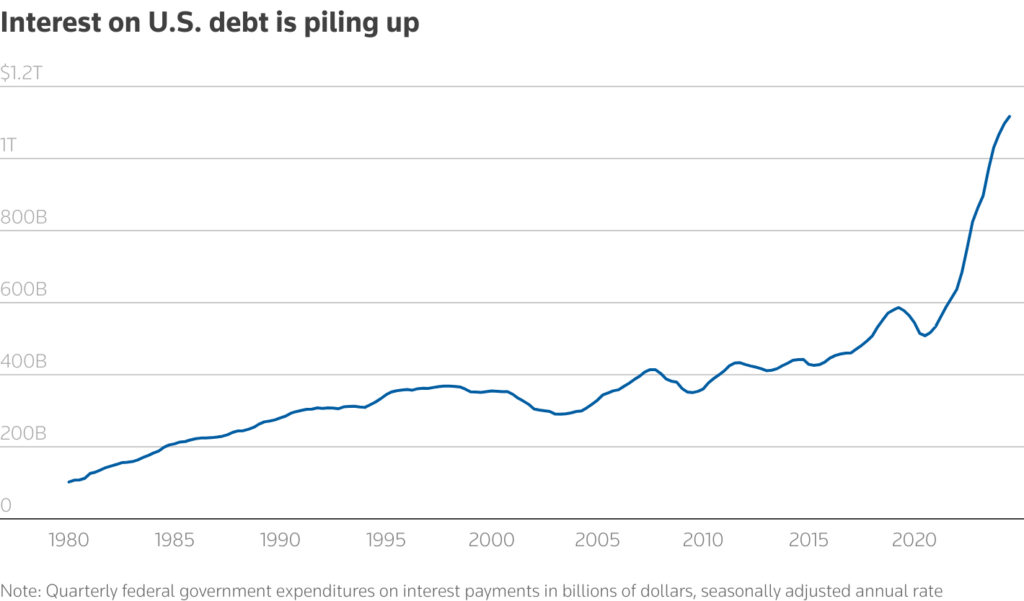
The world’s largest economy has not escaped the attention of the markets. Its nominal debt is nearly $37 trillion.
President Donald Trump, with the tax cuts and spending bill he signed into law on July 4, could add an additional $3.3 trillion over the next decade, according to the independent Congressional Budget Office.
It’s true that the world’s deepest and most liquid capital markets provide a cushion, but rising debt means investors are demanding more compensation to hold U.S. bonds. Signs of weak demand at recent auctions are worrying.
- JAPAN
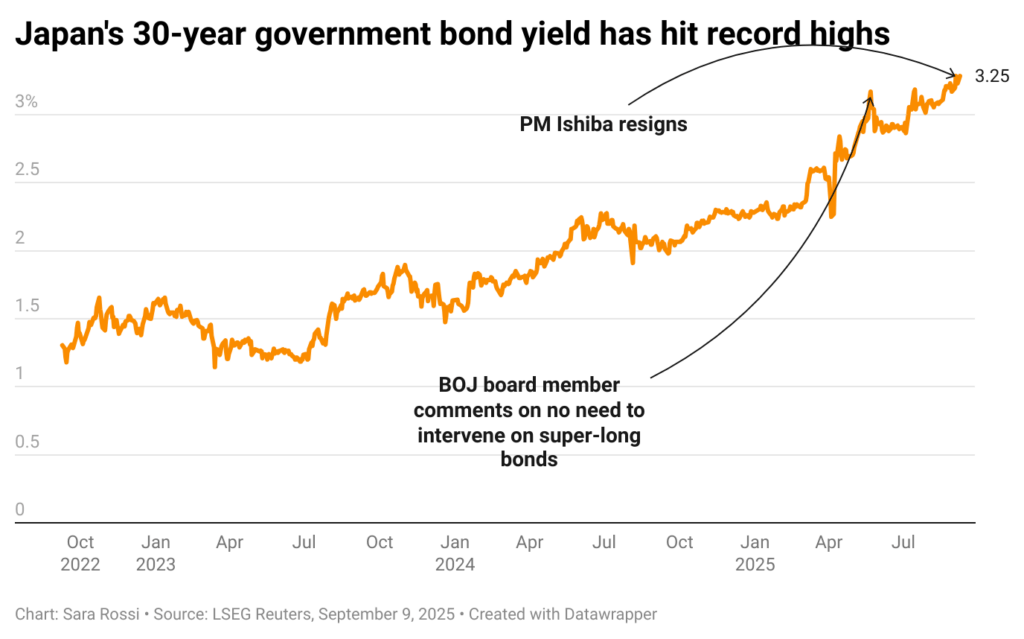
Japan’s high debt, one of the world’s largest, is no secret. What has changed is that the prospect of higher interest rates as inflation returns has pushed borrowing costs higher, bringing high debt to the fore as the Bank of Japan scales back its bond purchases.
Demand at recent auctions has been weak, adding to the market pain.
Political uncertainty following the resignation of Prime Minister Shigeru Ishiba has also helped push 30-year bond yields to record highs as speculation grows that his successor will spend more.
- GERMANY
Debt sustainability is not an immediate concern for Germany. It has the lowest debt-to-GDP ratio in the G7 and can spend more to boost economic growth.
However, markets are paying attention because the massive bailout package means Germany is borrowing more through bond sales.
30-year bond yields are at their highest level since 2011 – and that is a dangerous development. High investments in infrastructure and defense, just confirmed in the 2025 budget, bring the planned spending to 591 billion euros, including investments from the infrastructure fund and the special 100 billion euros for defense.
That is why supply is increasing, said Thanos Chonthrogiannis, Chief economist at Trust Economics.


