In international relations, but also in domestic politics, the same truth always applies: the strong do what they can, the weak suffer what is imposed on them. This does not only concern states but also individuals and groups of individuals who dare to challenge organized interests.
Many activists believe that they live in a world of “free speech” and that their microphone, banner or speaking room are protected by the right to free speech. This is a delusion. When your ideas touch the core interests of powerful actors, then you enter a battlefield where the rules are merciless and violence reigns.
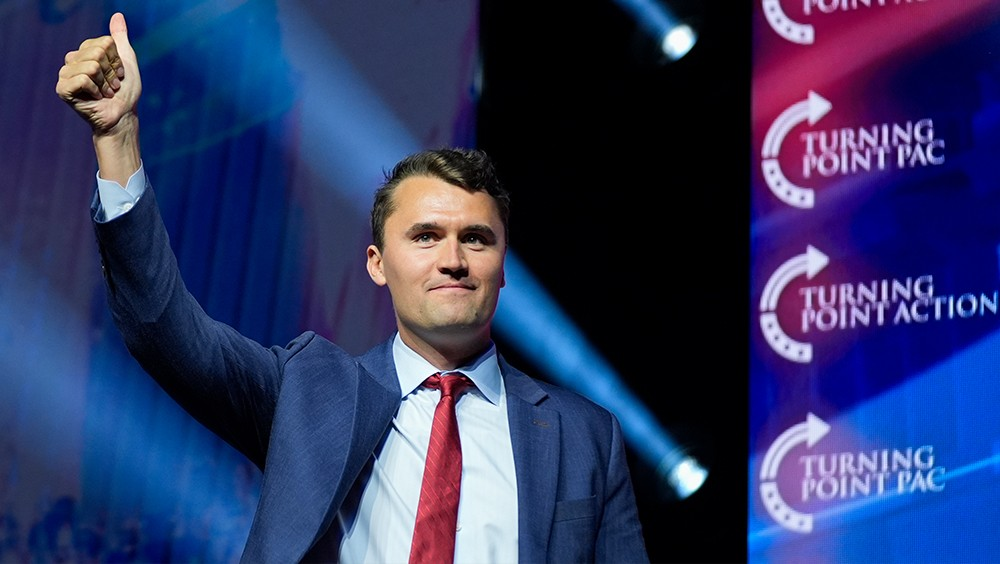
The murder of Charlie Kirk on September 10, 2025 proves this. A single shot from a rooftop almost 130 meters away, with precision and immediate escape. It was not a random attack. It was a premeditated operation, with the characteristics of a professional hit. The perpetrator (and his large and highly trained team) thought like hunters while Kirk’s team thought like event hosts. The result was fatal.
And we had already seen the same lesson in 1963 with John Kennedy in Dallas. An open convertible, maximum exposure, minimal environmental control. A sniper (at least that was the official narrative), a shot from a distant window with a bad viewing angle and history changed course.
Aggressive Realism: Live as if you were constantly at war
Aggressive realism teaches us that in an anarchic environment, where there is no higher authority to protect you, security is never a given. States have counterintelligence, secret services, harsh surveillance mechanisms. Why? Because they know that if they leave gaps, opponents will exploit them.
But the same must be true for any activist who makes dangerous enemies. If your views offend economic monopolies, foreign powers, or political establishments, then you are no longer a “freely speaking citizen.” You are a strategic actor, whether you like it or not. And if you are a strategic actor, then you need your own counterintelligence.
The logic of counterintelligence for an activist
It doesn’t mean becoming James Bond. It means adopting the life-saving “paranoia” of preparation:
- Map the space: If you are giving a speech, ask yourself first: where would I set up a sniper? where would I hide an explosive device? where would I escape unnoticed?
- Check the high points: Rooftops, balconies, garages. If you can’t secure them, don’t hold the event there.
- Be careful who you trust: Don’t open your group to random “volunteers.” States conduct checks. So should you.
- Always have an escape plan: The stage is a trap if you have no way out.
- Assume you’re being watched: It’s not a phobia; it’s realism. If you’re a target, the enemy’s eye is already on you.
- Wear Kevlar protection: It’s better than nothing.
- The hard lesson of Charlie Kirk
Kirk’s murder reminds us of the rule: the more powerful your ideas, the more dangerous your exposure. “Freedom of speech” is valid only until it clashes with power. From then on, we’re talking about war by any and all means.
If the activist doesn’t understand this, he will find himself unprepared. And then he will become another name on the blacklist of martyrs of political violence, proof that ideas may live, but people are lost in seconds.
Conclusion: If you build enemies with power, build your own counterintelligence. Otherwise, your ideas may survive — but you will not.