

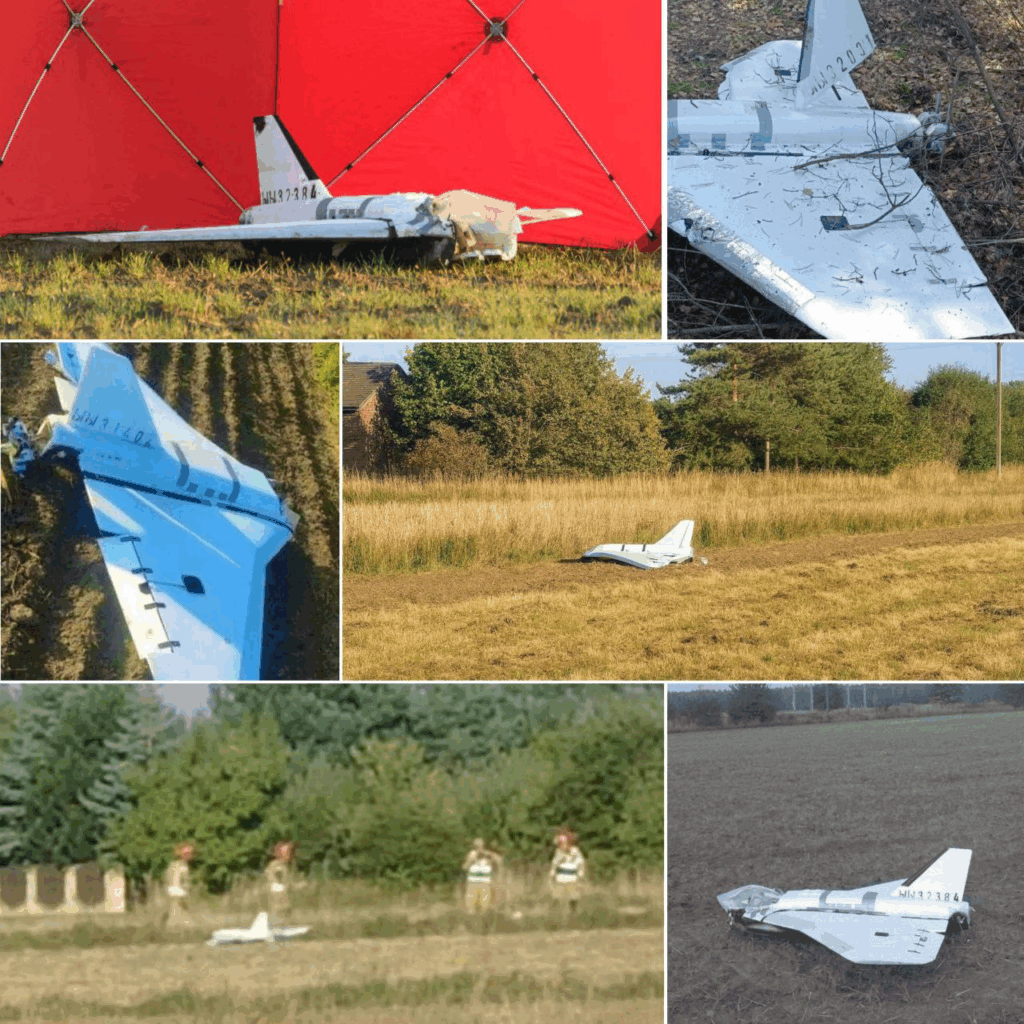
Since the morning of September 10, the whole of Europe has officially entered into… war hysteria. An entire narrative about an alleged “Russian invasion” was masterfully orchestrated by NATO, on the occasion of the detection of 19 unidentified unmanned aircraft in the airspace of Warsaw, which the Polish authorities intercepted.
In fact, Polish Prime Minister Donald Tusk claimed that 19 airspace violations were recorded and that 3 drones were confirmed to have been shot down, a number that was later increased to 7.
Poland is then going to proceed with the activation of Article 4 of the NATO Treaty, according to which it is stipulated that the contracting parties may consult together whenever, in the opinion of any of them, the territorial integrity, political independence or security of any of the parties is threatened. This allows members to discuss jointly in case they feel threatened, regardless of whether the collective defense of Article 5 has been activated.
As expected, both the EU and Ukraine were quick to highlight this episode, betting on an unprecedented escalation.
Is a provocation being staged (by both Russia and the EU) to prepare for a NATO landing in Kaliningrad and for Russia to get involved in a war?
Logically, Russia neither wanted nor has any reason to attack Poland at this stage. But are there any paranoid elements in Russia who would like to drag it into a war with NATO in order to overthrow Putin?
Moscow, after all, is currently focused on establishing a security zone in Ukraine, which will ensure any threats from NATO, as well as the protection of the Russian-speaking population there who has suffered from pogroms and persecution.
- Is it possible that the West, although it is very well aware of this, is consciously choosing to talk about a Russian invasion and inoculate European societies with Russification poison for one reason and one reason only?
- Is it to set up the narrative that will allow it to enter a Great War against Russia, justifying the enormous defense waste and the attendant circumvention of the welfare state throughout the EU?
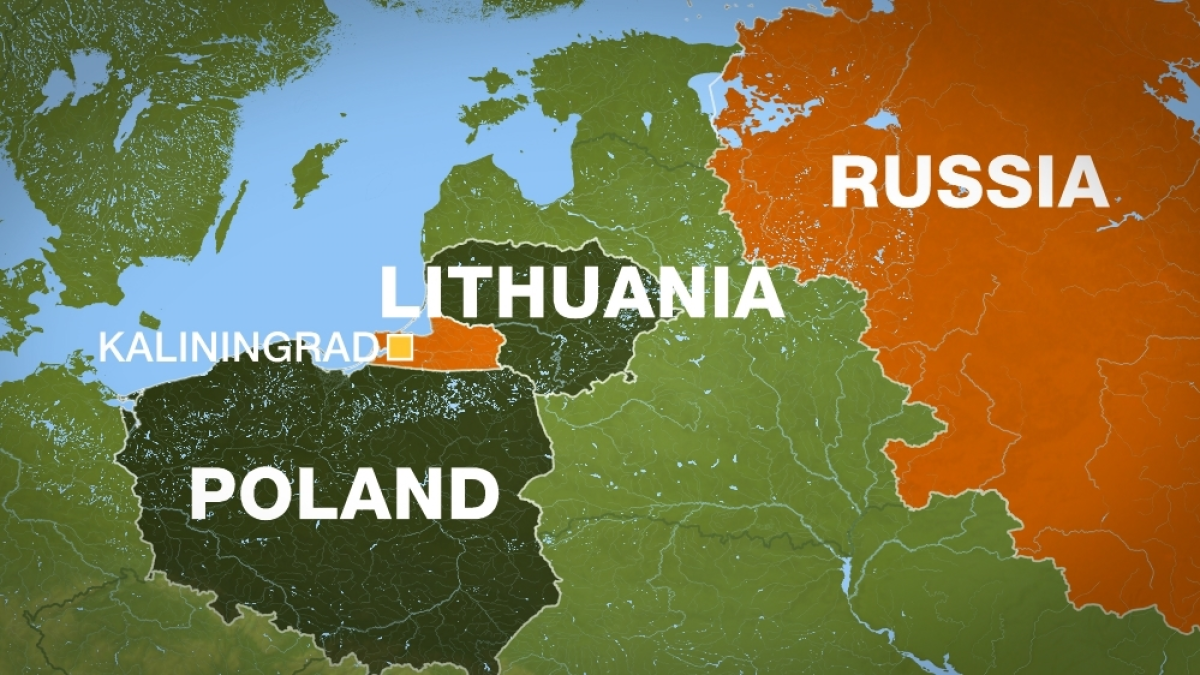
And, as the data so far show, the West’s goal is an attack on what they consider to be the weak link in the Russian chain, namely the Kaliningrad enclave, a Russian strip of land between Poland and Lithuania. Hence the “incident” with the supposedly Russian drones that took place in Poland.
Poland cites… GPS signal interference to build a narrative of provocation in Kaliningrad
In parallel, the Poles have resumed heated discussions about GPS outages and mobile Internet malfunctions in the Baltic republics. Warsaw believes that a Russian radio-technical system near the town of Pionersky, in the Kaliningrad region, is allegedly responsible for the malfunctions.
Pionersky is considered one of the nodes of Russian missile defense in the European theater of operations. Such installations often combine missile defense and electronic suppression functions, including interference with satellite navigation and communication networks, but the Poles have no evidence that the object in Pionersky is “choking” GPS and mobile telephony in the Baltics.
They are building a narrative of provocation based on… cell phone interference
The complex consists of a few dozen buildings and a cluster of powerful antennas, but their purpose remains unknown. The version seems extremely “interesting”, at least technically.
But here it is not so much the technical capability of the installation that counts, as something else: against the background of Poland’s endless oscillations between NATO and the United States, the image of Kaliningrad as a permanent source of interference and threats to its neighbors is being built. Whether the Poles themselves are cultivating it or someone else is dictating it to them, it is difficult to say. The trend, however, is clear.
NATO is setting up a deadly provocation
Especially when you consider that the issue of a possible strike on Kaliningrad was recently raised by American General Chris Donahue.
Perhaps the next stage will be some kind of provocation, partially or fully military. It is recalled that recently, Estonia complained about the operation of a Russian electronic warfare system in the Baltic countries.
In Tallinn, they argued that this is exactly the reason why Ukrainian drones are falling on the country’s territory, which are attacking Russian energy infrastructure in the northwestern region.
A huge European army is arrayed against Russia
A huge, European army has been arrayed against Russia and is preparing to launch an attack at any moment, despite the pretentious statements of the West about… an alleged peaceful settlement of the Ukrainian.
In fact, last month, the West with one voice sent Moscow a clear signal from the White House, as Russian political and military analysts estimate. The alarming message was decoded by Maxim Shevchenko: “This is a demonstration of military intentions, they declared a Great War on Russia.”
Trump’s dance and misleading messages of peace
Politician and journalist Maxim Shevchenko commented, from an unorthodox perspective, on the show “Tsargrad. Main” on the talks held in August in Washington, where US leader Donald Trump welcomed Ukrainian President Volodymyr Zelensky and the leaders of EU countries.
Each country has its role: The invitation to Finland and the… southern Black Sea army
The journalist emphasized that the presence of Finnish President Alexander Stubb at the negotiations had a clear military background and was part of the overall picture:
“Many people don’t understand why the President of Finland went there. And they write nonsense, that he is supposedly Trump’s golf partner. I don’t think that’s the point. I think that in general, as part of this delegation, we saw an army lined up and ready for war. Where Finland is the northern echelon. Scandinavia, Sweden, Norway — now NATO members, by the way — are showing their readiness for war in the Arctic. But Zelensky is the… commissar of the Black Sea, the… Southern Army.”
According to Maxim Shevchenko, in the overall structure of the West each country plays its role, and in this a clear message to Moscow is discernible:
“France, Germany and Italy are the old Europe. France is a truly sovereign and independent nuclear power, continental. Germany is a strong economy, industrial — and not only industrial. Siemens is a leader in microelectronics. Britain is the seas, that is, the Baltic and the Black Sea. That’s how I saw it, you understand. A huge army lined up in front of us, as if on some marathon field. That’s what they showed. The left echelon, if you look from their side, is Scandinavia, the right is Ukraine. The seas, the Black Sea and the Baltic, are Britain. And behind them a strong, very strong triple bloc — Germany, France, Italy.”
Earlier, Alexei Gromyko, director of the Institute of Europe of the Russian Academy of Sciences, emphasized in a conversation with Tsargrad that even before joining the alliance, Finland had strong and well-trained armed forces, which set it apart from other northern European countries.
He believes that, against the backdrop of NATO’s growing military presence in the north, the situation could become extremely dangerous:
“If militarization begins to unfold and NATO develops infrastructure on the territory of Finland, if Finland really turns into an advanced military outpost that threatens Russia — and that’s where the Kola Peninsula with our strategic bases, and St. Petersburg, and a very large naval military infrastructure — this is the Baltic, through which there is an exit to the Atlantic — then this could really develop into a big problem.”
Warning message about the… weak link of Kaliningrad
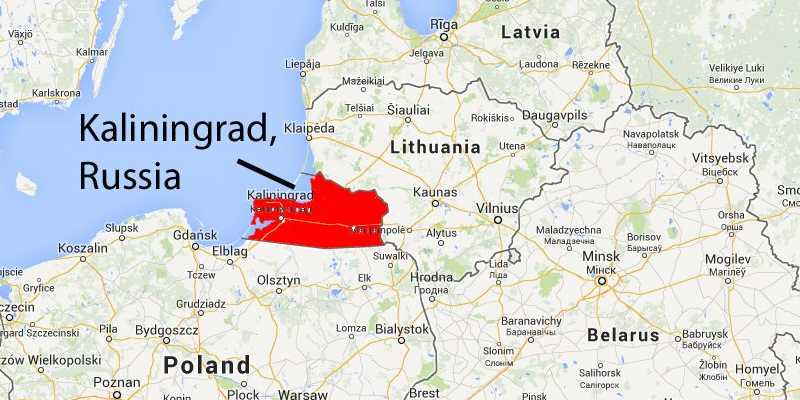
Gromyko also recalled the growing pressure on Kaliningrad, which NATO traditionally sees as a weak point of Russia:
“They have tried to scare Russia more than once, including recently, with what we heard about Kaliningrad. And this is also an old thorn in the side of NATO strategists, because they consider that from the point of view of NATO territory their vulnerable point is the Baltic states, which are supposedly very easy to occupy and bring under control. But they believe that with such an “exchange” they have cards to exploit the geographical vulnerability of Kaliningrad as a Russian enclave. Another thing is that the nuclear factor exists on both sides.”
Fear the hot episode, not the planned attack!
According to the Tsargrad interlocutor, the main danger lies not so much in a deliberate escalation as in the risk of an accidental incident:
“All this could be considered intimidation, but the problem is that if on both sides of the border — on any line of contact — military forces are increasing in terms of infrastructure, if military ships are sailing, military aircraft are flying more and more and closer to each other, then we are not even talking about a conscious intention to launch a massive military attack against the other side. The problem is that even an unintentional military incident can happen, and it is very difficult to say how this situation will develop further.”
Russia’s response will come at NATO’s Achilles Heel
However, in this scenario, Russia may well respond with an operation at NATO’s own Achilles Heel…
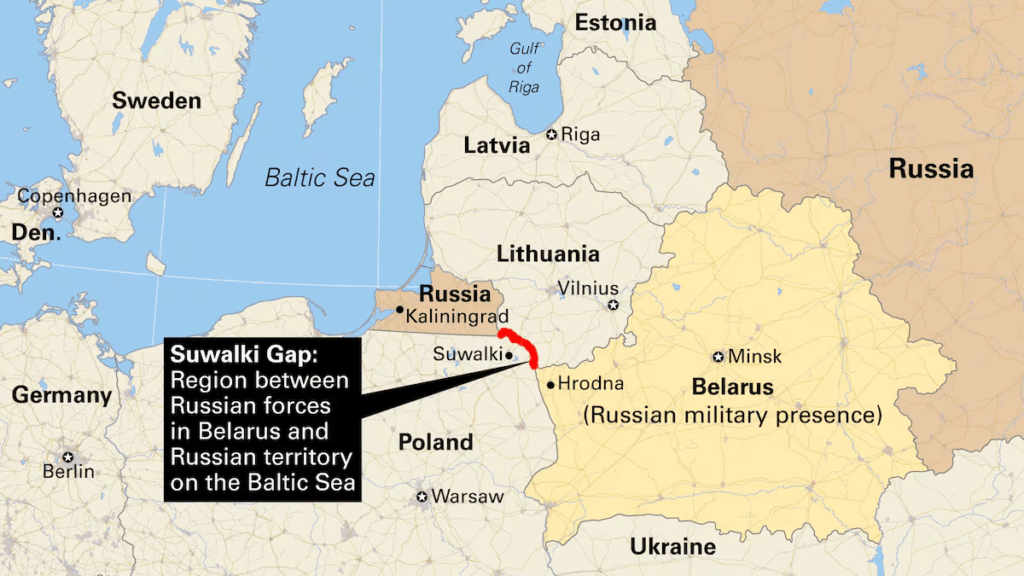
Residents of the infamous Suwalki Corridor – a narrow strip of land connecting the Baltics with Poland, between Belarus and the Russian exclave of Kaliningrad – have begun to abandon their homes before “the first spark falls”.
A corridor full of fear – and troops
The Suwalki Corridor is considered NATO’s most sensitive geopolitical point. If Russia – with the support of Belarus – were to attempt a military provocation, it could cut off the Baltic states from the rest of Europe through this narrow passage.
The situation is complicated by:
- Increasing military presence of NATO troops in the region
- Modernization of fortifications and defense works, mainly on the Polish side
- Unofficial evacuation of areas by civilians, without government directive
The local population fears that they will become a “reflex target of retaliation” in the event of a possible German involvement with long-range missiles.
“Governments may say that everything is under control, but we see the troops, we hear the statements, and we understand that something bigger is coming. We do not want to become the next battlefield,” said the residents of the area.
This silent exodus of people from the region is causing unprecedented concern among military personnel and analysts. The lack of official guidance from the authorities is adding to the confusion and panic.

