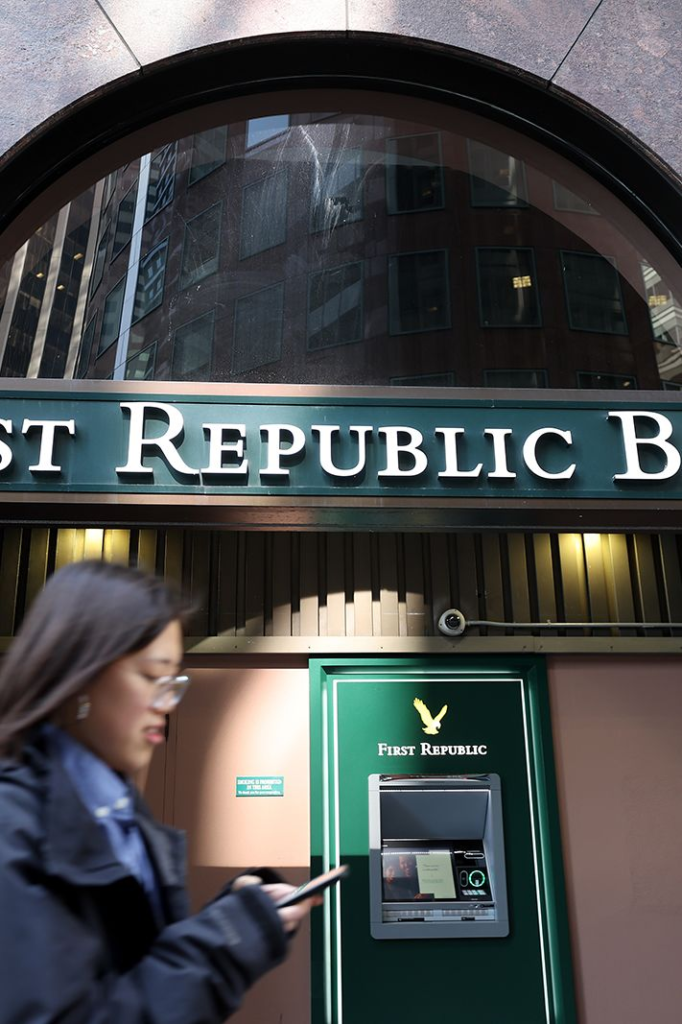


Despite their explosive rise (40% gains for 2025), European bank stocks are facing a tough time as sentiment has already been affected by the new uncertainty in France. Still, investors may find it hard to ignore the momentum of Europe’s best-performing sector so far this year. An investor who bought European bank stocks five years ago has seen a net return of about 300%, compared with 70% for the broader market, according to LSEG data. What’s next?
1. The earnings boom may not last
Strong earnings, boosted by relatively higher interest rates in recent years – before the recent cuts – and better growth prospects, have driven the rally, with most banks beating earnings estimates.
Trust Economics argues that combined with falling interest rates, future earnings are likely to be flat or declining, while tariffs could increase corporate bad loan provisions, which have been flat so far.
2. No more rate cuts
Even if earnings momentum weakens, banks should brace themselves as the European Central Bank’s rate cuts draw to a close and the era of negative interest rates appears to be over for good.
A recent European Parliament study found that European banks are particularly sensitive to interest rates compared to their US counterparts, with NII accounting for 60% of net operating income. Despite interest rates falling from 4%, they are not expected to fall much below 2% as an EU-US tariff deal reduces economic uncertainty.
Expectations that further interest rate cuts in the UK are limited have supported NatWest, Lloyds and Barclays. Their shares have risen 35-50% this year, still below pre-2008 crisis levels.
3. Winners and losers
A sign of confidence in banks’ prospects for increasing shareholder value is the rise in the price-to-book (P/B) ratio for the average bank in the STOXX Europe 600 Banks index, which compares market value to asset value. It has risen to 1.12, after years below 1.
However, not all banks are performing equally well. German and Spanish stocks have stood out on the prospect of mergers and acquisitions around Commerzbank and Sabadell.
Spain’s buoyant economy is supporting banks linked to the broader economy, Germany’s fiscal stimulus is boosting growth prospects, and German business confidence hit a 15-month high in August.
By contrast, Switzerland’s UBS faces challenges from high U.S. tariffs, zero-interest rates and new capital regulations.
The fall in French bank shares this week on renewed political turmoil shows how quickly sentiment can change. Societe Generale on Tuesday suffered its biggest one-day drop since April.
4. Less Risk
In general, investors are seeing banks as less risky. The cost of insuring against default, as reflected in credit default swaps (CDS), is falling.
Deutsche Bank’s CDS, which temporarily rose above 200 basis points in 2023 as the US banking crisis spread to Europe, is trading around 54 basis points. The recovery in high-risk AT1 bank bonds, whose existence was called into question when Credit Suisse collapsed that year, remains strong.
AT1s are a great combination – excellent returns. Essentially investment grade bonds without the investment grade label. European bank stocks recently hit their highest levels since 2008 and the sector is stronger than ever, with lower levels of leverage, analysts say.
5. Buy on the dip?
The momentum remains positive, but the price does not allow us to be overly optimistic, because the risks of a recession, while not foreseeable, have not been priced in. Others saw any selling as an opportunity.