The BRICS alliance is a powerful weapon for its members and a threat to Western international capital. The members work efficiently and have managed to strengthen the position of the BRICS in the international economic arena. However, they do not cease to be powerful leaders of major economies and inevitably there are internal frictions and risks.
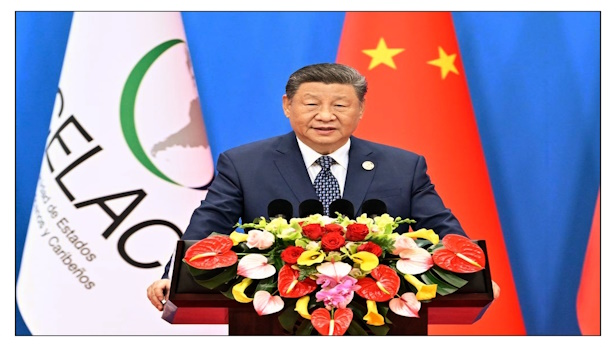
At the recent summit in Brazil, Chinese President Xi Jinping refused to travel to Rio on the pretext that he had commitments on his schedule and it was not urgent since he had already met with his Brazilian counterpart Luiz Inacio Lula da Silva twice in 2025.
However, an article in the South China Morning Post newspaper reveals another dimension. Citing government sources, the newspaper said Xi did not want to be “considered a secondary player” there, given that Lula was hosting a state dinner in honor of Indian Prime Minister Narendra Modi, who would be the first Indian prime minister to visit Brazil in nearly six decades.
China and India have some diplomatic issues. Despite an agreement to de-escalate border tensions reached by Xi and Modi during the last BRICS summit, China and India remain rivals, as demonstrated by China’s support for Pakistan during the latest India-Pakistan conflict and India’s perception that China is using the SCO (Shanghai Cooperation Organisation) against it. Thus, the newspaper claims that, with the Indian Prime Minister as the top VIP in Brazil, Xi declined to travel there and attend.
This case inevitably raises the question of why Lula decided to make Modi’s visit an official state visit with an accompanying dinner, despite the fact that the latter was there to attend a multilateral event. While it could be simply for protocol reasons, given the historical significance of his visit, Lula may also have calculated that he could expand Brazil’s balance from its hitherto largely dual nature between China and the US to a more complex one, through the inclusion of India. This in turn could relieve some of the pressure from Trump.
Modi’s decision to attend the BRICS summit in person, thus becoming the first Indian prime minister to visit Brazil in almost six decades, gave Lula the opportunity to extend an official visit.
Lula, therefore, tried to boost relations between the US and Brazil and to comparatively reduce China’s role in Brazil’s balance, since India’s role in it could soon become more important.
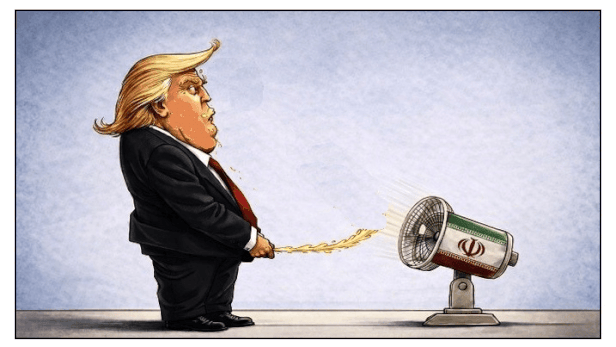
However, just a few days earlier, Donald Trump had threatened the BRICS countries – of which Brazil is a founding member – with additional 10% tariffs if they adopted anti-American policies, after they criticized his tariff policy (in a post he had made on the Trump-owned social networking site Truth Social).
President Lula had commented that “it is not a serious action” for the president of a country like the US to threaten the world with tariffs through posts on social networking platforms.
Subsequently, on July 10, President Trump announced the imposition of 50% tariffs on imports from Brazil.
The conclusions from all of the above are very interesting.
First of all, we must say that we did not expect any smarter move from a left-wing and convicted embezzler like Lula. His plan to upgrade cooperation with India to counterbalance his problems with the US was indulgently stupid.
Then we must emphasize that President Trump has also been staggering very dangerously in stupid actions in the last quarter. He is trying (unsuccessfully) to balance his erratic political actions with rhetoric of “political scum” that essentially rallies his opponents while at the same time the floor under his feet (the political base of the MAGA movement) is irrevocably giving way.
Finally, we can only say bravo to Chinese President Xi Jinping, who probably read the whole situation correctly and avoided being used, shining through his absence.