



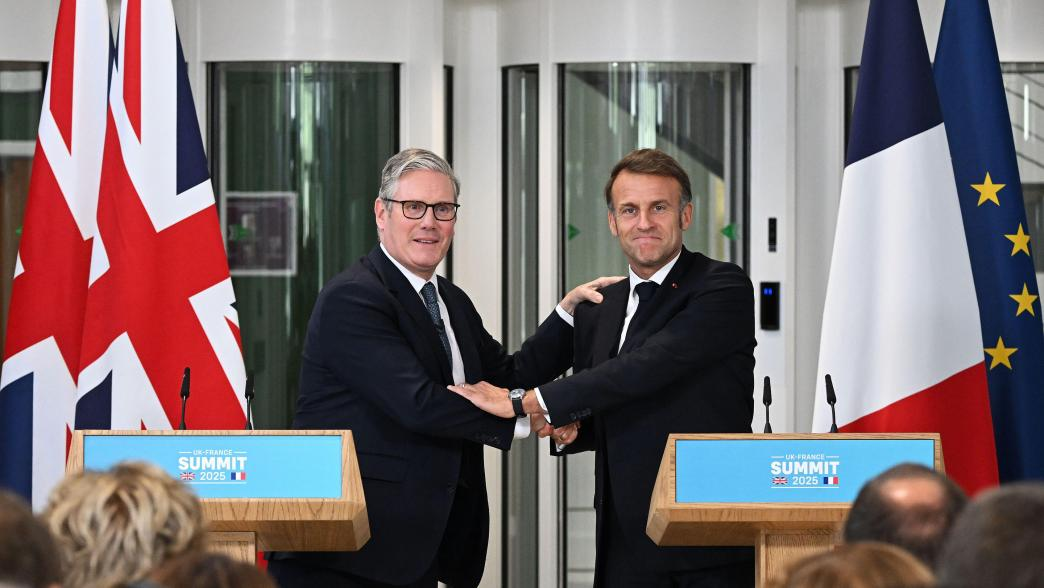
Beyond the mundane aspects of Macron’s recent visit to Britain, the essence of what was agreed upon with Prime Minister Keir Starmer is a high-level political strategy for defense convergence between the two countries, within NATO of course, but also at a bilateral level. And in so many ways, that it actually “bridges” to a large extent the distance that Britain had taken from continental Europe, due to Brexit and exit from the European Union. Something that shows that the current British government, the Labour Party, does indeed maintain its special relationship with the US (a historical fact for the country), but clearly wishes to align itself with the vision of common European Defense.
A key element in the agreements signed, which are described as Lancaster House 2.0, that is, as a continuation of the corresponding ones that were made in 2010, regarding Franco-British defense cooperation, is cooperation in nuclear deterrence. Thus the special joint statement – as the Northwood Declaration – states:
“Our nuclear weapons exist to deter the most extreme threats to the security of our nations and our vital interests. Our nuclear forces are independent, but they can be coordinated and make a significant contribution to the overall security of the Alliance, as well as to the peace and stability of the Euro-Atlantic area.
As we have explicitly stated since 1995, we do not foresee situations in which the vital interests of either France or the United Kingdom could be threatened without also threatening the vital interests of the other. France and the United Kingdom agree that there is no extreme threat to Europe that would not provoke a response from our two countries.
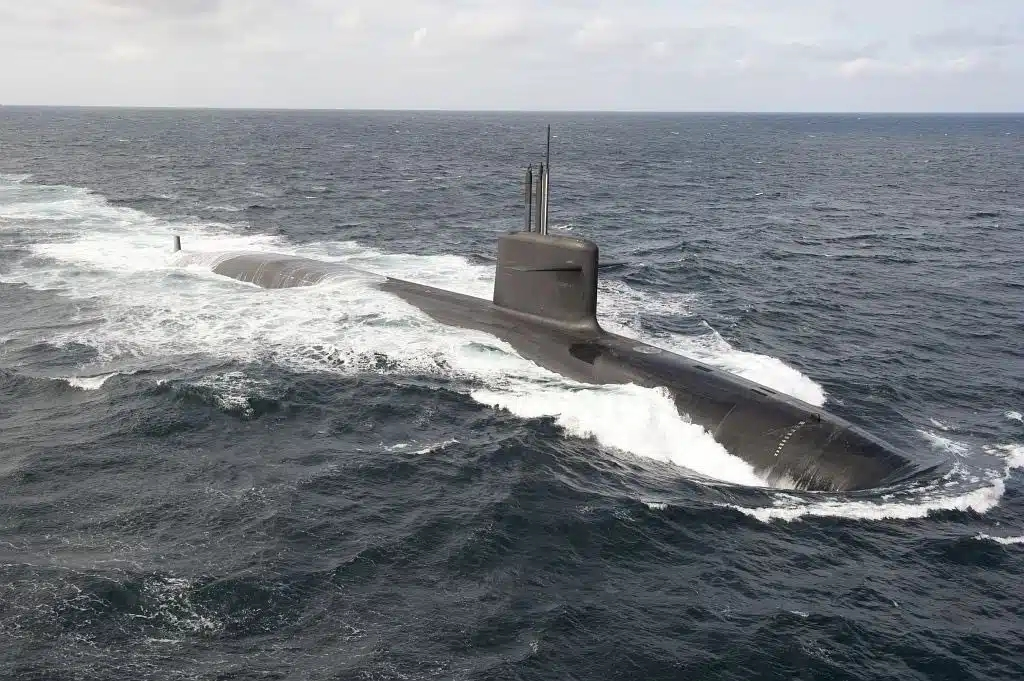
France and the United Kingdom have therefore decided to deepen their nuclear cooperation and coordination. A UK-France Nuclear Steering Group will be established to provide political direction for this work. It will be led by the Presidency of the French Republic and the Cabinet Office and will coordinate nuclear policy, capabilities and operational matters.
The United Kingdom and France reaffirm their full support for the Treaty on the Non-Proliferation of Nuclear Weapons and our obligations under the Treaty. We will coordinate ever more closely to support and strengthen the international non-proliferation architecture.”
The two countries therefore agree on a framework for a common policy of nuclear weapons development and use, stating that “when one is threatened, the other is also threatened.”
Cooperation everywhere and against… everything
The cooperation between the two countries at the defense-security level begins with the following statement: “The return of large-scale conventional warfare in Europe and beyond, strategic competition on the international stage, combined with hostile state activities, the rapid expansion of hybrid warfare and disinformation, create a tense and dangerous international order. States are increasingly using hybrid tactics against us, either directly or through intermediaries, to undermine our national security and our democracies.”
So here follows the reaffirmation of defense cooperation and its strengthening with many practical measures and defense programs, which in brief are the following:
- Strengthening and expanding the joint Franco-British expeditionary force, within NATO and bilaterally, so that it can undertake land missions in the Euro-Atlantic arena, with synchronization of the international deployments of forces of the two areas. The same force will also strengthen the “alliance of the willing” to help Ukraine.
- Industrial cooperation for the development of the next-generation FC/ASW cruise missile.
- Cooperation for the development of long-range air-to-air missiles, with an expansion of the capabilities of the Meteor missile.
- Purchase of new SCALP/Storm Shadow missiles (we have written about this).
- Creation of a joint office for complex weapons, to coordinate their procurement, in cooperation with the OCCAR procurement organization.
- Emphasis on unified air defense, both against unmanned and against hypersonic weapons, using Aster and CAMM missiles.
- Cooperation in the further development of a long-range strike capability, with the European Long Range Strike Approach (ELSA) initiative in which Germany and other countries participate.
- Cooperation in the development of directed energy weapons.
- Cooperation in the development of algorithms for strike synchronization, missiles and unmanned vehicles, through artificial intelligence.
- Research on how interoperability in air combat can be improved, and with possible joint procurement of weapons.
- Cooperation in the naval sector for better coordinated joint maritime defense, countering hybrid threats, Russia’s “shadow fleet” (tankers that transport fuel in circumvention of international sanctions), etc.
- Improvement in joint air defense exercises, with the production of more complex scenarios, dealing with unmanned aerial vehicles, etc.
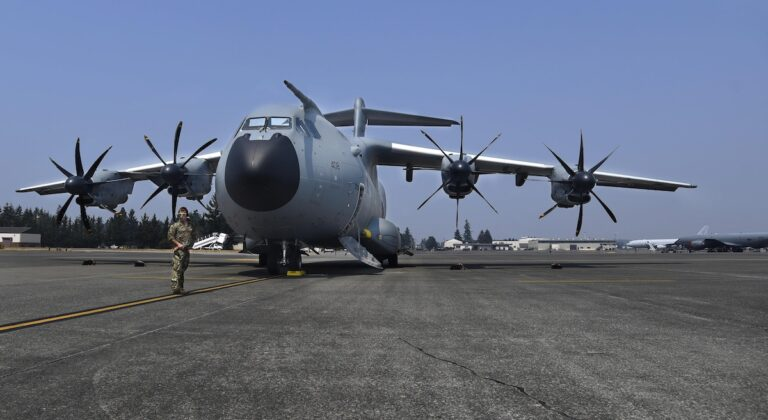
- Conversion and development of the A400 transport aircraft into a multi-mission platform (including strike capabilities, information collection, etc.) and its promotion on the international market.
- Cooperation in space for defense applications and possibly joint action in the development of surveillance satellites.
- Cooperation in cybersecurity.
- Strengthening security and defense actions between Britain and the EU with more cooperation and their expansion into new fields.
- Cooperation between Security Forces and intelligence services to better deal with all kinds of threats, with an emphasis on hybrid ones, including disinformation campaigns.
- Development of a bilateral system of secure intergovernmental communications.
- Policy of cooperation at many levels of defense, security, development of strategic, tactical and political actions.
- Cooperation to maximize joint action against terrorism, particularly in sub-Saharan Africa and Central Asia.
he Franco-British axis in development
The above (which are not even all the points of the relevant announcements) make a radical upgrade of the historical “Franco-British axis” that we knew, which had been partially replaced by the “Franco-German” one, from the 60s onwards. Thus, the importance of the Lancaster House 2.0 agreements is not simply analyzed, as it also includes a strong bilateral convergence, but also a positioning of the two countries as “leaders-collaborators”, within Europe. With emphasis on the fact that they are both the only ones within the European West, which possess nuclear weapons, therefore (without being formulated so directly) they can be confronted with the Russian nuclear threat, which… has been constantly being waved by Moscow in recent years, even at the level of propaganda and inflammatory statements.
It is interesting to see what the reaction of Germany will be, which maintains the economic leadership of the EU but has found that this is no longer enough in a multipolar world of high tension, so it is also proceeding with rearmament. Something that will gradually produce ambitions of “leadership” in broader fields. So here, perhaps Britain and France are anticipating the development and are forming, at least at a planning level, their own axis, in its classic role, of the 20th century, that of “balancing German power”. But now on a much friendlier level, with many fields of cooperation and alliances.
Will all of the above pay off?
Clearly, several weapons and technology development programs, yes, will continue no matter what, as they are in the absolute interest of both France and Britain. The most… grandiose, however, of strategic convergence, these must constantly cross the threshold of the next elections in the two countries. Where today in Britain the polls give the first party Reform UK, of the highly ridiculous, populist and pro-Russian Nigel Farage. While in France, the disintegration that Macron produces with his anti-social policies, maintains the nationalist-far-right party of Marie Le Pen in great popularity, albeit with a different leadership. But even that with hints of support from Moscow, which for its own interest seeks the prevalence of introverted/geopolitical neutrality, political formations in its west.
