


1. The Americans used 7 B-2 bombers to attack Iran’s 3 nuclear facilities, which flew over the Atlantic and the Mediterranean, and another 6 as a diversionary operation, coming through the Pacific. A total of 13 of the 19 such bombers that the US has. In practice? 70% of the fleet, so probably all of the aircraft that are in service as some are always in the maintenance phase. At the same time, they apparently spent up to 14 GBU-57A/B MOP bombs, from a stock of only 20. And here they exhausted most of their stock. So this is the largest combined US air attack using strategic bombers since the Gulf War. It is not, and it shows the attempt at a blatant, even extortionate, “prestige-building” of a superpower that is aggressively returning to a historically hot region of the planet.
2. The Iranian air defense has disappeared and this was evident both from the lack of any reaction – they probably did not even detect the specific aircraft – but also from their announcements that they had detected the bombings, while they were taking place. This shows the performance of the Israeli operations of the previous days. And here we have a rare event, even a novel one, for such a large state as Iran to have lost control of its airspace in a few days. In other words, it is not risking its territorial integrity, but has lost its defensive status.
3. However, even if the three Iranian facilities were completely destroyed, this almost certainly concerns the uranium enrichment centrifuge infrastructure and any laboratories. However, the stockpile of 408 kilograms of enriched uranium at a level of 60%, plus several thousand kilograms of lower enrichment stock, remains unknown. Therefore, the Iranian capability for future completion of nuclear weapons is preserved, at any time horizon.
4. Iranian loneliness continues. Verbal condemnations of American involvement by China, Russia, and other countries and organizations do not, for the time being at least, yield any support in practice. And this has been true since the beginning of the Israeli attack, where Iran, a large country with history and tradition, does not have state allies to the extent that they would stand up for it militarily or even with strong diplomatic intervention. Something that is largely due to its own extremist policy, which has already deprived it of alliances within the Middle East.
5. The US move, or the Trump move, to give it a face, returns and repeats the “traditional” incendiary policy of the superpower in the Middle East. With the example of Iraq, Lebanon, Yemen now, of the older frictions with Iran (with various episodes of skirmishes), overshadowing but not becoming a “lesson”. The above cannot be attributed to some difficulty in analysis or some inherent naivety of the US in understanding the chaos of the Middle East. But we are more led to their inability to produce a “new crisis management policy” when they encounter the fundamental impasses of the region. Israel’s unbridled aggression whenever it feels threatened, reinforced by a narrow and religious interpretation of its existence, along with Iran’s similar (but not identical) religious fanatical belief in its own God-sent destiny in the Islamic world “with a gun in hand”. Thus, the US remains committed (to the point of being tied down) to the defense of Israel, committed to not allowing Iran to acquire nuclear weapons, or more correctly, the “prestige of nuclear weapons”, and of course in a zone of interests where we have vast trade routes, an abundance of hydrocarbons, and an overabundance of fanaticism. So the “solutions” are few, and those proposing something alternative and braver than bombs are either non-existent or unheard.
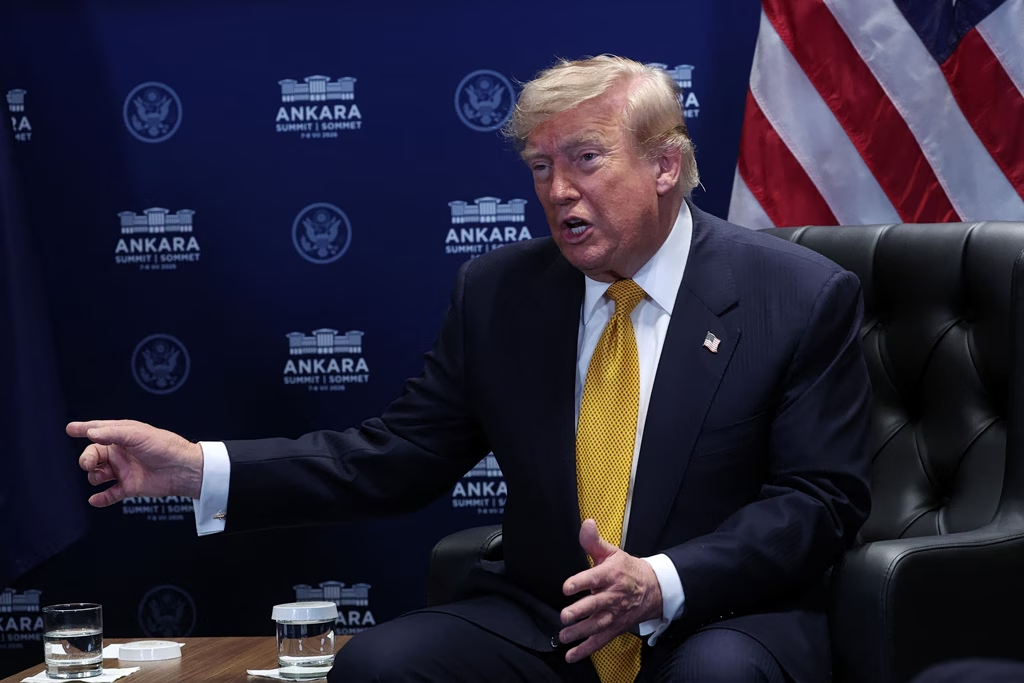
6. Trump’s reversal from his false campaign slogan of “peacemaker” was both quick and disappointing, but also predictable. A personality without a special understanding of history, without political experience (which even a few years in power and in campaigning do not provide, especially if you have such narcissism and inability to empathize), now manages a superpower in crisis: one that cries out for isolationism but at the same time engages in warlike exercises of extroversion, that is, leading to great opposition and, above all, international unrest. It is difficult to discern any long-term gain for the US from this action, even if Iran is led to some “negotiation”.
7. Israel is living its own contradiction. To dominate militarily in a distant country, which it bombs daily and cannot ensure the integrity of its citizens inside. This ambiguity, a technical struggle of ballistic missiles with a powerful air force and air defense, has much greater political depth as it will produce -sooner or later- and ripples within Israeli society. Which is being tested again in a direct attack (after October 7, 2023, after the Hamas and Hezbollah rockets), has tolerances, but these -logically- cannot be comparable to the wars of 1967 or 1972. Plus of course the moral burden of the entire military action which will also be seen at a later time, but in an unknown way. Because the extreme feeds the moderate to flourish, but also feeds back the extreme as confirmation.

