The situation on the Iran front is evolving so rapidly that any analysis risks being immediately overtaken by new developments. This is especially true in view of the fact that some of the actors involved, most notably the US, are acting with extraordinary unpredictability and chilling inconsistency.
Trump’s handling of the Iran affair is completely unpredictable, even psychotic. From demanding discussions to sudden outbursts of “Capitulate” and “Evacuate Tehran Immediately” type, it is impossible to predict what Washington will say or do next. The only thing that is almost certain is that Trump has been captured by threats from his neoconservative advisers linked to Israel; there is nothing else that could explain his puzzlingly confused behavior.
There is an explanation that leads us to the crux of this article. Israel apparently expected a very quick surrender of Iran through a series of devastating decapitation strikes, but these were only partially successful. When that didn’t happen and Iran rained down retaliation, the Israeli-led bloc panicked and began putting enormous pressure on Trump to save the “chosen” kingdom and the “proper” people. This is because Israel is not equipped for a long, drawn-out war of attrition, as confirmed by a Jerusalem Post article: “Neither the US nor the Israelis can sit around all day and intercept missiles,” said Tom Karako, head of the missile defense program at the Center for Strategic and International Studies. The Israelis and their friends must act with due urgency to do what is necessary, because we cannot afford to sit idly by and play games.”
Israel needed a quick operation to put Iran out of action and probably expected the US to enter the war. However, this should be tempered by the fact that while Israel claims to have prepared for a possible long-term conflict, this can obviously only be achieved under the full auspices of the US and the West, which fully support it in every way, especially in terms of weapons, fuel, etc.
So what did Iran do? Apparently, Iran followed a similar strategy to Russia, namely to deliberately slow down the conflict in order to preserve Israel’s resources. Israel expected Iran to “break out” and launch its entire missile capability, not only to be immediately exhausted, but also to cause a huge “tragedy” that could serve as a provocation for the US to enter the war. Instead, Iran chose to slowly bleed Israel, with the “death by a thousand stabs” strategy that Russia developed against Atlantic Ukraine. This is why Iran is now launching a small number of missiles every day to weaken Israel’s social, economic and political resources. Why did Iran choose this strategy? Because it is the only one with a chance of success. A massive “shock and awe” campaign would make it easier for Israel and give the Israelis exactly what they were waiting for.
Israel’s own claims that it has gained complete “air dominance” over Iran are false, as Israeli fighter jets do not fly over Iran, and there is no evidence to support this claim. Israel uses a combination of drone strikes, for which there is indeed ample evidence. UCAVs are less detectable and expendable, allowing Israel to direct them towards Tehran without suffering losses from shoot-downs that do not affect its public image. Every video of the attack released by Israel so far shows footage from UCAVs or surveillance drones. And there is not a single video of Israeli aircraft in Iranian airspace, but many videos showing the stages of Israeli missile launches from Syria and Iraq. This shows that Israel continues to launch missiles outside Iran’s borders. Images show Israel using laser-guided drone bombs to hit targets seen in videos of the attacks, while long-range cruise missiles are being used to hit larger infrastructure targets. Similarly, the US is unable to fly over Yemen and must conduct strikes from a distance so that F-35 bombers are not shot down again if they get too close to the border. Therefore, Israel is certainly not able to fly over Iran at the moment, except perhaps for some small raids just over the border.
It is becoming clear that the real purpose of the planned operation goes far beyond simply weakening Iran’s nuclear program and even mere regime change. Instead, it aims to completely divide Iran into smaller, easily dominated nation-states, as was attempted with Syria and Libya. It is no surprise that the war broke out just weeks after a crucial hub of China’s New Silk Road opened, bypassing US-dominated maritime bottlenecks. Israel attacked Iran immediately after the opening of a groundbreaking new rail link between Iran and China, posing an existential geo-economic threat to the US and its allies.
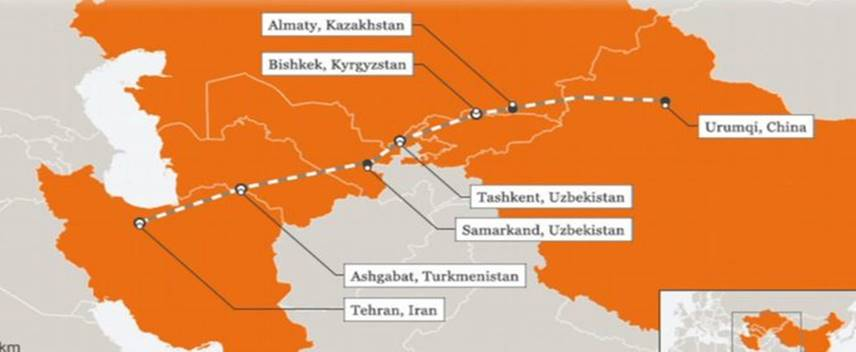
The route bypasses US sanctions and will boost Iran’s economy, allowing it to thrive like never before. In addition, Iran will become a major Eurasian transportation hub, reaching as far as Russia.
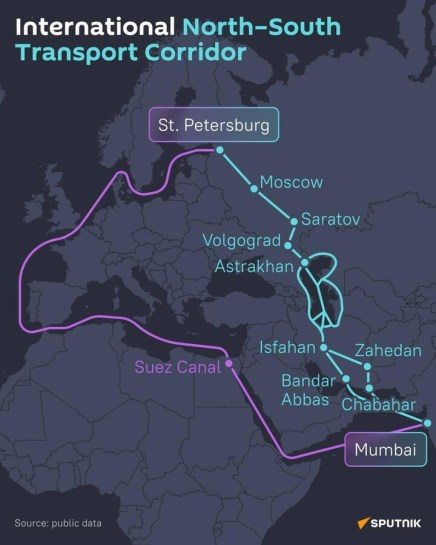
The Israeli attack is an attempt to dismantle Iran because it is a great counterweight to the imperialist dreams of the US neocons and, more importantly, to the Babylonian-messianic prophecies of their leaders. The self-proclaimed “crown prince” of Iran, the son of the last Shah, has published through the CIA his call for the population to take to the streets and overthrow the “regime” of Khamenei. It is clearly a highly coordinated plot aimed at doing to Iran what was done to Assad and Syria late last year.
This new war in the Middle East is in a constant state of flux, possibly escalating and putting the world at risk, it is the work of the Zionist elite who are trying to control the world and create a Greater Israel, ideally expanding their current map to include Iran.
This war will be the starting point for the reconstruction of the world. If Iran wins, and this will depend on many factors (direct support from Russia and China in the war against Israel, while regime change in Iran from within will make Iran pro-Western),, the world will transform into a multipolar order. This is the shared vision of Iran, Russia, and China. This is a decisive battle, not just for Iran, but for the fate of the world.
As missiles fly and rhetoric escalates, what began as a regional conflict could ultimately determine the balance of power in the 21st century.