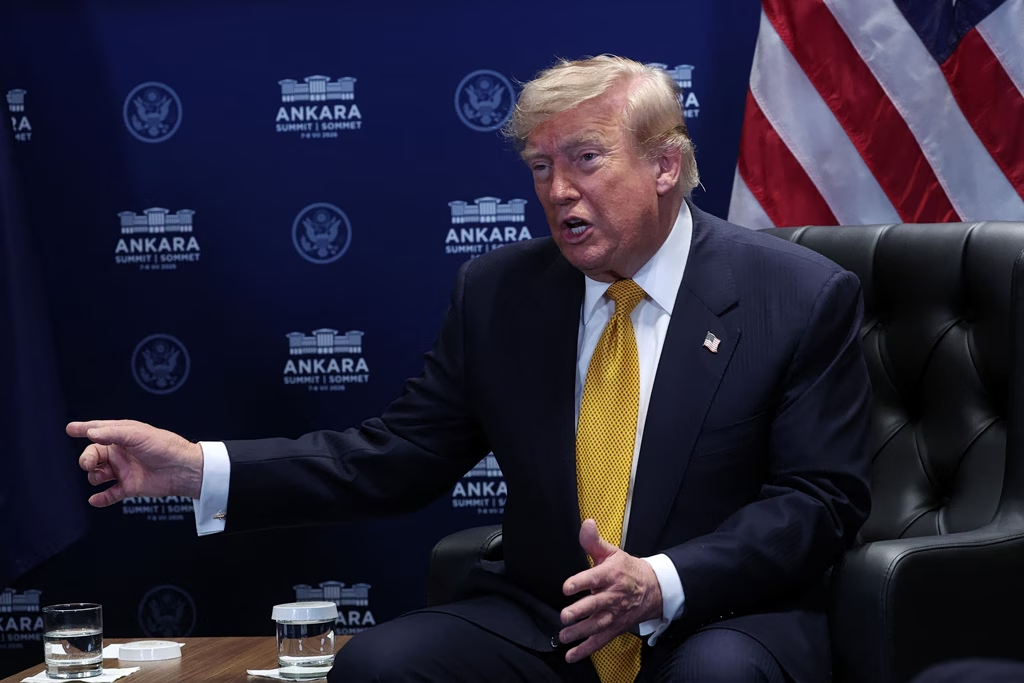


In a recent interview on or about June 13, 2025, Tucker Carlson had a heated debate with U.S. Senator Ted Cruz regarding the escalating calls for possible U.S. military action against Iran. During the debate, Carlson highlighted Cruz’s apparent lack of knowledge about Iran, its population, demographics, and internal dynamics while also noting the senator’s strong support for aggressive policies toward the country.
The debate attracted significant attention online, particularly as it unfolded amid rising tensions between the United States and Iran, fueled by ongoing hostilities between the two countries. Carlson questioned Cruz’s willingness and readiness to advocate for regime change in Iran without demonstrating a basic understanding of the nation or its people.
The excerpt quickly went viral, drawing widespread criticism from analysts and citizens alike, who questioned whether U.S. lawmakers were adequately informed before advocating military intervention in complex geopolitical contexts. Critics argued that calling for the overthrow of a foreign government, especially one as strategically important as Iran, without fundamental knowledge was reckless and symbolic of deeper issues in U.S. foreign policy decision-making.
Notably, during that heated debate with Tucker Carlson, Senator Ted Cruz argued that U.S. aid to Israel yields significant strategic benefits, but provided no supporting evidence. According to data from OpenSecrets, while AIPAC cannot legally donate directly to campaigns, its affiliated Super PAC, United Democracy Project, is among Cruz’s top political donors, raising concerns about the influence of pro-Israel lobbying on his foreign policy stance.
Meanwhile, Fox News host Martha MacCallum recently profiled Lizzy Savetsky, a prominent Jewish influencer and ardent pro-Israel activist. Savetsky first gained attention a decade ago as a fashion and lifestyle blogger under the pseudonym “Excessories Expert” and later expanded her reach through Instagram.
During the show, Savetsky made the controversial claim that U.S. President Donald Trump and Israeli Prime Minister Benjamin Netanyahu should receive the Nobel Peace Prize for their efforts in dealing with Iran. This claim has been widely criticized as contradictory, given that military confrontation and peacebuilding are generally considered opposing goals by not only the standards of the Nobel Committee but also common sense.
Accordingly, this Liberal Globe analysis explores the growing dissatisfaction among segments of the American public and political commentators with perceived Israeli influence in U.S. foreign policy. From an aggressively realist perspective, this shift reflects a broader dissatisfaction with Washington’s strategic commitments abroad that do not directly serve core American national interests.
Drawing on historical precedents, geopolitical theory, and contemporary discourse, this paper examines the roots of this sentiment, its manifestations in media and blog commentary, and its implications for U.S. grand strategy.
1. Introduction: The Expression of Discontent
In recent years, a growing group of American bloggers, journalists, and independent analysts have expressed concern that U.S. foreign policy is being “taken over” by Israel. This sentiment, while not new, has gained momentum following several high-profile military interventions and diplomatic entanglements in the Middle East.
Critics argue that the United States has increasingly aligned itself with Israeli security priorities at the expense of its own strategic autonomy and global standing.
Since the terrorist attacks of September 11, 2001, the U.S. national debt has increased dramatically, with over $2 trillion in direct and indirect costs associated with wars in Afghanistan, Iraq, and other conflicts in the Middle East.
According to data from the Watson Institute for International and Public Affairs at Brown University, the post-9/11 “Global War on Terror,” including operations in Afghanistan (Operation Enduring Freedom), Iraq (Operation Iraqi Freedom), and Syria, has cost American taxpayers more than $2.3 trillion in direct military spending through 2024 alone. When veterans’ long-term care, interest on borrowed funds, and related homeland security expenditures are taken into account, the total economic cost exceeds $8 trillion (Brown University, Costs of War Project, 2023).
These figures reflect a significant portion of the broader increase in the US federal debt, which rose from about $5.8 trillion in 2001 to over $34 trillion by 2025, fueled in part by continued military engagements abroad.
From the perspective of Aggressive Realism, based on the work of John Mearsheimer et al, this phenomenon fits into a broader critique of how powerful interest groups can distort state behavior, leading to suboptimal outcomes in international relations (Mearsheimer & Walt, 2007).
2. Theoretical Framework: Aggressive Realism and Strategic Autonomy
Aggressive realism assumes that states are rational actors operating in an anarchic international system, where survival depends on maximizing their relative power. According to John Mearsheimer, great powers such as the United States tend to act aggressively to prevent the rise of potential rivals and to ensure their dominance (Mearsheimer, 2001).
However, when domestic interest groups or foreign allies exert undue influence on foreign policy decisions, they can lead a state into costly conflicts that are not aligned with its core security interests.
The argument that Israel exerts disproportionate influence on US policy in the Middle East has its roots in this framework. Proponents of this view argue that pro-Israel lobby groups, particularly AIPAC (American Israel Public Affairs Committee), have successfully shaped the decision-making process of Congress and the executive branch to benefit Israeli goals, even when this undermines broader US strategic objectives.
3. Historical Context: US-Israeli Relations and Regional Involvements
Since the 1967 Six-Day War, the United States has maintained a strong alliance with Israel, providing it with significant military assistance and diplomatic support. By 2024, Israel had received over $150 billion in US aid since its founding in 1948, making it the largest cumulative recipient of US foreign aid (US Department of State, 2023). While initially formed as part of the containment of Soviet influence in the Arab world during the Cold War, the alliance has persisted and even deepened since the Cold War.
However, critics argue that this alignment has led the US into unnecessary regional involvements. For example, the 2003 invasion of Iraq was justified in part on the grounds of addressing threats to Israel, despite limited evidence of such a threat (Chomsky, 2003; Walt, 2006). Similarly, the US reluctance to criticize Israeli settlement expansion or human rights abuses has been seen as jeopardizing American credibility in the Muslim world.
4. Contemporary Criticism: Bloggers, Commentators, and Digital Dissent
In the digital age, criticism of U.S. foreign policy toward Israel has proliferated on blogs, social media, and alternative news platforms. Independent voices increasingly question why the U.S. should “fight Israel’s wars,” especially when such actions often come at great financial and reputational costs.
Prominent figures and platforms contributing to this dialogue include:
- Robert Parry, founder of Consortium News, who frequently highlighted what he called the “Israel Lobby’s stranglehold” on US foreign policy before his death in 2018.
- Paul Craig Roberts, former assistant secretary of the Treasury under Reagan, who has argued that US foreign policy is “effectively controlled by neoconservatives and Israel supporters.”
- Moon of Alabama, a popular blog run by a German-American commentator, regularly criticizes US interventionism and Israel’s role in shaping it.
- Grayzone, edited by Max Blumenthal, which has published investigative articles on pro-Israel lobbying and its impact on US military interventions.
These voices, while often dismissed by the mainstream media, reflect a growing segment of the population that is skeptical of Washington’s role in global policing and its subservience to Israeli interests.
5. Case Studies: Where Do U.S. and Israeli Interests Diverge?
Several key episodes illustrate the tension between U.S. strategic interests and Israeli political preferences:
A. The Iraq War (2003)
While multiple factors prompted the invasion of Iraq, some analysts argue that the war was promoted by neoconservatives closely aligned with Israeli interests. Douglas Feith, Deputy Secretary of Defense during the Bush administration, was known for his support for aggressive action against Saddam Hussein, based in part on dubious intelligence about Iraq’s ties to terrorism and Weapons of Mass Destruction (Shenon, 2004). These claims of WMD were later disproven, but not before justifying a war that destabilized the region and drained American resources.
B. Opposition to the Iran Nuclear Deal (2015)
Despite President Obama’s successful negotiation of the Joint Comprehensive Plan of Action (JCPOA), Israeli Prime Minister Benjamin Netanyahu delivered a speech to Congress opposing the deal, a rare breach of diplomatic protocol. Many Republican lawmakers supported Netanyahu’s stance, effectively undermining the deal and signaling strong alignment with Israel’s fears about Iran’s nuclear ambitions (Sanger, 2015).
C. Gaza Conflicts and US Diplomatic Support
Whenever Israel has launched large-scale military operations in Gaza, such as in 2008–2009, 2014, and 2021, the US has consistently shielded Israel from international condemnation, including blocking UN Security Council resolutions criticizing Israeli actions. Such support has damaged US soft power in the Global South and alienated many Arab partners (Khalidi, 2021).
D. Security Agency Opinions Are Irrelevant When Support for Israel Is at Risk
In late May 2025, former U.S. Representative for Hawaii’s 2nd congressional district from 2013 to 2021, Tulsi Gabbard, who now serves as national security adviser in the Trump administration, testified before a closed-door Senate hearing that Iran does not currently possess nuclear weapons nor is it actively pursuing them. Her assessment was reportedly based on intelligence briefings and aligned with the findings of the US Director of National Intelligence (DNI) and the International Atomic Energy Agency (IAEA), who have consistently maintained that while Iran has enriched uranium beyond the limits set by the 2015 nuclear deal (JCPOA), there is no conclusive evidence of an active nuclear weapons program.
However, in June 2025, President Donald Trump dismissed these assessments, stating that he did not care whether Iran had nuclear weapons or not and reaffirmed his unwavering support for Israel, stating: “I will support Israel no matter what, they are our friends and we must stand with them.” His comments sparked controversy among foreign policy analysts and nuclear nonproliferation experts, who warned that such rhetoric risks undermining U.S. credibility in efforts to control weapons of mass destruction and could encourage not only regional but also global instability.
6. Public Opinion and Congressional Dynamics
Public opinion polls show a generational divide in U.S.-Israel relations. Younger Americans show significantly less support for Israel than older generations. A 2023 Pew Research Center survey found that only 46% of Americans aged 18-29 viewed Israel favorably, compared to 70% of those over 65 (Pew Research Center, 2023).
This shift is reflected in Congress, where several senators have been outspoken critics of Israeli policies and have supported Palestinian rights. Their positions have provoked strong reactions from pro-Israel groups and political actors, highlighting the growing cracks within the established American parties.
7. Implications for US Grand Strategy
From an aggressively realist perspective, the United States should prioritize its own security and economic interests above all else. Alliances and interventions should be evaluated on the basis of whether they enhance American power and deterrence. If the United States finds itself involved in conflicts that primarily serve the interests of another state, it risks overextension and strategic bankruptcy in both the economic and military spheres.
The discontent currently simmering among American commentators and citizens may signal an overdue reassessment of US commitments in the Middle East. As the US shifts toward great power competition with China, maintaining a costly involvement in the Levant becomes increasingly difficult to justify.
8. Conclusions: Towards a More Autonomous Foreign Policy
The growing skepticism about U.S. involvement in Israel’s regional conflicts reflects a deeper dissatisfaction with the course of American foreign policy. Whether this disagreement translates into concrete policy changes remains uncertain. However, from an aggressively realist perspective, reducing reliance on foreign lobbies and realigning alliances according to national interests would be a prudent course correction.
As the United States faces increasing challenges from China, Russia, and domestic economic constraints from its massive debt, reassessing the strategic value of its engagements in the Middle East, including its relationship with Israel, is not just advisable. It is imperative.
Bibliography
- Chomsky, N. (2003). Hegemony or Survival: America’s Quest for Global Dominance. Henry Holt and Co.
- Khalidi, R. (2021). The Hundred Years’ War on Palestine: A History of Settler Colonialism and Resistance, 1917–2017. Metropolitan Books.
- Mearsheimer, J. J. (2001). The Tragedy of Great Power Politics. W. W. Norton & Company.
- Mearsheimer, J. J., & Walt, S. M. (2007). The Israel Lobby and U.S. Foreign Policy. Farrar, Straus and Giroux.
- Pew Research Center. (2023). Global Attitudes Survey: Views of Israel and Palestine. Retrieved from https://www.pewresearch.org/global/
- Sanger, D. E. (2015). Inside the Iran Deal: How Obama Brought Us Back from the Brink. New York Times.
- Shannon, P. (2004). The End of the Empire: Inside the Fall of Baghdad . Simon & Schuster.
- U.S. Department of State. (2023). Foreign Aid to Israel. Retrieved from https://www.state.gov/u-s-foreign-aid-to-israel/
- Walt, S. M. (2006). Taming American Power: The Global Response to U.S. Primacy. Yale University Press.
- Consortium News – https://www.consortiumnews.com
- Moon of Alabama – https://www.moonofalabama.org
- The Grayzone – https://thegrayzone.com
- Fairness & Accuracy In Reporting (FAIR) – https://fair.org
- Middle East Eye – https://www.middleeasteye.net