
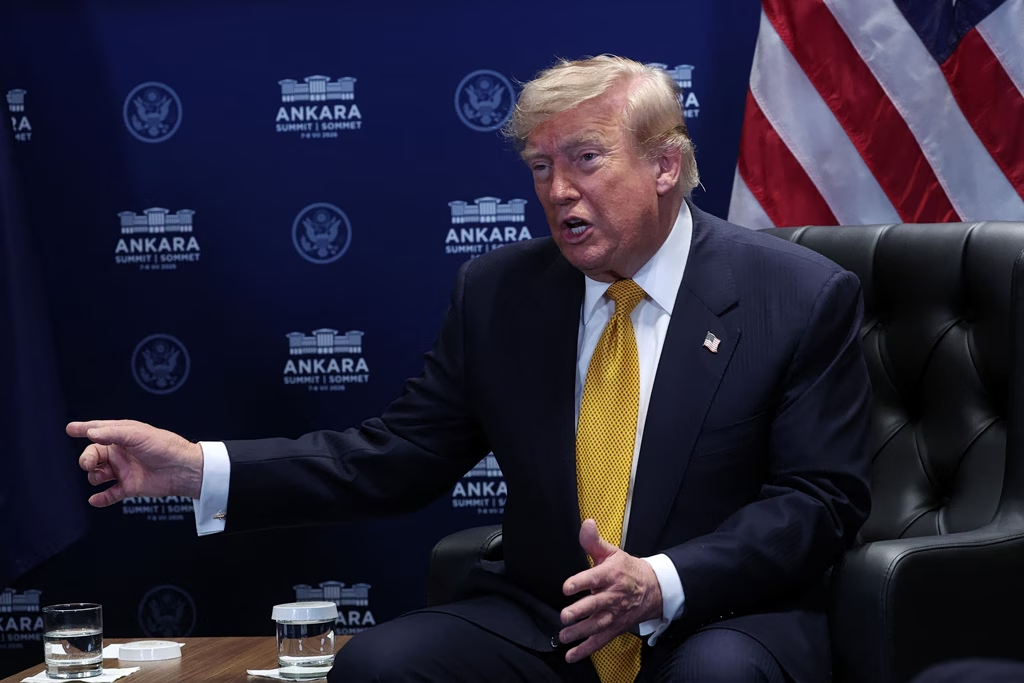

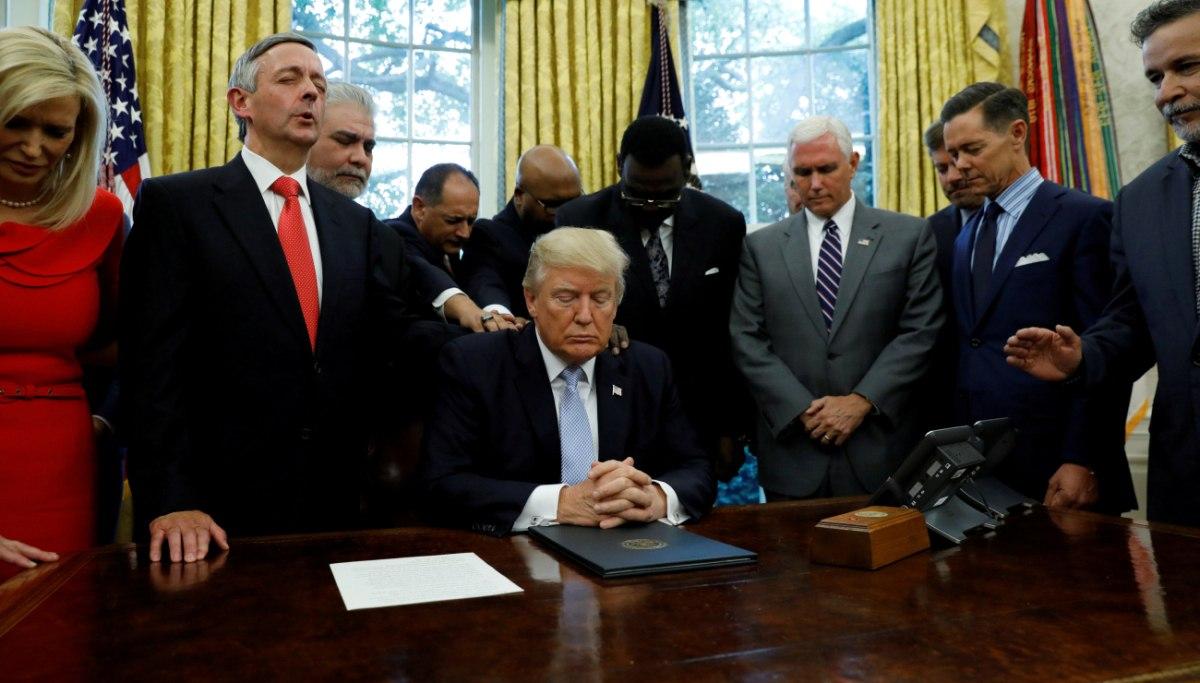
On May 1, 2025, U.S. President Donald Trump signed an executive order on the White House lawn, inaugurating a new “Religious Freedom Commission.”
That day, the old form of the American religious right came to an end. For decades, the so-called “religious right” was based on a Christian nationalism that wanted God in schools, public life, and the law. It was theocratic—it believed that the state should follow the dictates of the Church.
What Trump is creating now is something entirely different. This new religious right does not aim to bring the state closer to the Church.
Quite the opposite: it puts the Church at the service of the political agenda of American nationalism. Not God, but America—and more specifically, a white, heterosexual, traditional America.
This new model is more reminiscent of Putin’s Russia than of a democracy with a separation of church and state. There, the Church does not guide politics. Instead, it serves state propaganda.
Trump’s new commission is part of this plan. Instead of promoting partnerships to address global problems (as previous presidents have done), it aims to prepare a “official report” on the history of religious freedom in America — but based on an ideological, not theological, perspective.
This new idea of “religious freedom” is not about protecting the religious rights of everyone. On the contrary, it has been used to deny services to gays, women, or vaccinated people in the name of religion. In fact, it is a political weapon to fight social progress.
The Commission’s Strange Composition
Trump’s 39 appointments to the committee are revealing. Not a single traditional Protestant is included.
Instead, they are dominated by evangelical Christians, conservative Catholics, Orthodox Jews, Muslim converts, and even the Greek Orthodox Archbishop.
Traditionally, the dominant religious groups in America have been moderate Protestants, who support the separation of church and state. Their absence here shows how different this new “religious right” is.
The explanation that Protestants are absent because they have become more liberal is not enough. There are still conservative voices among them. Their exclusion means that the new movement is not based on theological or traditional values — but on cultural siege.
It is united by a sense that traditional society is under threat, particularly around issues of gender, sexuality, and race.
Trump has presented this new interfaith alliance publicly, at his rallies, and he is reinforcing it with appointments, events, and political rhetoric. This is not an alliance that returns to tradition. It is a movement of radical transformation.
How does this new “religion” work?
The old religious right started with theology and ended up in politics. Now the opposite is happening: politics dictates a new “theology.”
Trump is presented as the savior of America — not of souls, but of the nation. Even his sexual transgressions are forgiven, because — as his supporters say — he has been “sent by God” to save the country.
A typical example is Ismail Royer, one of the three Muslim appointees to the commission. Royer has previously been convicted of ties to a terrorist organization and served more than 10 years in prison. Now, he heads a group for “Islamic religious freedom.” Despite his extreme positions in the past, he has been accepted because he shares the new nationalist narrative.
This new form of “religion” is not aimed at strengthening faith. It is aimed at strengthening political power. It uses the symbols and rhetoric of faith to promote a nationalist vision.
And because it does so in an interfaith guise, with people from many different religious traditions, it becomes even more difficult to confront.
It is not the Church entering politics. It is politics masquerading as the Church.
