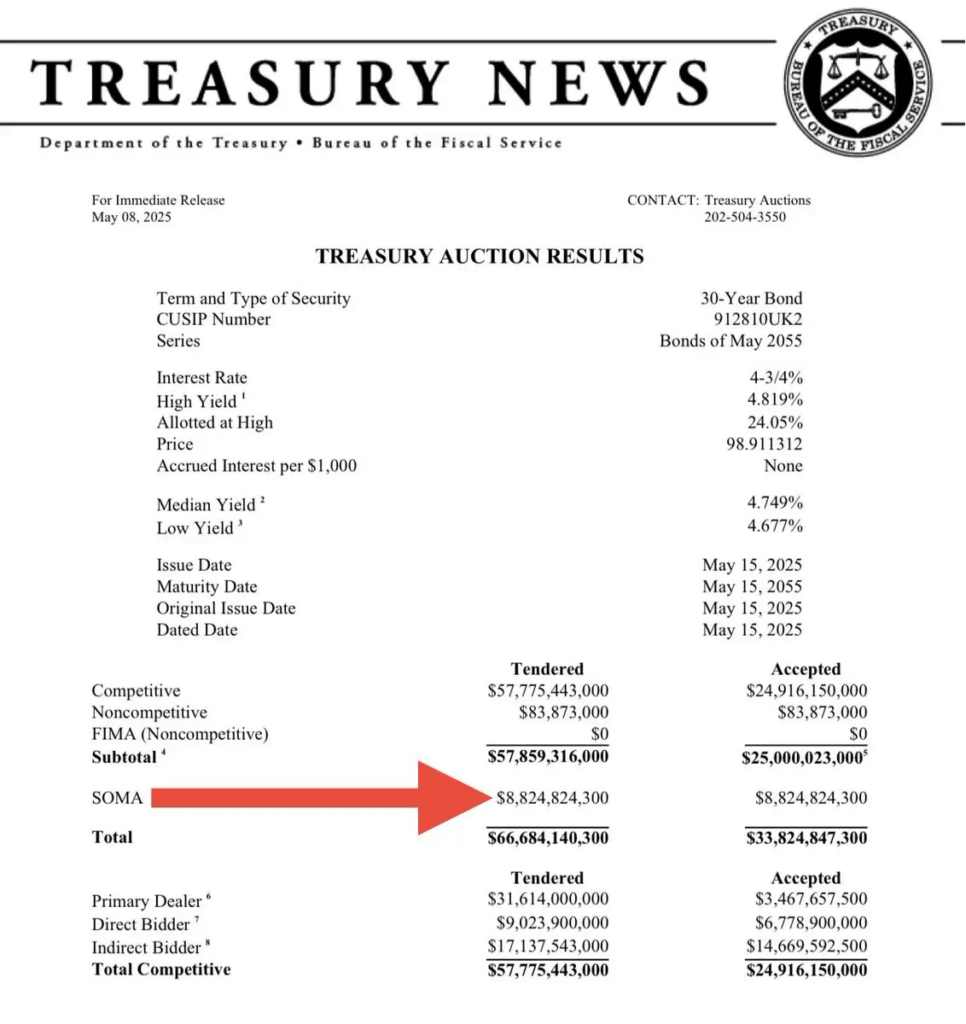
The US Federal Reserve has quietly made a major move — in four days last week, without any publicity, the Fed has withdrawn $43.6 billion in US Treasury bonds.
That’s $8.8 billion in long-term 30-year bonds on May 8 alone, plus another $34.8 billion earlier in the week. Not exactly small change.
Quietly returning monetary policy to the bottom of quantitative easing is not the Fed’s standard practice — it’s like a bank robber returning to the scene of the crime because he forgot his car keys.
Let’s be blunt: This is not tightening. This is insidious easing. This is monetary policy… on tiptoe.
Gold, the metal of ultimate economic cynicism, has been tumbling since early 2024. Gold doesn’t believe in politicians, central bankers or economists – not even the Ivy League guys who wave their hands and promise stability. It believes in numbers. But this isn’t just a U.S. game.
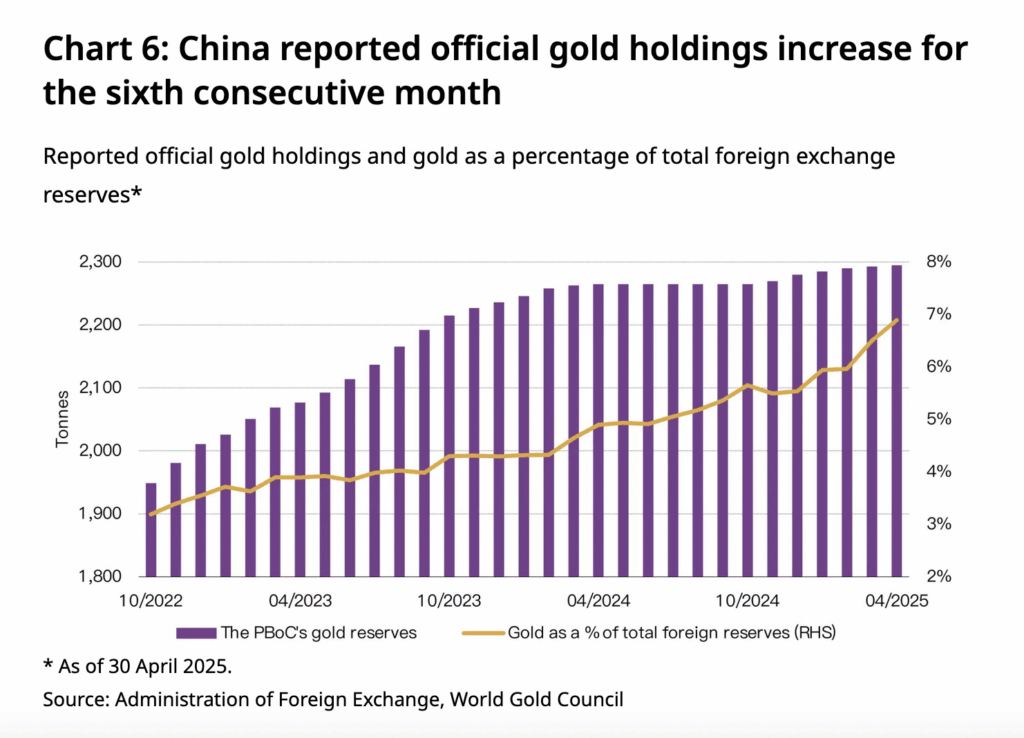
China has also been in the gold pit, and it’s bringing a bigger shovel. China’s central bank just opened the treasury doors by dramatically increasing its gold import quotas, allowing local banks to exchange dollars.
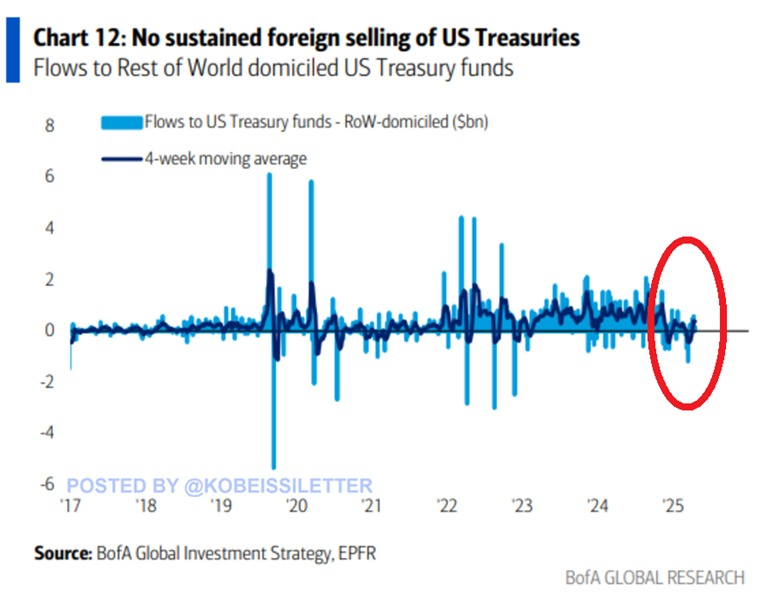
This is China silently saying that holding all those U.S. bonds is starting to look less like a prudent investment and more like… roulette while the house burns down. We should think about it: Even if China were to convert a modest 10% of the $784 billion Treasury reserve it held in February into gold, it would send shockwaves through global markets. China isn’t hoarding gold because it matches the curtains — it’s preparing for a monetary earthquake.
The Tectonic Shift
Central banks around the world are doing the same. America just imported a mountain of gold. Nations are preparing for the next tectonic shift in global monetary power.
Gold and Bitcoin are also responding to these developments — bitcoin because cryptocurrency investors don’t trust central planners; gold because central planners don’t trust each other.
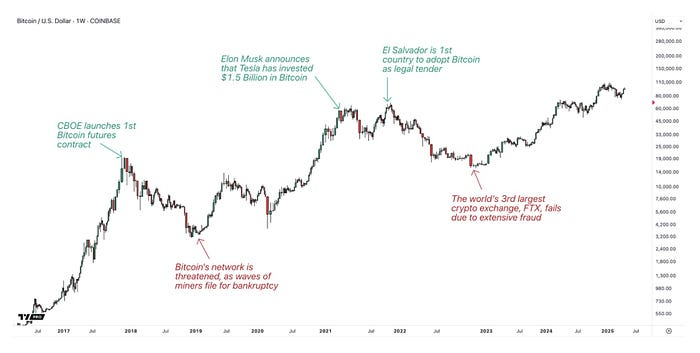
Bitcoin is the behind-the-scenes asset that respectable investors pretend not to see. Bitcoin is rising, not just because of distrust of central banks and the little fiat-currency Ponzi schemes they’ve been running for years — but also because a year ago, bitcoin experienced its last halving event, pushing it into a typical four-year bull run. There are others.
The Bitcoin Strategic Reserve
The Trump administration, previously wary of cryptocurrencies, has made a major shift in direction by creating a U.S. strategic bitcoin reserve — a move that signals institutional confidence that bitcoin is not just a speculative fad, but an asset worthy of strategic importance.
In addition, institutional and retail capital is flowing into bitcoin ETFs — bolstering bitcoin’s legitimacy as a mainstream financial asset.
If the Fed continues to quietly push the quantitative easing button, bitcoin could become the investment equivalent of a… burrito at a convenience store — volatile but satisfying.
For investors willing to bet on the Fed’s recent move, opportunities abound — particularly in places with tangible assets buried beneath their feet, such as the commodity-rich economies of Latin America and Brazil, an economic powerhouse enjoying a commodities-fueled bull run. This year, for example, the iShares MSCI Brazil ETF has gained about 24%. This is not frivolous speculation.
These are strategic positions that are being leveraged to take advantage of Fed-induced dollar weakness and rising commodity prices.
Brazilian commodities are like beachfront property when a hurricane is brewing offshore — a perfect location if you’re on solid ground and prepared for the storm season.
The Fed’s covert quantitative easing is the opening act in a larger economic drama. Gold is rising, bitcoin is gaining legitimacy, and resource-rich economies like Brazil are poised to benefit.
Central bankers usually have less of a clue than professional poker players, but right now they’re shaking. And quiet central bank moves often precede big market moves.
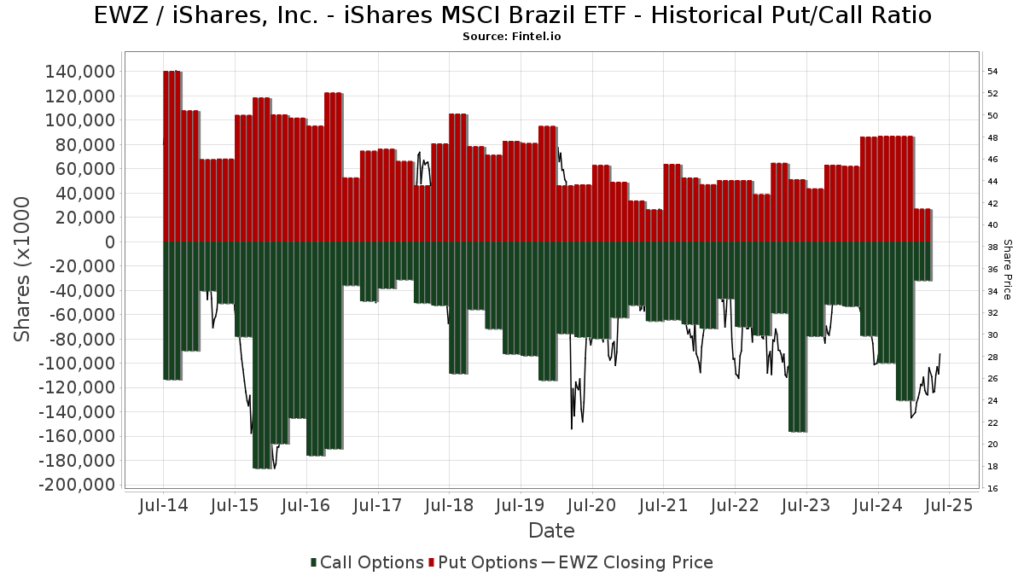
Gold, bitcoin, and Latin American markets have already enjoyed impressive returns, but the Federal Reserve’s discreet shift toward quantitative easing suggests those gains could accelerate.
While quantitative easing typically supports U.S. stocks, this quiet move — amid declining confidence in fiat currencies and rising geopolitical tensions — uniquely positions gold, bitcoin, and Latin America as key safe havens and profitable opportunities in an impending economic storm.
Investors who pay attention now — before the rest are up in the air — have the best chance of reaping these outsized returns.