

The global economy is one step away from a serious crisis, which will start again in the United States but this time will concern the country’s excessive public debt, warns Trust Economics in a report.
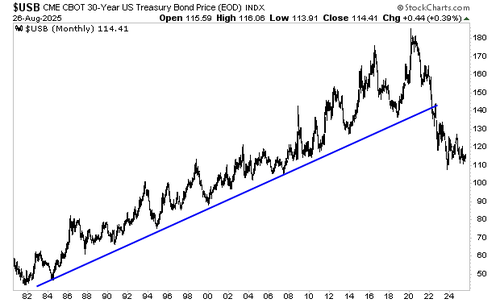
The American economy is facing a significant turning point, which does not just concern interest rates or debt, but the entire lending system that has supported the markets for almost half a century. One particular graph, that of the yields of the 30-year US bond, is now sounding the alarm: the long-term decline in yields has come to an end and is paving the way for a completely new, more expensive borrowing regime.
From 1980 to 2022, the world experienced one of the longest periods of falling interest rates in history. US Treasury bond yields have been steadily falling, making borrowing costs increasingly affordable for US businesses, local governments and households.
This has led to an explosive increase in total debt:
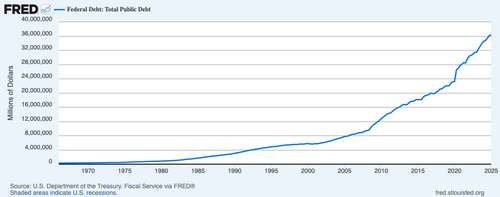
1. Federal debt: from $10 trillion in 2008, it doubled in less than 15 years and is expected to reach $40 trillion within the next two years.
2. Corporate and municipal debt: increased to record levels, respectively.
3. Household debt and other loans (student, car, etc.) also saw spectacular increases.
Overall, the US now has more than $100 trillion in debt of all types in circulation,” Trust Economics reports. However, it emphasizes that 2022 was a turning point.
The return of inflation in the US, after decades of subdued inflationary pressures, caused bond yields to rise sharply. This marked the end of the bond bull market. Since then, the bond market has been in a consolidation phase – yields have been moving within a narrow range with no direction. This period, although it has lasted since 2022, is simply a harbinger of a big change.
Rising yields mean that the cost of borrowing in the US is rising.
- For the government, it means higher costs to service its huge debt.
- For businesses and households, more expensive money limits the possibility of new investment and consumption.
The US “financial supercycle” of cheap bonds has finally ended and a new period of successive increases in borrowing costs is beginning.
The US federal debt is the most critical problem. The speed with which the debt is growing is unprecedented:
- From 10 trillion to 20 trillion took almost 15 years.
- From 20 trillion to 30 trillion it took just 5 years.
- The forecast for 40 trillion within the next 2 years is now realistic.
Maintaining this course is becoming increasingly expensive for the state. The inability to issue new debt at low interest rates could lead to a global financial crisis.
- The US bond market is the core of the global financial system. Banks, investment funds, insurance companies and governments use US bonds as a key reference point.
- The safety and solvency of Treasury Bonds allows cheap money to flow worldwide.
Any doubt about the US ability to manage its debt can cause panic and ripples in all markets. All this leads to a possibility that cannot be ignored: the onset of the greatest financial crisis in recent decades, the note concludes.