


On April 25, the former Chief of the Armed Forces of Ukraine (2021–2024) and current Ambassador of Ukraine to the United Kingdom, General Zaluzhny, delivered a particularly interesting lecture at the Royal United Services Institute in London. His topic: the changing nature of modern warfare, based on the experience of the Russian-Ukrainian conflict.
Whether Zaluzhny himself wrote the thesis of the speech or whether he was assisted by experienced military analysts – perhaps from abroad – remains unknown. What is certain is that his presentation was structured, thorough and impressively to the point. So much so that the well-known Russian website BMPD (which operates under the auspices of the Russian Center for Analysis of Strategies and Technologies) deemed it appropriate to publish the entire text of the speech, describing it as “undoubtedly interesting.”
It is worth noting that Zaluzhny’s views on key issues largely coincide with those of the former Chief of the General Staff of the Russian Armed Forces (2004–2008), General Yuri Baluevsky, who published a corresponding analysis in late 2024 in the Russian magazine Army Standard.
Thus, we have the rare opportunity to compare the assessments of two important military leaders – from opposing sides of the war – regarding the form, development and results of the operations so far.
The common ground of the two analyses
As Zaluzhny pointed out in London,
- From the very beginning of the war in Ukraine, “drones appeared in the sky, completely transforming the architecture of combat.”
- Unmanned reconnaissance and attack aircraft, as well as drones that coordinate artillery fire, combined with operational awareness systems, made the battlefield completely transparent.
- The possibilities for precision strikes at the tactical level have skyrocketed.
- Drones now strike not only at the front line, but also in depth, making it impossible to hide equipment or reserves.
- This has led to the formation of a “zone of absolute death” 10–15 kilometers in front of the front line – a zone that is constantly expanding. Now, a drone can target not only armored or concentrated troops, but even individual soldiers.
General Baluevsky had made
- a similar point more than a year earlier, noting the “unprecedented transparency” of the battlefield, the result of an extensive and constantly developing system of reconnaissance and target designation – primarily through drones and satellites.
- “The abundance of unmanned vehicles allows for practically uninterrupted surveillance of the battlefield at all levels, down to individual soldiers,” he says.
- This almost completely eliminates the traditional “fog of war” and dramatically speeds up the process of identifying and neutralizing targets.
- The phenomenon of transparency is not limited to the tactical level, but also touches the operational and strategic spheres, allowing for critical strikes in depth.
- With a self-critical attitude, Baluevsky acknowledges that Russian military theorists underestimated the pivotal role of drones in planning the operation in Ukraine – although there were already indications of this since the second Nagorno-Karabakh war in 2020.
The Critical Shift in the Philosophy of War
Both generals agree that the transparency of the battlefield is forcing military forces to completely change their methods and means of action.
Baluevsky admits that, due to the impossibility of massing large troops without becoming a target, traditional practices such as mass transportation and deployment of forces must be abandoned.
Instead, war must now be waged by small, agile units – something that requires a complete overhaul of organization, equipment, logistics and technological support.
Tanks, once a symbol of power, are now vulnerable to mines and recognizable by drones, forcing crews to use them like artillery – from a distance and at close range.
Baluevsky summarizes: “Armored vehicles, which have been the backbone of offensive operations since 1915, are now defenseless against cheap drones – and therefore, their use becomes impossible in modern war conditions.”
Aviation at a dead end
Both generals also agree that air power is facing new, difficult challenges.
Baluevsky emphasizes that the classic use of aviation – such as mass raids or offensive operations – has lost its significance due to strong and unneutralized air defense.
Zaluzhny notes that “the sky above the battlefield is now inaccessible to manned aircraft, which now operate in support of air defense.”
The air force must be completely redesigned, so that it can operate from new distances and with new missions.
Understandably, there could not be absolute agreement. Baluevsky strictly limited himself to technical military analysis. In contrast, Zaluzhny, as a serving diplomat with ambitions for the presidency of Ukraine, did not fail to convey political messages.
He urged the audience to see the changes not only as technological developments, but as indications of the need for a comprehensive revision of military doctrine, the structure of the armed forces and the defense planning of states.
He concluded with a warning: “Whoever advances first – systematically and qualitatively – into the new military-technological era will gain a strategic advantage and impose his will on the adversary.”
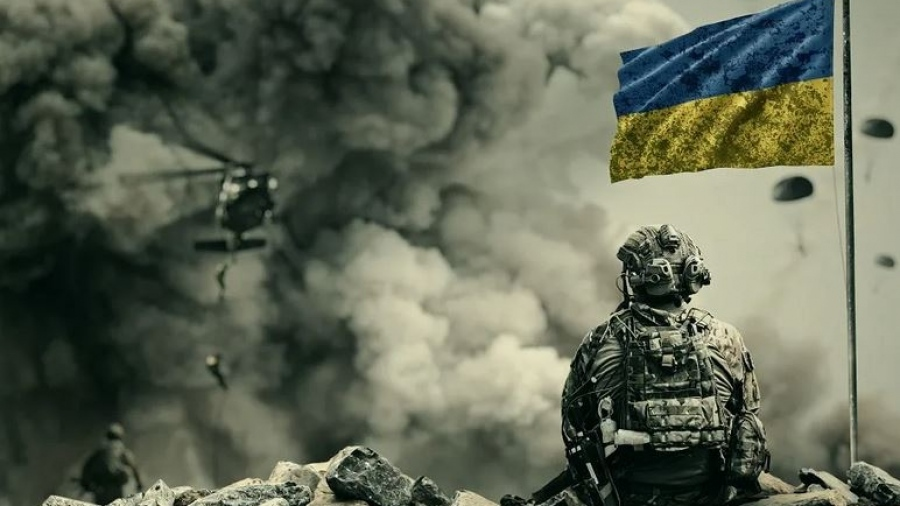
Hell for 60 days – Russia activates Plan B with 8 shock targets
The fateful moment has arrived for Ukraine. The US has recorded the impasse in the peace negotiations between Russia and Ukraine and has effectively withdrawn.
After this, Putin, the Russian President, has only one option: to proceed with Plan B. The war in Ukraine has proven that the tactics of war, the methods of waging a war have changed radically.
Drones and electronic warfare are of tremendous value, although artillery, aviation and the regular army will always play a crucial role in waging a war.
However, the war in Ukraine has turned into a war of drones and all war manuals obviously need to be rewritten.
Ukraine is attacking with drones, most of which may be shot down, but apparently some disrupt Russia’s air defenses, causing local devastation. The Storm Shadow and Neptune missiles have proven ineffective in practice.
On the other hand, the destructiveness of Russian attacks is greater because it combines drones, missiles, electronic warfare, glide bombs and other means.
A Ukrainian strike, as military analysts have emphasized, can destroy 20% of the target, while a Russian strike can destroy 70% of the target.
In terms of terrain and what is really happening on the front, drones can eliminate the possibility of surprise since they are constantly flying and immediately warn.
Many wonder, since the Russians have such great superiority on the ground in terms of army and artillery, which is an indisputable fact, why haven’t they finished off Ukraine?
The answers are as follows:
A) Drones monitor all the movements of the opponents 24 hours a day, thus preventing surprise.
The Russians ended Kursk because 880 Russian soldiers entered a natural gas pipeline, in a pipe 1.40 meters high and 15.5 kilometers long that the drones obviously could not see.
B) Drones are responsible for 70% of Ukrainian and Russian casualties and only 30% artillery and glide bombs and aviation.
Simply, missiles hit specific targets, not so much human resources, except for the Iskander M, which also hits human concentrations.
C) The territories claimed by the Russians are historical, so they do not want to destroy large cities.
E.g. some villages and towns that have no historical value, for example, they destroyed them like Toretsk, but they don’t want to destroy Odessa or Zaporizhia. They want them almost intact. All this slows down the advance, which is clearly in favor of Russia. Every month Ukraine loses 400 to 500 square kilometers of territory and this advance may not be considered terrifying, but it is consolidated, at the same time the Russians are also building structured lines of defense in case of a future Ukrainian counterattack.
D) In terms of tactics and organization, the Russian army model has proven to be clearly more effective than the NATO model, which is based on outdated and obsolete methods.
- Russia rejected the American proposals for peace – It did the right thing because they were incompatible with logic
- Russia is clear that it demands that the Ukrainians surrender all the historical territories of Luhansk, Donetsk, Zaporizhia, Kherson and that the Ukrainian army be reduced to 85,000 men 110,000 in common Russia demands the unconditional surrender – capitulation of Ukraine.
- The White House stated that the US is “tired” of seeking a ceasefire between Russia and Ukraine and is “washing its hands” immediately after approving the agreement with Ukraine on natural resources.
- The US side will not act as a mediator in resolving the crisis.
- Now it is up to Russia and Ukraine to present concrete ideas on how this conflict should be ended,” the US side stressed.
- The Russian side rejected the US proposals because they presented Ukraine not as a loser but as a country that has conditions in the framework of peace, and obviously Russia would never accept this.
The Russians have planned a plan B with a possibility of activation within 3 to 5 weeks
- According to sources, since the beginning of 2025, the head of the Russian Ministry of Defense, Belusov, has had the so-called “Plan B” “on the table” – this is a scenario of a harsh and decisive defeat of Ukraine.
- It is only waiting for the signature of President Putin.
- The Western intelligence services are aware of the existence of Russia’s plan B and are literally trembling since it will mean the quick end of Ukraine…
- According to sources, the corresponding plan is at a high level of readiness and can be put into operation within three to five weeks after the official recording of the failure of the negotiation process.
- As for Russia, it expects to end the active phase of the conflict within 60 days, after activating plan B….it will be 60 days of hell that no man has ever seen… it will be a terrible hell… of historic proportions.
“Plan B” Awaits Only Putin’s Signature
Russia’s Plan B: A Quick and Hard End to Ukraine – Major Counteroffensive with 380,000 to 450,000 Troops, Zelensky’s Elimination, Control East of the Dnieper
Meanwhile, Russia has made it clear that Ukraine belongs to Russia, not the West, and will implement the final plan or Plan B, which includes a quick and hard end to Ukraine with relentless bombing and, most importantly, a large and coordinated offensive of 380,000 to 450,000 Russian troops aimed at hitting Sumy, Kharkiv, Dnipropetrovsk, Zaporizhia, and Kherson.
“The main elements of this plan include:
1) A large-scale Russian offensive into Ukraine with 380,000 to 450,000 Russian troops aimed at striking Sumy, Kharkiv, Dnipropetrovsk, Zaporizhia and Kherson.
The offensive will likely begin in late May 2025 and the priorities will be Sumy, Dnipropetrovsk where there is no Ukrainian defense, and the city of Zaporizhia.
2) Targeted elimination of key figures in the Ukrainian leadership.
It includes Zelensky, the head of the SBU, high-ranking military commanders and ministers, through coordinated attacks with high-precision weapons and the work of special forces.
3) Destruction of critical infrastructure facilities, with an emphasis on nuclear energy, which remains under Ukrainian control, with the aim of causing energy, humanitarian and administrative collapse on a national scale.
Weapons will be used for the first time in this plan.
4) Destruction of the logistics hubs of the Ukrainian Armed Forces, including the borders with Poland, Romania and Slovakia, in order to stop the supply of Western weapons.
This scenario is at a high level of readiness and could be implemented within three to five weeks after the official failure of the talks.
5) Complete occupation of all territories in the historical regions.
In Donetsk, they will take Kramatorsk and in the south the city of Zaporizhia.
6) The Russians will create a security zone 80 kilometers deep on Ukrainian territory, in northern Ukraine in the Sumy and Kharkiv regions where the Russians are advancing with great success especially in Sumy.
Obviously Dnipropetrovsk will be turned into a neutral zone and also the Odessa and Mykolaiv regions in southern Ukraine.
7) The final plan is that all the territories west of the Dnieper River will be Ukraine and all the territories east of the Dnieper River will be Russian along with the neutral zones.
The Russians are not stepping on it again, the West laughed at them twice already and now they know, Ukraine is Russian and will remain Russian, they will not allow NATO games. In fact, the Russians officially warned that if the West dares to send peacekeepers, the Russians will kill them, they will be a legitimate target.
8) Russia will demand after all this the capitulation of Ukraine, which will include a surrender – Japan-style – unconditional.


