



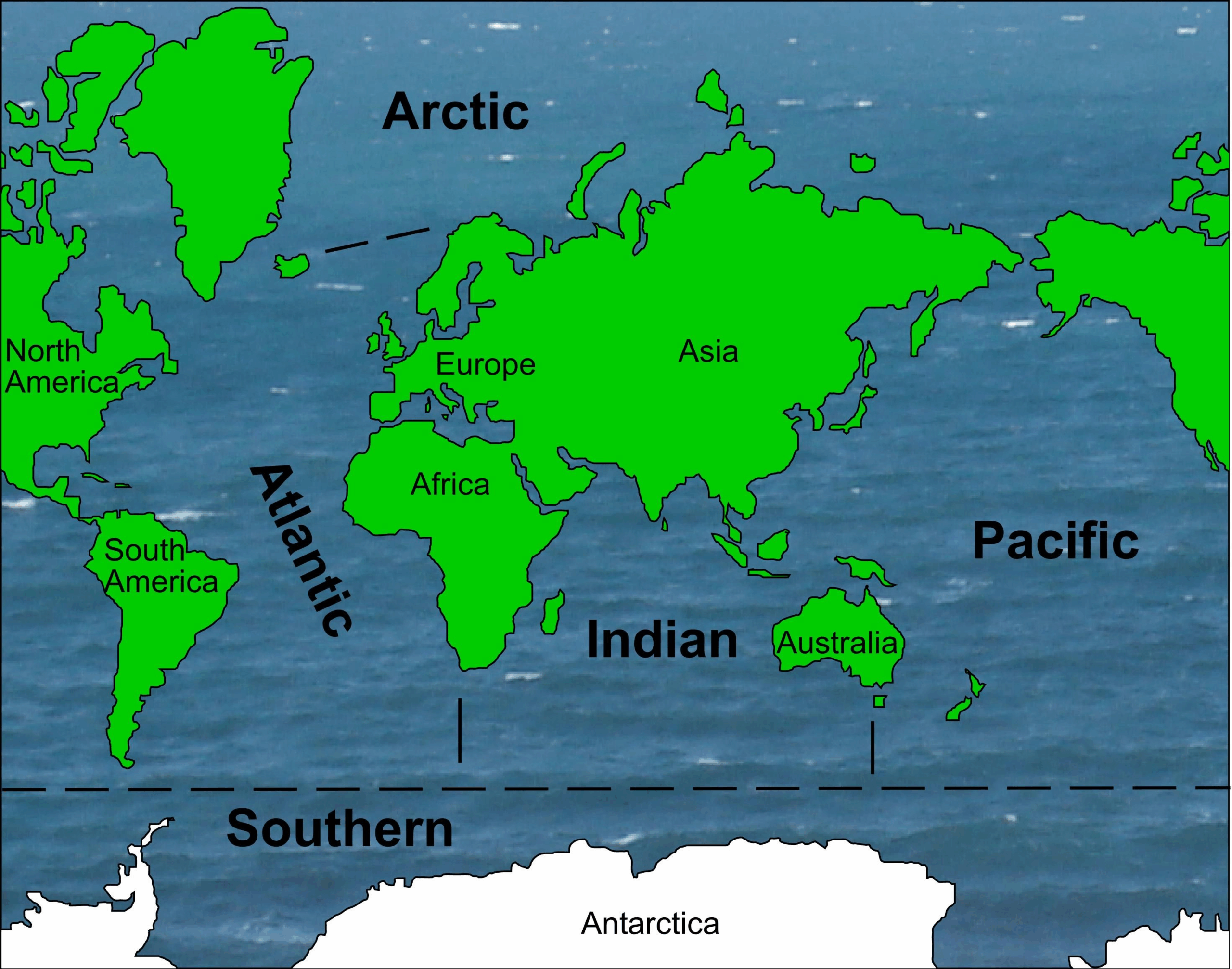
If the oceans were a country, they would be the fifth largest economy in the world. It is indicative that from 1995 to 2020 the oceans accounted for 3% to 4% of the planet’s global gross value added (GVA) and up to 133 million jobs (full-time equivalents or FTE).
These calculations were made by the OECD in its latest report on the Global Ocean Economy by 2050 (The Ocean Economy in 2050), which also states that the oceans:
- They cover 71% of the Earth’s surface.
- They contain 90% of the biosphere.
- They provide food security to over 3 billion people.
- They enable the transport of over 80% of the world’s goods.
- They host submarine cables that carry 98% of international internet traffic.
These are the main reasons why if they were a country, the oceans would be the fifth largest economy in the world based on 2019 figures. Today, the largest countries by GDP are the US with $27.72 trillion, China with $17.8 trillion, Germany with $4.52 trillion, Japan with $4.2 trillion and in fifth place is India with $3.56 trillion. The top ten are rounded out by Britain with $3.38 trillion, France with $3 trillion, Italy with $2.3 trillion, Brazil with $2.17 trillion and Canada with $2.14 trillion. Greece is in 54th place with a GDP of $243 billion.
Oceans: The data
The data on the ocean economy is revealing. The global ocean economy doubled in real terms in 25 years, from $1.3 trillion in 1995 to $2.6 trillion in 2020, recording an average annual growth rate of 2.8% over this period.
As the OECD points out, if these historical trends continued, the global ocean economy could almost quadruple by 2050 compared to 1995.
Tourism, renewables, oil, gas. Tourism and offshore oil and gas extraction generated about two-thirds of the total gross value added from the oceans. However, the distribution of the workforce varied widely, the OECD analyzes: Marine and coastal tourism was the largest employer in the ocean economy, while offshore oil and gas extraction generated high economic output but relatively low employment. Economic output from shipbuilding and offshore wind energy also expanded rapidly, although from a smaller base.
In particular, marine coastal tourism with a value of $789 billion (2019 data) and offshore oil and gas extraction with $988 billion (2020 data) had the largest share of total gross value added from the oceans, according to the OECD.
Offshore wind and marine renewable energy experienced an average annual growth rate of 31%, with global gross value added (GVA) increasing from US$38 billion in 2000 to US$4.6 trillion in 2020, the OECD notes.
Employment levels in the ocean economy have remained relatively stable, peaking at 151 million full-time equivalents (FTEs) in 2006. They then declined to 101 million in 2020 due to the COVID-19 pandemic and have been recovering since then.
More than 75% of global ocean economic growth between 1995 and 2020 came from countries in Asia and the Pacific, the OECD reported. East Asia alone accounted for 56% of global ocean economic expansion, while Europe and North America experienced slower growth, it noted.
The People’s Republic of China, the United States, Japan, Norway and the United Kingdom had the largest ocean economies in absolute terms on average over the period. However, countries such as Norway had the highest share of their ocean-based economy overall, highlighting regional disparities in reliance on the ocean economy, it noted.
Two scenarios for growth
Different paths to a global energy transition will affect ocean economic growth in different ways. Under an accelerated transition to low-carbon energy, the ocean economy would continue to grow by 2050 to about 2.5 times its 1995 level, the OECD estimates. In such a scenario, “the composition of the ocean economy would change, with marine and coastal tourism remaining dominant and offshore oil and gas extraction declining as a share of the total global gross value added of the ocean economy.”
A deadlocked transition scenario could lead to a decline in overall ocean economic activity from the level reached in 2020, mainly due to a combination of a lack of investment in productivity and increasing negative impacts of climate change in many parts of the ocean economy,” it notes.
Climate, trade, geopolitics
Specific adverse forces could slow or even reverse the growth of the ocean economy by 2050, if policy measures are not taken, is the bell that rings the Organization. Factors such as
- population growth,
- climate change and other environmental pressures,
- trade and globalization,
- energy transition,
- technological progress and geopolitical dynamics – along with their interactions are highlighted.
All of these factors will shape the health of the oceans and the future growth trajectory of the ocean economy. These qualitative and quantitative projections factor in climate change, energy transitions and advances in science, technology and innovation as key drivers of such growth, it notes.
Declining productivity and digitalization gaps will also shape the future potential of the ocean economy, the OECD warns. “While some ocean economic activities outperformed the average growth of the sector between 1995 and 2020, multi-factor productivity declined in more than half of the ocean economic activity groups analyzed (…) There was evidence that ocean economic activities are not fully leveraging their strong productivity drivers to prepare for an increasingly automated future,” the OECD says.
Environmental challenges
Maritime economic activity faces increasing threats from overexploitation of natural resources, illegal activities, biodiversity loss, pollution, sea level rise, ocean acidity, heat waves and numerous and intense extreme weather events.
For these reasons, taking immediate action is considered vital to address the risks. Strengthening scientific management of the oceans is considered key to addressing the growing risks. Policymakers are called on to strengthen national ocean strategies, marine spatial planning and marine protected areas. They are also called on to implement international agreements on biodiversity, climate, fisheries subsidies and decarbonisation of maritime transport.

