

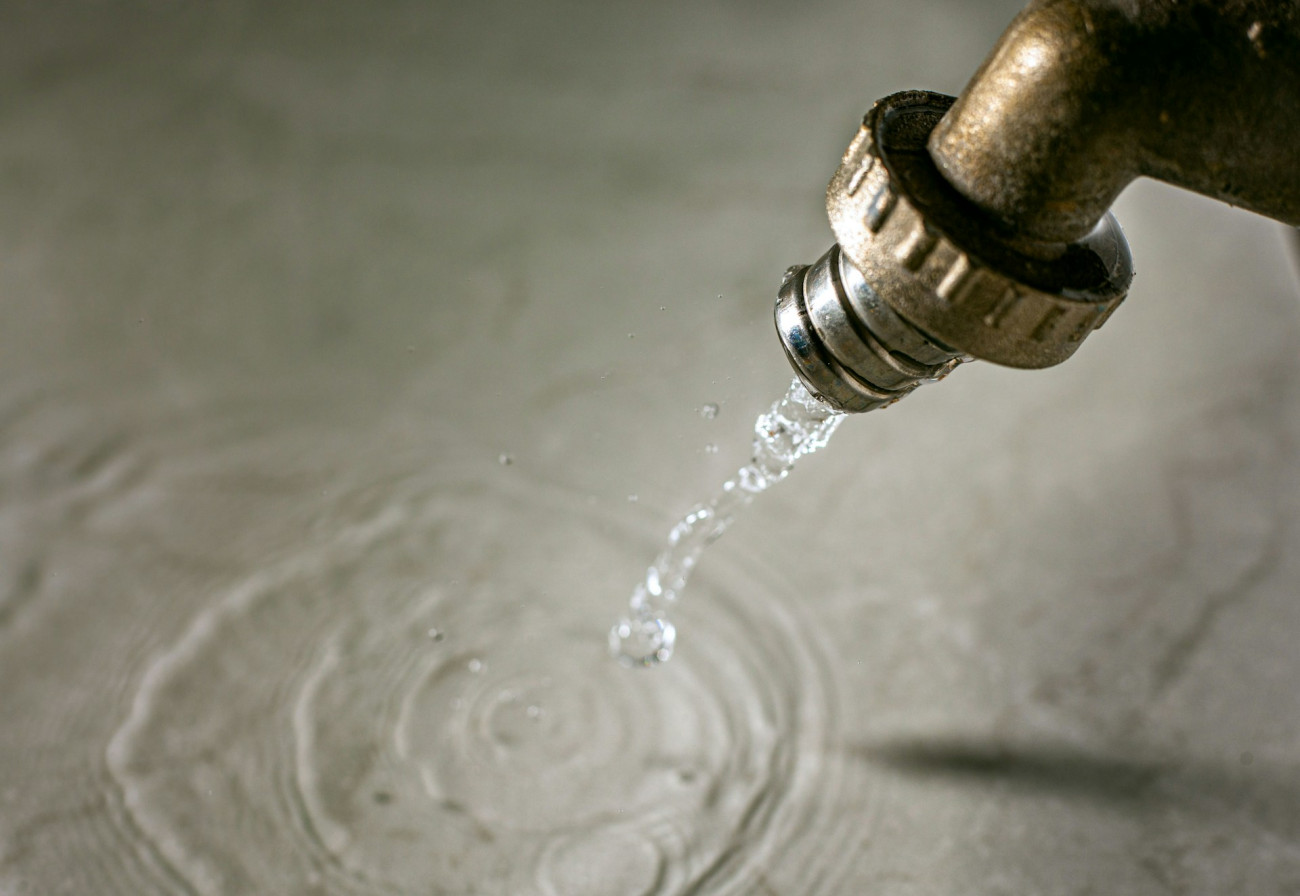
Europe has recently put all its weight on its energy stabilization and has left the ever-worsening water shortage uncontrolled. Drought is a major challenge and is closely linked to climate change. The latest report from the European Drought Observatory presents a worrying picture in southern, eastern and central Europe.
The Iberian Peninsula is facing the most critical conditions with several red warnings arriving as a result of alternating periods of drought and heavy rainfall in winter and spring. In 2023, Spain already has the largest area affected with 34,000 square kilometers, followed by Poland with 24,000 and Lithuania with 20,000.
Orange warnings also for areas in other European countries
At the same time, orange warnings are in place for areas of Italy, Greece, Cyprus, Poland, Belarus, most of Ukraine, as well as Ireland, Scotland and a few parts of Germany and France.
In 2024, Greece experienced a severe drought, with October being the driest in the last 15 years. The lack of organized irrigation networks and outdated irrigation methods seem to be exacerbating the problem.
Cyprus is facing a critical situation
According to the latest Water Exploitation Index, freshwater consumption has reached a record level of 5.8% of total available resources. Values above 20% are generally considered an indication of water scarcity.
Cyprus is facing by far the most critical situation, with 71% use of freshwater resources, followed by Malta and Romania with 34% and 21% respectively.
Latvia, Croatia, Sweden, Slovakia, Lithuania, Slovenia, Finland and Luxembourg recorded values below 1%, indicating that they are not in water stress conditions.
The “culprits” for water consumption
Looking at the trend over the decade 2012-2022, Italy sees the highest growth rate in freshwater use with an increase of almost 7%, followed by Turkey with almost 6% and Malta with 4%.
“By mid-century, the frequency and intensity of heat waves and droughts are expected to increase in most parts of Europe,” says the European Environment Agency. “Therefore, it is important that land management practices are adequately and timely adapted and that EU and Member State adaptation strategies are effectively implemented.”
At the same time, orange warnings are in place for areas of Italy, Greece, Cyprus, Poland, Belarus, most of Ukraine, as well as Ireland, Scotland and a few parts of Germany and France.
In 2024, Greece experienced a severe drought, with October being the driest in the last 15 years. The lack of organized irrigation networks and outdated irrigation methods seem to be exacerbating the problem.
Cyprus is facing a critical situation
According to the latest Water Exploitation Index, freshwater consumption has reached a record level of 5.8% of total available resources. Values above 20% are generally considered an indication of water scarcity.
Cyprus is facing by far the most critical situation, with 71% use of freshwater resources, followed by Malta and Romania with 34% and 21% respectively.
Latvia, Croatia, Sweden, Slovakia, Lithuania, Slovenia, Finland and Luxembourg recorded values below 1%, indicating that they are not in water stress conditions.
Wastewater is not a problem
At their latest meeting, the Med9 countries – France, Croatia, Cyprus, Greece, Italy, Malta, Portugal, Slovenia and Spain – presented ideas for tackling drought, such as smart irrigation systems, crop protection technologies, water-saving systems, as well as genetically modified crops.
But the European Investment Bank believes that the key is to step up wastewater recycling. “More than 80% of wastewater is wasted,” said the bank’s water expert, Maria Diamanti.
“Wastewater is not a problem. It is an extremely valuable source of water, nutrients and energy. We need to change the way we treat it and make the recovery of wastewater resources a priority,” he adds.
Plans to tackle the problem
The EU committed to 33 actions related to drought resilience, as part of the UN Water Conference. Spain and Italy introduced water management plans in 2023, including desalination plants and consumption restrictions. In Greece, the need to modernise irrigation networks is urgent.
Experts from the EU’s Joint Research Centre (JRC) described the 2022 drought as the worst in 500 years, with 47% of the EU in a state of warning and 17% on alert. Rivers, agriculture and energy production, especially hydroelectricity and nuclear power plant cooling, were affected. Scientists warn that without significant rainfall, the situation could worsen in the summer of 2025, particularly in the Mediterranean.
