

Tech giants such as Motorola, Cisco, Microsoft and Palantir sell “Information Fusion Systems” to governments around the globe. These “Information Fusion Systems” can directly integrate monitoring data from thousands of different sources, and this has completely transformed the way law enforcement is conducted.
How this information is accumulated
As you drive to work or school to take your children, license plate readers systematically track where you are travelling. Thousands of state-of-the-art security cameras that include facial recognition technology are even found in small towns that monitor people is every move.
by Thanos S. Chonthrogiannis
©The law of intellectual property is prohibited in any way unlawful use/appropriation of this article, with heavy civil and criminal penalties for the infringer.
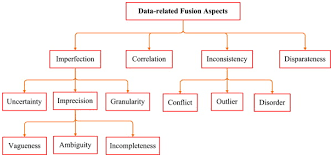
Photo by the webiste www.sciencedirect.com
If something suspicious comes up, the authorities can in no time bring to light the criminal, financial and medical records of each citizen. Of course, personal devices like phones, and PCs can provide a huge amount of surveillance data.
An example of such an “information fusion system” is Genetec’s Citigraf. Το Genetec Citigraf is a decision support system that unifies public safety operations across city departments, disseminates timely information and provides greater situational awareness and which is used by the city of Chicago.
The software of this information fusion system operates a series of algorithms that detect the city’s historical police records and is powered by live information sourced through specific live sensors, looking for patterns and connections.
Within seconds of starting their investigation, the user is shown a large list of possible potential suspects and not just on the screen. This list includes several people who had previously been arrested at specific locations for violent crimes, their home addresses, along with photographs and car license plate numbers, etc.
At the same time, such systems can if asked by the data entry to find the file of any resident of the city, his associates both in the past and current.
How does the future of citizens’ lives be predicted in the face of the monitoring of
Of course, it is not only the US and China that use this type of ‘Information Fusion Systems’ but also the EU that funds the well-known Roxanne citizen surveillance system.
It is a real time network, text, and speaker analytics for combating organized crime with aim to facilitate the identification of criminals. Roxanne is funded by EU Horizon 2020 and will develop a platform that will increase agencies’ capabilities via voice recognition, language, and video technologies.
At the same time, the system could monitor those guilty of alleged hate speech and political extremism. In fact, it also acts as a system for tracking “thinking criminals”, monitoring social media such as Facebook, YouTube, and regular telecommunications platforms.
In this way, authorities can draw primary data from various sources and platforms to identify common speech patterns, facial features, and geographical location, both in order to identify suspects and to create a complex picture of the networks placed under the microscope.

