



Until now, the question has been whether Trump was primarily negotiating or whether he really wanted to bring the biggest disruption to the global economy in decades.
We are referring to the way he announced aggressive tariffs against almost all the countries with which the US does business. Including some islands near Antarctica that are mainly inhabited by… penguins.
And which amounted to a gravestone for what we used to call globalization.
Which explains why all those who supported him were very quick to express their complete disagreement.
Because all these billionaire friends of his are not willing to suffer the consequences not only of the tariffs but also of the side problems such as the massive sale of US government securities.
This may explain the rollback and the announcement that the implementation of the new tariffs is being postponed for 90 days in most countries.
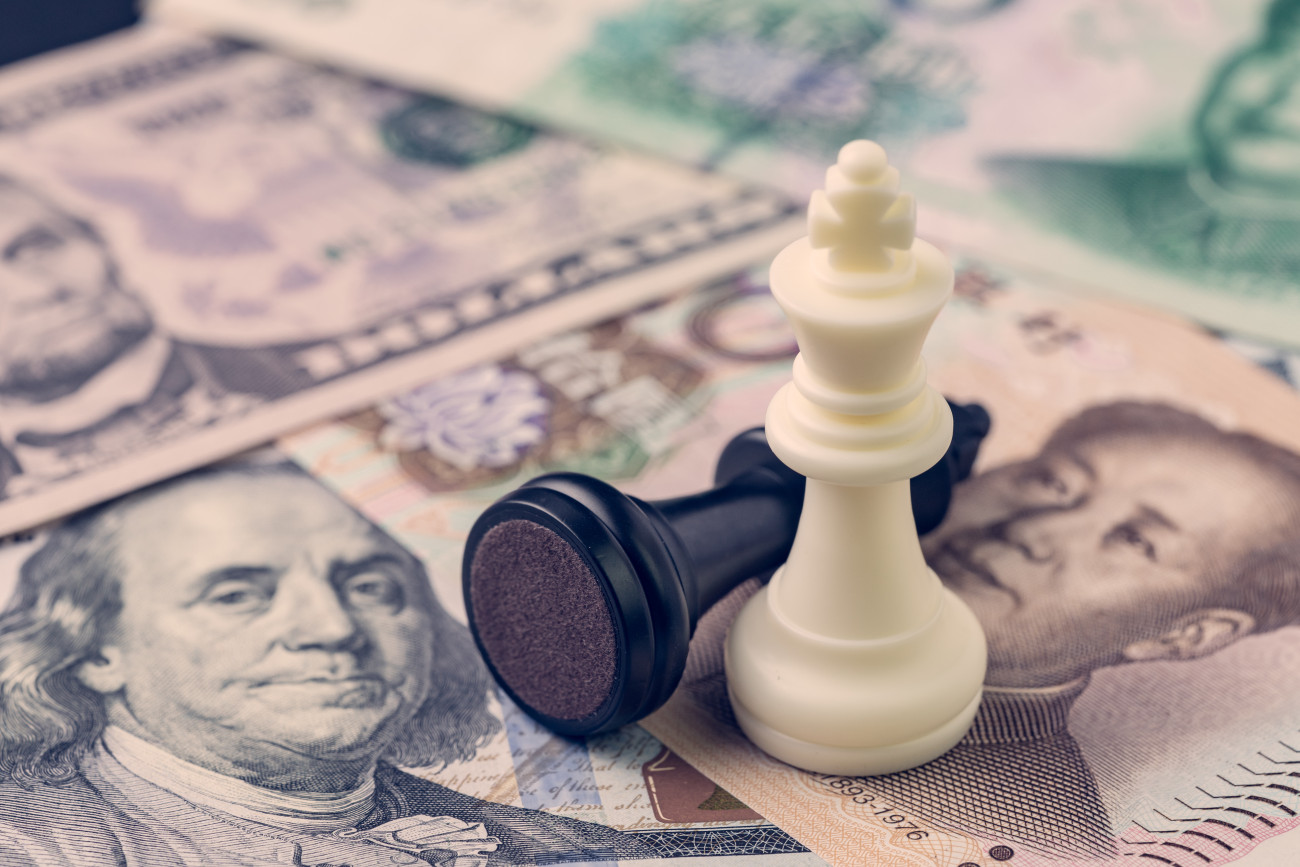
However, there is one country for which the tariffs were not suspended: China.
To a certain extent, the move seems to “make sense”. China is the US’s major trade competitor.
The US trade deficit with China is a reality that hurts the US economy.
In a sense, jobs were lost in the US because products could be produced more cheaply in China.
However, this was not the result of some conspiracy on the part of China.
It was the choice of American companies to stop producing various products in the US, because they could be produced much more cheaply in China.
And that is precisely the problem with Trump’s choices. Especially when they involve a more comprehensive change and not just his beloved “art of the deal”, that is, the sometimes erratic tactics he adopts in the effort to achieve a “good deal”.
Because the American economy has been shaped for decades on the basis of the political choice that a number of products, including components of American-made products, were preferable to be produced in China.
What changed was that China at some point ceased to be simply the country of “cheap labour” and became the second economy in the world and therefore de facto the economic power par excellence that could compete with the USA.
A situation has been created where the US is now the one that depends on cheap imports from China.
In this context, the trade war seems “reasonable”, but things are not that simple.
Because when a country has such large trade deficits in transactions with another country, imposing tariffs is not certain that things will change. They may seem like a “show of strength”, but in reality China’s negotiating power is much greater, as it is the US that needs Chinese products and not the other way around.
To put it simply, among other things, the US should be able to produce everything that will no longer be imported from China.
However, this is currently bordering on the impossible. Which means that Trump’s choices have a real cost for the US. For consumers and for businesses.
Because they will simply buy more expensive products.
And China will have a cost since it will inevitably see its exports to the US decline.
However, it can probably withstand this treaty. At a time when the US clearly has neither a plan nor a strategy to replace cheap imports from China.
On the contrary, China can use this special treaty to argue that it is the force that is truly in favor of “globalization”.
And this explains why while there was a positive reaction to the suspension of tariffs for other countries, from a certain point onwards, the realization that tariffs in relation to China are being strengthened led to a new round of concern about the prospects of the American economy, the largest in the world. America’s uneasiness is also visible in the palindrome, such as not imposing tariffs on mobile phones and computers from China, at least temporarily.
Because issues like trade deficits are ultimately about whether countries can make cuts in labor productivity and the production model, not whether they can manipulate the terms of international trade.
And all of this is not simply addressed with additional tariffs.

