


In 2010, as the Type 23 frigates were approaching the end of their operational life, the Royal Navy decided to replace these frigates with a new class of frigates in two different versions, one Anti-Submarine and one General Purpose. The new class of frigates to be built under the “Global Combat Ship” program would consist of 13 vessels and was named the Type 26 City Class. However, due to the high cost of building the Type 26, it was decided in 2015 to build only eight frigates of the anti-submarine version. Nevertheless, this new class, even before the first ship entered service, managed to acquire export customers, constituting a commercially successful frigate design already from the “drawing room”. The Type 26 was selected, as the River Class, by the Canadian Navy to acquire a total of 15 ships to replace the Halifax-class frigates and by the Australian Navy, as the Hunter Class, to acquire 6-8 ships to replace the Meko ANZACs. In the three versions of the Type 26, the hull and propulsion system remain common, with the differentiation mainly being in the electronics and weapons systems. The construction of the first frigate of the British Navy began in 2017 and the first ship is expected to be delivered in 2027 and the total of eight ships to be delivered by 2035.
The Type 26 was designed as the ultimate anti-submarine frigate that would replace the corresponding Type 23 frigates of the Royal Navy. As is known, the Type 23s were built in the 1990s as hunters of Soviet submarines that would try to enter the Atlantic Ocean. Thus, the new Type 26s will have as their primary role anti-submarine operations, flanking the Type 45 anti-aircraft destroyers and the Type 31 General Purpose frigates. Nevertheless, the Type 26s are ships capable of full-spectrum operations, undertaking high-intensity missions in all latitudes and longitudes of the globe. The need to replace the Type 23 frigates at the same time as the need to increase the capacity due to the constantly developing and increasingly sophisticated threats of the British fleet, determined the requirements for enhancing the ASW, Anti-Air Warfare (AAW) and Anti Surface Warfare (ASuW) capabilities of the new frigates. In addition, the flexible joint capability (e.g. Special Forces, Cyber, Information, Surveillance, Target Acquisition and Reconnaissance (ISTAR), Command and Control) should be improved and increased global availability achieved, together with a more cost-effective change management or new technology introduction methodology that would provide a more flexible platform over the life of the ship. It was also a prerequisite that the Type 26 comply with all relevant safety and environmental legislation in force at the time of construction, including compliance with the International Maritime Organization (IMO) Tier III for NOx emissions and the latest Royal Navy survivability and stability standards.

The requirement for increased anti-submarine capabilities was the main factor in designing the hull and selecting the ship’s propulsion system so that it has a very low sound signature. In this context, a special design of the hull has been made to smooth the water flow, while a stern flap has been added, which also contributes to noise reduction and fuel consumption. At the same time, additional care has been given to the design of the various systems to reduce the noise produced. Also, as in the Type 23, electric propulsion and a fixed-pitch propeller have been adopted. The fixed-pitch propeller is correspondingly larger than the corresponding variable-pitch propeller for the same performance and rotates at a lower speed. This has the advantage of simpler system construction and minimizing cavitation, resulting in quieter sailing. The ship has an overall length of 149.9 meters, a beam of 20.8 meters and a displacement of around 6900 tons. To keep the center of gravity low, the main mast is made of composite materials. The Type 26 has a basic crew of 157 people, but has significant free space for another 50 people who can be additional crew or Marines, or other specialties depending on the mission. The ship’s crew accommodations consist of spacious accommodations that have been designed from the beginning for both men and women. The other two versions of the Type 26 will be larger in dimensions and displacement due to changes mainly to the main mast. The Canadian frigate will have a length of 151.4 meters, a beam of 20.75 meters, a maximum draft of 8 meters and a displacement of approximately 8000 tons. Correspondingly, the Australian frigates will have a length of 151.4 meters, a width of 21.4 meters and a full load displacement of approximately 8800 tons.
The propulsion system is of the CODLOG (Combined Diesel-Electric Or Gas) type, where electric propulsion is used for medium and low speeds up to 18 knots and the single naval gas turbine is used to achieve the maximum speed of 28 knots. Since the propulsion system remains the same in all three versions, the increased weight of the Australian and Canadian frigates is reflected in the maximum speed that these two ships can achieve. The electric propulsion is done with two 3.4MW electric motors coupled to the two shafts of the ship which receive an electric load generated by four MTU 20V 4000 M53B diesel electric engines which deliver 3015 kW at 1800 rpm. each. The air turbine is the MT30 of Rolls-Royce and delivers 36MW at 3600 rpm. and an ambient temperature of 38oC. The MT30 comes from the Trent 800, a civil use Turbofan aero engine and they have 80% common elements. The ship’s systems management system IPMS (Integrated Platform Management System) will be from L3Harris.

Armament
It has a large-caliber 127 mm naval gun in the bow. On the ships of the British and Australian navies the gun chosen is the Mk45 Mod4 127/62 of Bae Systems while for the ships of Canada it is the Leonardo OTO Melara 127mm with Vulcano missiles. The gun has the ability to put conventional or extended-range ammunition. Behind the main gun are the vertical missile launchers. In the British version the ship will carry a total of three eight-fold MK41 vertical launchers in the bow and 48 vertical launchers of the Sea Ceptor system for CAMM anti-aircraft missiles. The Sea Ceptors are divided into two systems of 24, the first in the bow in front of the MK41 and the remaining 24 behind the funnel. The MK41 vertical launchers can carry a variety of different payloads such as the VLA ASROC, SM-3, SM-6 and in the future the Anglo-French FCASW (Future Cruise and Anti-Ship Weapon) missile under development. This particular missile will be released in two versions and is intended to replace both the SCALP/STORM Shadow and the MM40 EXOCET in the future. The cruise version will have a high subsonic speed while the Anti-ship version will be a supersonic missile with great maneuverability. Theoretically, the ship in anti-aircraft version will be able to carry up to 144 CAMM missiles. In the Australian version, the ship will carry four eight-stage MK41 launchers for ESSM Block 2, SM-2 and SM-3 missiles. The Canadian version will carry three eight-stage MK41 launchers for ESSM Block 2 and SM-2 missiles.
Regarding the attack on surface ships and ground targets, the three versions will carry three different anti-ship missiles. The British frigates will be equipped, as mentioned above, with the FCASW (Future Cruise and Anti-Ship Weapon), while the Canadian frigates will be equipped with eight Kongsberg NSM missiles and the Australians with eight Boeing RGM-84 Harpoon missiles. For anti-ship defense, the British and Australian ships will carry two CIWS Mk15 Block 1B Baseline 2 Phalanx systems mounted amidships on either side covering an arc of almost 360 degrees, and the Canadians will carry a Mk49 RAM launcher with 21 RIM-116 missiles mounted above the helicopter hangar. For anti-submarine operations, the ships have dual torpedo tubes for American Mk54 light torpedoes and European MU90. The helipad can support the landing of a heavy Chinook helicopter, while the hangar can accommodate a Merlin-sized helicopter. The armament is complemented by two remote-controlled 30mm cannons (DS30M Mk2 in the City Class, Typhoon Mk30C in the Hunter Class & Lionfish 30mm in the River Class). As a last line of defense against incoming threats, the ships have different systems to deal with these threats. The British frigates have the IRVIN-GQ DLF-3B floating Decoy against incoming missiles and Seagnat countermeasure launchers. Against torpedoes they have the Sea Sentor Surface Ship Torpedo Defence system from Ultra Electronics. Accordingly, the Australian frigates have the Nulka system and the Canadian frigates the Nulka system as well as the Sea Sentor against torpedoes.

Electronics
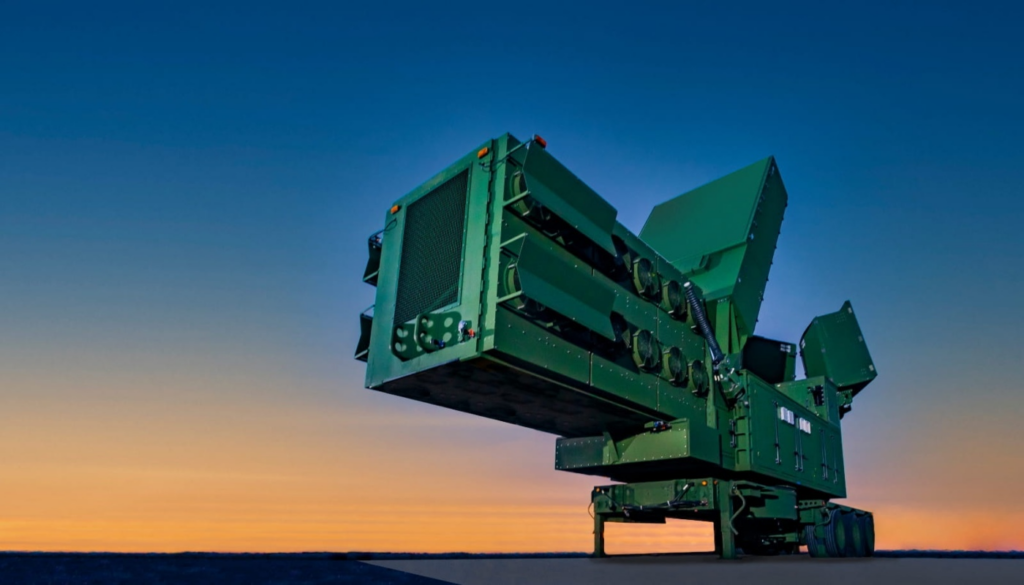
The main sensor of the British frigates is the three-dimensional Artisan 997 radar from Bae Systems, which has a range of over 200 kilometers and can track up to 800 targets. The ship’s Combat System will be of open architecture also developed by Bae Systems. Accordingly, in the Australian frigates, the main sensor is the CEAFAR 2 radar and the Aegis combat system. The installation of CEAFAR required changes to the ship’s main mast as well as to the electrical installation and cooling systems so that the increased weight and increased energy and cooling requirements could be supported. For stability reasons, a partial redesign of the hull was also required. More specifically, its width was increased to the maximum design from the main deck to the maximum draft. The above changes resulted in an increase in displacement compared to the original design. To keep the weight of the new mast and the center of gravity low and within acceptable limits, the mast will be made of aluminum alloys. On the other hand, the Canadian frigates have been equipped with the AN/SPY-7 V(3) radar along with the Aegis combat system.
For anti-submarine warfare operations, the ships have a full A/V warfare system with hull sonar and a retractable array at the stern. The hull sonar is common to all three versions and is the Type 2150 from Ultra Electronics. This sonar is active/passive and operates at frequencies of 5kHz-12kHz in active mode and at frequencies of 2kHz-8kHz in passive mode. The maximum range of the Type 2150 is 72,000 yards or over 65 kilometers. The converged device is the Type 2087 variable depth sonar which is essentially the Thales CAPTAS 4 in British service. This particular device will be carried by the British and Australian frigates while the Canadian Navy has chosen the LTFAS of Ultra Electronics. Regarding the electronic warfare systems, there is no information except that the Canadian frigates will carry the ESM AN/SLQ-32(V)6 SEWIP Block 2 RESM/CESM system. All ships will carry a full communications system UHF, HF, VHF, SATCOM and others on the two pylons installed above a helicopter deck.
In conclusion, these ships truly have increased destroyer-level firepower and have the ability to be present on a global scale while being able to operate in the full spectrum in high-intensity operations. Their firepower is orders of magnitude superior to the ships they are to replace, resulting in a significant increase in firepower and operational capabilities for the three navies that are to enter service in the near future. Of course, these are three countries with a vast operational scope that extends across the three major oceans of the planet.