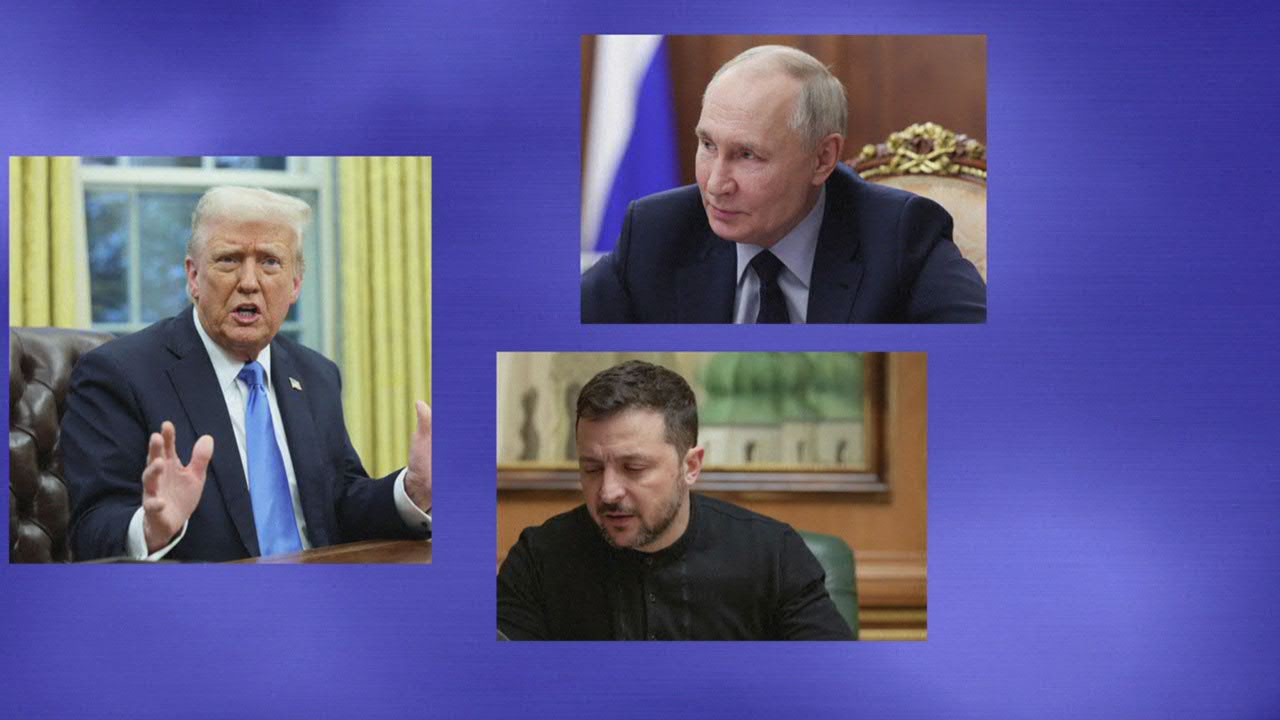
Russia has responded negatively to the recent US proposal for a 30-day ceasefire in the war with Ukraine, explaining that such a temporary cessation of hostilities would offer only a “breather,” a momentary, tonic operational respite for the Ukrainian armed forces.
Yuri Ushakov, foreign policy adviser to President Putin and former Russian ambassador to the US, stated unequivocally that: “…Moscow seeks a long-term peace agreement, which will take into account Russian concerns and Russian interests.” According to him, “…the proposal was probably designed for this very purpose,” namely to give the Ukrainians at the front a breather and to regroup, as they are being pressed militarily both in eastern Ukraine and on the Kursk front.
And the hourglass of History is emptying……
The Berlin Congress of 1878—where Russia’s unparalleled battlefield triumphs were overturned in a diplomatic ambush orchestrated by (then) Great Britain, Austria-Hungary, and the cold calculation of Chancellor Bismarck—is being repeated today, as President Trump plays the role of the reasonably restrained, “honest and sincere broker,” ensuring that the fate of the disorganized Ukraine is determined not solely by war, but by the paranormal and irrational “necropolitical” calculation of empire, where survival is logically distributed, national sovereignty is an illusion, and power belongs only to those who decide who must perish and who is allowed to remain. It is recalled here that “Necropolitics” is a sociopolitical theory by the African (Cameroonian) historian and political scientist Assil Bebe about the use of social and political power to dictate how some people can live and how others should die.
A century and a half ago, blood was spilled in the East like an overgrown tide that did not know how to recede. The Russo-Turkish War (Русско-турецкая война) of 1877-78 had reached its peak and the Russian army, steeled after numerous violent battles in the Balkans, was a remarkably short distance from Constantinople – the “Tsargrad” of its dreams. The Ottoman forces suffered a crushing defeat at Pleven (Plevna) in Bulgaria, where its European sectors quickly fell to Slavic rebels and became the domain of the unstoppable Russian bayonets. Only two days of march remained before the Russian troops raised their victorious banners beside the “Golden Horn” (the Golden Horn), the strategic natural harbor of Constantinople, which for centuries had protected the city’s naval defenses. But, as history dictates, the march of the sword was stopped by the intrigues and machinations of diplomacy. Russian victory was very close, but, as the great German political theorist Carl Schmitt (1888-1985) reminds us, “diplomacy is never neutral.”
In his essay-lecture “The Age of Neutralizations and Depoliticizations”, written in 1929 (which he himself added to the 1932 edition of the infamous “The Concept of the Political”), he severely criticized liberalism. He criticized it for pretending that all persons and all perspectives had an alleged “right” to equal presence, so that conflicts of perceptions and visions, of individuals and collectivities, could and should evolve through peaceful confrontations controlled by rules, legislative evaluations and courts!
Schmitt particularly complained about the way in which the formations we call the media, the means of shaping the “social train,” endlessly published, in myriad variations, and promoted this false vision, effectively depoliticizing politics. He argued that politics could never be replaced by the liberal process of anti-natural and anti-historical artificial social coexistence of individuals, social groups, and nations. Real politics was essentially a means for a person or group to crush its enemies or to be crushed by them.
The Spanish diplomat and writer Don Juan Donoso Cortés (1809-1853), Marquis de Valdegamas, is one of those rare figures whom academics have difficulty fitting into any conventional category. A prominent Spanish figure – politician, journalist, philosopher, and theologian – Donoso emerged in Europe as one of the most astute, if idiosyncratic, and precise diagnosticians of the post-French Revolution era. Donoso Cortés’s volatile and multifaceted life and thought entered strongly into the fluid and impressive kaleidoscopic world of nineteenth-century Europe, whose political and ideological intrigues, the “intrigues,” shaped Donoso’s own diplomatic and religious ambitions. He was polyglot, highly observant, inquisitive, and prophetic in foreseeing a fusion of pan-Slavic nationalism with socialism (which was unleashed by the Bolsheviks).
Schmitt borrows from Donoso Cortes his reticence about the role of Russia and the Slavic peoples. Cortes was the first, as early as 1848, to introduce Russia and the Slavic element as decisive for future developments in the next century. In the opening sentence of “The Age of Neutralizations and Depoliticizations” he clearly states that: “…we in Central Europe live under the gaze of the Russians. For a century the psycho-examining eye has seen them through our grand words and institutions. Their vitality is strong enough to seize our knowledge and technology as their own weapons. Their capacity and talent for rationality and its opposite, as well as their potential for good and evil in orthodoxy, are overwhelming. They have realized the union of Socialism and Slavism…”
“…This is our situation. We can no longer say anything worthwhile about culture and history without first knowing our own cultural and historical situation. ….. Diplomacy is war by other means, a field where the victors are often those who do not fight.”
Britain, alarmed by the prospect of Russian dominance in the Balkans and a possible Russian fleet in the Mediterranean, moved quickly. The British Mediterranean Fleet entered the Dardanelles, signaling that any further Russian advance would face war. Russia, militarily exhausted after years of violent conflict and heavy losses, found itself unable to risk another conflict. Austria-Hungary, fearful of growing Russian influence in the Balkans, also threatened military intervention. Germany, which Russia had expected to support its position, instead played Bismarck’s cold balancing game, siding with Britain and Austria to ensure that no single power would dominate Europe. Diplomatically isolated and without allies to support her, Russia had no choice but to submit to the “Congress of Berlin” of 1878, where her victories were used as … spoils in a backroom deal.

The “Congress of Berlin” was an extremely important international political conference, a “summit”, that met in Berlin and lasted one month (June 13 – July 13, 1878). This conference was convened under the chairmanship of Chancellor Bismarck and attended by delegates from England, Austria-Hungary, France, Italy, the Ottoman and Russian Empires and four Balkan states (Serbia, Montenegro, Greece and Romania), with the aim of defining the borders of the states of the Balkan Peninsula after the Russo-Turkish War of 1877-78.
At the Berlin Congress, intensive multifaceted diplomatic activity developed, the main goal of which was the overthrow of the “Treaty of San Stefano”, which had been concluded just three months earlier (March 3, 1878) between Russia and the Ottoman Empire. The decisions taken by the congress in a series of protocols were subsequently formulated in the “Treaty of Berlin” (1878) which was concluded and signed on the day of its conclusion.
The “Treaty of Saint Stephen of Constantinople” was a bilateral treaty concluded between the Russian Empire and the Ottoman Empire, in the southwestern suburb of Constantinople Saint Stephen (Gesilköy), hence its name, putting an end to the Russo-Turkish War, the armed phase of which had ended with the Treaty of Adrianople (armistice treaty).
This treaty definitively reversed the consequences of the Treaty of Paris (1856), which ended the Crimean War. This treaty was signed between Russia, Great Britain, France, Piedmont and the Ottoman Empire, in an attempt to resolve the “Eastern Question” in accordance with Russian interests at that time. Specifically:
- Bulgaria was declared a large autonomous Hegemony with a total area of 163,000 sq km. including the area from the Danube to the Aegean, N.-S, and from the Black Sea to the Drinos River, E.-W., that is, except for present-day Bulgaria, part of Eastern Thrace, the region of Xanthi, the later Greek Macedonia), except for Thessaloniki, Chalkidiki, Pieria, Imathia, Grevena and Kozani, the entire present-day North Macedonia, the lakes Prespa and Ohrid, up to the territories of present-day Albania (such as Korçë).
- Romania, Serbia and Montenegro, after their liberation from Ottoman suzerainty, became independent States with the right to expand their borders by annexing neighboring regions. Specifically, Romania annexed the Parexine Dobruja but ceded Bessarabia to Russia. Serbia expanded southward and annexed the cities of Niš, Leskovac, and Novi Pazar. Montenegro tripled in size and gained access to the Adriatic Sea.
- Herzegovina and Bosnia also became autonomous, although permanently separated from the Ottoman Empire but under the tutelage of Austria (in return for its non-participation in the war against Russia).
- For the large island of Crete, this treaty provided for the application of the “Organic Charter” of 1868. A similar organization was also planned to be introduced for Epirus, Thessaly and other Greek departments of the Ottoman Empire, since a special committee was appointed to study the details of this Organization, however (according to the text of the treaty) it was clearly defined: “Before implementing these, Turkey will consult Russia”. Russia also ensured the return to it of all the territories it lost in the Crimean War, as well as territories in the Caucasus and Armenia, where it re-annexed large areas with the cities of Batum, Bayezid, Kars and Ardahan.
Namely: The Treaty of San Stefano, which had granted Bulgaria almost complete independence and massively expanded Russian influence, was rewritten under pressure from Britain and Austria. The new Treaty of Berlin limited Bulgarian autonomy, returned much of the Ottoman territory that Russia had liberated, and reduced Russian dominance in the Balkans. Britain, having done nothing more than threaten, profitably got rid of Cyprus, while Austria-Hungary took control of Bosnia-Herzegovina. Russia, though diplomatically humiliated, accepted this setback out of necessity: War with Britain and Austria would have been suicidal. New revolutionary unrest arose at home, and the Tsar calculated that Russian interests could be advanced by patience rather than direct confrontation.
Schmitt would indeed have laughed at the childish naivety of those who still believed in justice as something other than an expression of force. The “Politics” is about the ability and the consequent right to decide, and those sitting at the table had already decided: Russia could fight, but she could not rule.
Schmitt’s “friend-enemy” distinction reveals that the real struggle for power is not decided on the battlefield but afterwards, where the victors define the new political order, determining who retains their legitimacy and who must be restrained. Even military success can be futile if a nation is reclassified in the eyes of the dominant powers from a potential “friend” to a limited “enemy,” as Russia experienced when its battlefield triumphs were undermined by diplomatic blockade and containment at the Congress of Berlin, demonstrating that control over political decision-making—and not just military might—ultimately dictates the shape of history.
The historical past solidifies and hardens, but it remains incomplete. And now, 147 years later, it plays out again with a new troupe of imperial… addicted gamblers, savvy gamblers rolling their dice. This time, Germany’s role belongs to the United States, a nation that pretends to despise empire while it flogs itself, tied from its birth to the fabric of perpetual war, like a blundering sailor on an ocean-going sailing ship. Britain is still the cunning Albian, the ruthless and “elegant” treacherous Britain, always that hypocritical and smiling jackal, whispering in the ears of its allies while bargaining for the fate of other peoples. The Ukrainian army—now rotting, in current real time, losing ground, losing men, losing hope—limpses through the fields of the dead, and each new defeat underlines the inevitability.
The unfortunate Ukrainians have already been crushed at Shuja (located at the confluence of the Shuja and Olesnya rivers, 105 km southwest of Kursk, the administrative center of the Shuja district of the Kursk region). “Shuja”, another entry in the big book of annihilation. So now, in the name of order or peace, (or whatever other word the Overlords and their technocratic assistants use to make annihilation sound civilized), Russia is invited to the table. Not to win. Never to win, of course. But to “resolve” things, which in the lexicon of world power means diluting its power and delaying the completion of its development goals.
President Trump, a seasoned showman and presenter, takes to the stage, wearing his own version of the Bismarck mask of a reality TV “honest broker,” as if capitalism ever allowed a single honest deal! But this is also the logic of sovereignty that Schmidt described – the exception, the extraordinary, and the urgent define the sovereign, so the sovereign is the one who decides on the state of emergency, the exception of the urgent. So now Trump, playing his absurd role, holds that power. The collapse of Kiev is not just a military issue. It is an existential crisis for the liberal order, which thrives only in the presence of an external enemy who can keep it perpetually half-dead in the Intensive Care Unit of the plutocratic International Overlords.
So Trump has set up the perfect theater: First, tighten the noose on Zelensky, bring him to his knees, make him sign a contract that strips Ukraine of whatever resources it still pretends to possess. But of course in “apocalyptic,” demonic Necropolitics, consent is not real. Where the weak sign treaties not of their own free will but because their heads are already under water. The last two weeks have been a long exercise in drowning Kiev before giving it a straw to breathe through like a bombed-out Viet Cong guerrilla in the war with the US. Moscow, playing its part with admirable “clinical”
detachment, is issuing its cold ultimatum. The American delegation is broadcasting it. Kiev, overwhelmed and crushed by the pressure, capitulates instantly. The scenario unfolds.
The logic of necropolitics, as the Cameroonian Bebe, born in 1957, whom I mentioned earlier, sees it, is revealed in the otherworldly and tragicomic choreography of these negotiations. It is not just about war, but about the management of death itself, the strategic control of who is allowed to live and who is left to perish. For Ukraine, its existence depends on its usefulness to larger powers. It is a pawn whose suffering is not even a tragedy but a calculated necessity. The oversupply and withdrawal of weapons, the sharing of information, the offer of a ceasefire not as salvation but as a way to prolong a suspended state between survival and destruction — this is Necropolitics in practice.
The US does not need Ukraine to win! It only needs Ukraine not to die too quickly. The real horror is that decision-makers have already accepted Ukraine’s final demise. What is being negotiated is the pace of its demise. This is not war in the “Clausewitzian” sense, that is, a struggle between two dominant antagonists, two actors competing for victory. It is war in the “Schmittian” sense, where one side is an object rather than a subject, a battlefield rather than a combatant, more a chessboard than a player. The US is not simply using Ukraine. It is governing and regulating the conditions of its life, as well as its inevitable, sad demise. Ukraine has not learned from its traumas and horrors. Neither the ataman Bogdan Khmelnitsky, nor the genocidal Soviet famine (the horrible “Kholodomor” of 7,000,000 dead), nor the massacre at Babi Yar, nor the partisans of Simon Bandera… nothing and no one was enough to save her from the power of … the unethical actor Zelensky, who pushed her into the “beastly battle” with the Red Army.
What does the determined magician, the talented miracle worker President Trump offer? A ceasefire – a leash to hold the angry bear, if it itself accepts its bondage. Thirty days. A pause, but not really, because a pause only matters if the subject is capable of independent movement. And Ukraine is not. A brief window for reconstruction and rearmament not because America cares about Ukraine’s victory (it obviously doesn’t), but because it still needs the country as a spatiotemporal and logistical buffer against Russia.
The weapons, which have been withheld (like food deprived of a stray dog), will find their way back into circulation, a controlled trick designed to keep the corpse in convulsions, to extend the pain long enough to serve its usefulness. Also, military-political information will be restored, because an army blind to its enemy is already dead. After Shuja, even America is beginning to wonder whether this “slow-motion destruction” experiment might end sooner than expected. The subject might end before the final act is even written. The lab rat might not make it through the maze. And then what? What happens when there is no one left, no one left to fight for the supposedly “rules-based international order”?
And here is today’s Europe of forced vaccinations, illegal immigration, third-world invasion…. of Starmer, Macron, scandals, bribes… of Von der Leyen…. the great former empire of Civilization that is dying. The once cradle of humanism and science, which is masquerading as a shameless drug-addicted collection of nation-states, trying to make way for its participation in the debate. Trump, with his usual apathy and feigned indifference, shrugs and says: “sure, let them in.” But Russia – the old and experienced survivor of history – has played this game before. It will reject the ceasefire. It must reject it.
He knows that this well-crafted farce is no different from the notorious Minsk settlement, no different from any peace that is not peace, except as an alternative means of ensuring war, so that it continues under different conditions. Russia sees the trap and overcomes it. It will refuse the deal, and Trump will ostentatiously lower his hands and say, “Well, I threw my best ball! What else could I do?” A gesture for the cameras, a futile hypocritical move, an indifferent shrug of…the shoulders of history. And in the background, the ghost of Schmidt will mutter wryly: “Politics is a decision, and you, the small nation of Ukraine, have no right to decide.”
The great German historical thinker Oswald Spengler (1880-1936) foresaw this. He wrote it with the “ink of the damned,” composing a prophecy disguised as analysis, telling us that history is not progress but decline, a great disintegration of civilization pretending to be movement.
Western man, Faustian man, the heir of Apollonian man, lost in his own illusions, struggles against fate while pretending that he can still sculpt it! The circle is closed, the West is in its last stage, where its wars become mere rituals, its leaders articulate, empty figures repeating ancient mistakes with new technology. Spengler called this cycle the “winter of civilization,” this historical moment when decisions become reactions, when empires feed on their own decay.
The negotiations that have begun in Saudi Arabia are another scene in the unfolding tragedy, another setting up and dusting off the deck chairs on the Titanic of European empire that is sailing doomed to sink.
The ball is now in Moscow’s court, but the game, in a general and broad sense, has long been decided.