


The US Navy has decided to revive and upgrade the submarine surveillance program developed in the 1950s. The reason for this decision is the increasing threat from the constantly increasing qualitatively and numerically submarine fleet of the Chinese PLAN (People’s Liberation Army Navy). This program was developed in the 1950s under the term SOSUS (Sound Surveillance System) to deal with Soviet submarines. The submarine as a weapon was used extensively during World War II by the Germans and their allies and had a great impact on the Allied forces and their supply lines.
This previous unpleasant experience created the need for a system that would perform early detection of underwater threats and acquired high priority in the undeclared submarine war of the West against Soviet submarines. Before the recent revival of the program, SOSUS and later IUSS served the US Navy for about fifty years until 1998. After the collapse of the Warsaw Pact, anti-submarine warfare weakened, resulting in the closure of most bases and the transition of the system to a purely research character and a tool for marine biologists and geologists. Taking all the above data into account both at the level of the General Staff of the Navy and at the level of the General Staff of National Defense, the competent staffs are examining every possible solution in order to install a fixed array of submarine detection sensors in the Aegean Sea to the standards and with the appropriate adjustments for the Navy.
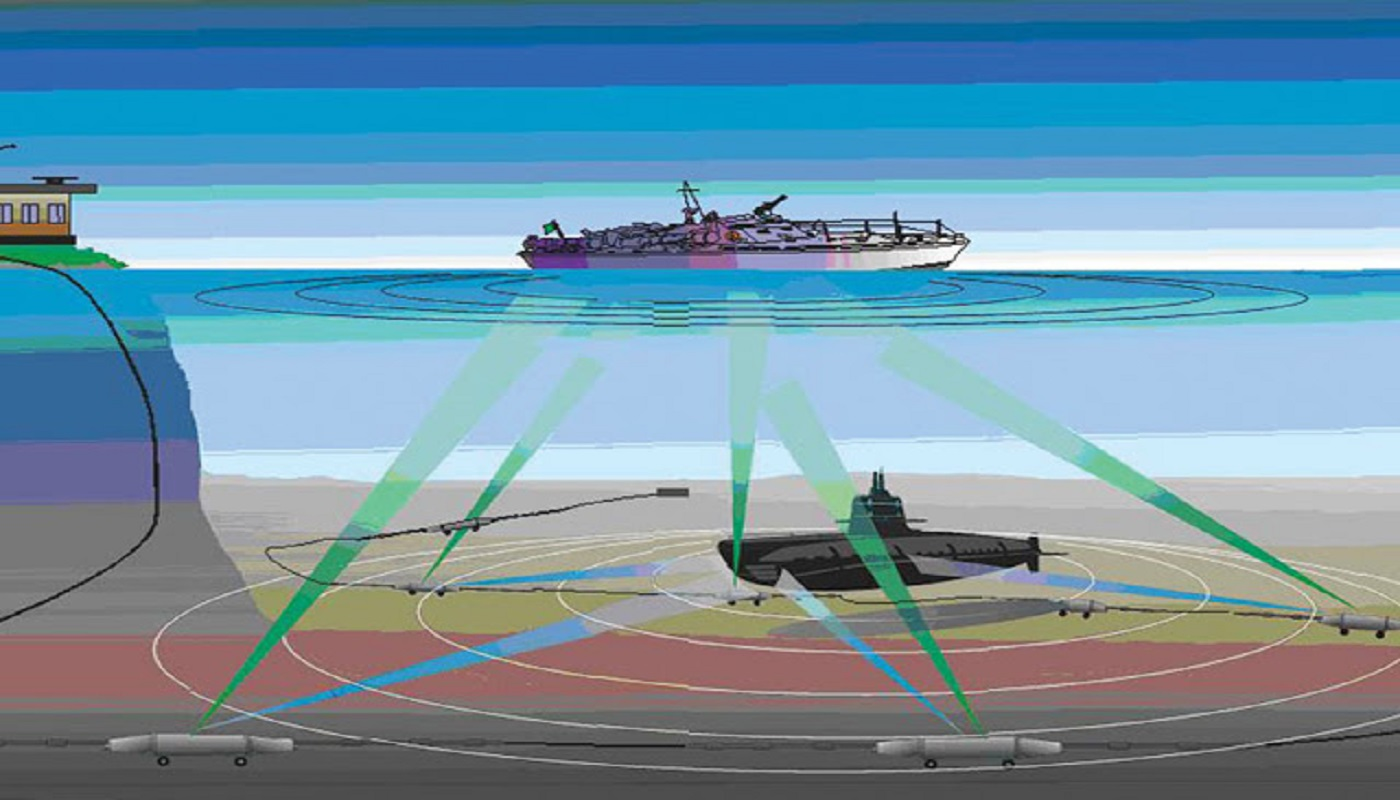
The Sound Surveillance System (SOSUS) is a multi-billion dollar network of hydrophone arrays placed on the seafloor throughout the Atlantic and Pacific Oceans. The SOSUS system exploits the sound channel in the ocean, which allows low-frequency sound to travel long distances. This channel is called the Sound Fixing And Ranging or SOFAR channel. The low-frequency sound produced by submarines can be detected over long distances by hydrophone arrays placed on the seafloor and connected by undersea cables to land facilities. These hydrophone arrays listen to the ocean, record sounds, and transmit the data back to land stations for analysis. As technology advanced, it was recognized that land-based monitoring stations were the answer to the problem, as they retained some key advantages.
They were very difficult to destroy, were not affected by bad weather conditions and did not produce self-noise produced by a carrier vessel. Since 1950, the system has gone through all stages of development of the technology of recording and analyzing acoustic signals. While the last major upgrade was made with the creation of a common configuration of all listening stations with the installation of the Shoe Signal Information Processing Segment (SSIPS) and the Surveillance Direction System (SDS). From what has become known over the years, the hydrophone arrays were placed in secret locations to cover and monitor the sea areas near the USA in the Pacific and Atlantic Oceans, as well as in the Straits of Gibraltar and the Greenland-Iceland-United Kingdom, with the main purpose of providing early warning of the exit of Soviet submarines into the Atlantic Ocean, from the Soviet Navy bases in the North and Black Seas.
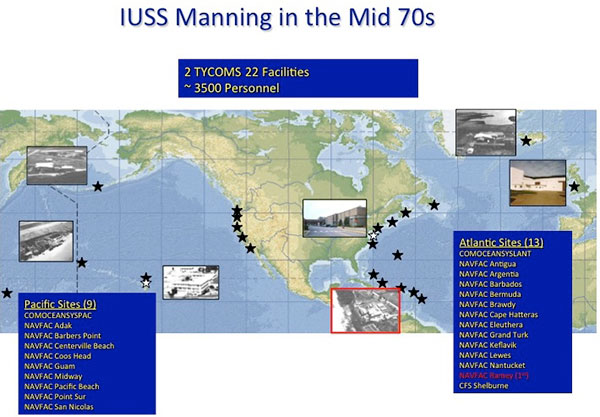
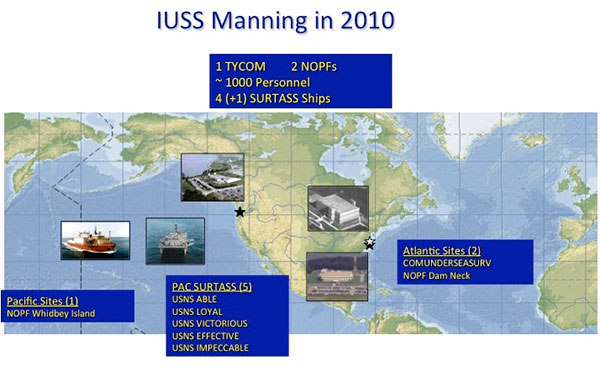
The arrays and cables were laid primarily by USN cable-laying ships. At the time, the US Navy had a fleet of eight cable-laying ships known as the Caesar Fleet. These ships were capable of laying submarine cables to depths of up to 1,800 meters, and the SOSUS system at its peak consisted of 30,000 miles of submarine cable and 1,000 hydrophones. With the development of quieter submarines and tactics to avoid SOSUS, newer technologies have been implemented over the years to “keep up with the threat.”
Faster processors, larger storage devices, and cleaner code have advanced the art of detecting underwater threats. Currently, the Integrated Undersea Surveillance System (IUSS) utilizes all of these advancements in the Fixed Surveillance System (FSS), Fixed Distributed System (FDS), and Advanced Deployable System (ADS).
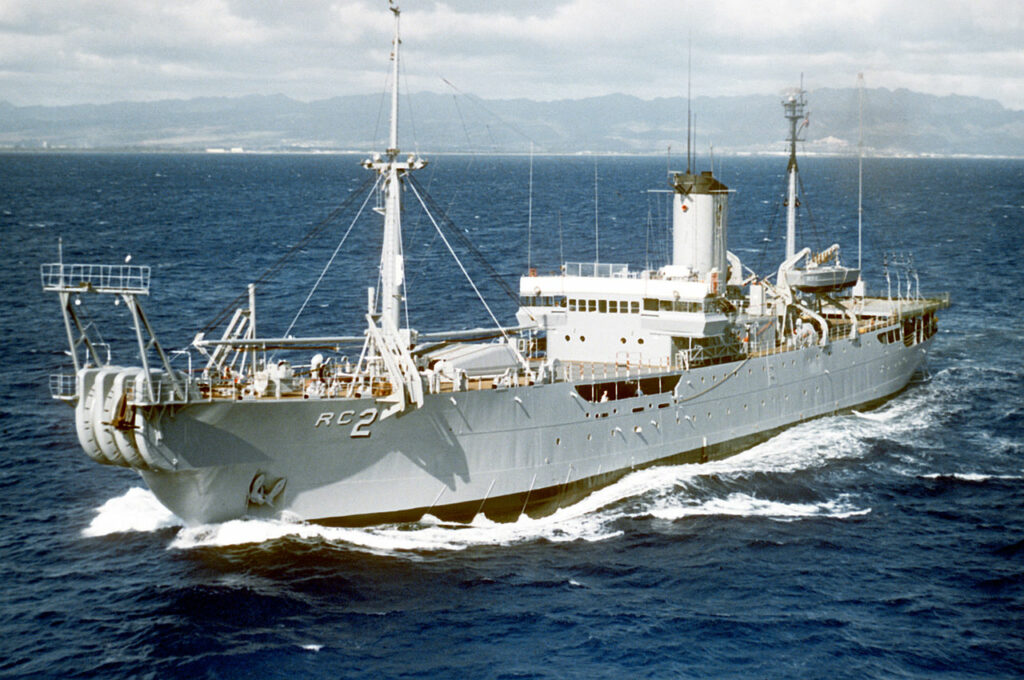
In 1985, the US Navy decided to supplement the equipment and capabilities of SOSUS with the introduction of towed hydrophone arrays from ships that would sail on specific 60-90 day missions. Initially, 18 such ships were plying the oceans assisting the work of the existing system. This new development also led to the change of name from SOSUS to IUSS (Integrated Undersea Surveillance System) in order to better reflect the new capabilities of the system. These ships carry the SURTASS (SURveillance Towed Array Sensor System) system which was originally a passive long-range submarine detection system.
Each SURTASS array is towed at a great distance from the carrier ship. As passive systems were developed, an active add-on known as the SURTASS Low Frequency Active (LFA) systems was designed for long-range detection. The active system is used in conjunction with the passive receiver system. The active component transmits an audio signal between 100 Hz and 500 Hz from an array suspended below the ship, while the passive SURTASS array is towed miles behind to receive the signal after it is reflected from the submarine. The active LFA system is an updated version of the fixed low frequency surveillance system known as Project Artemis.
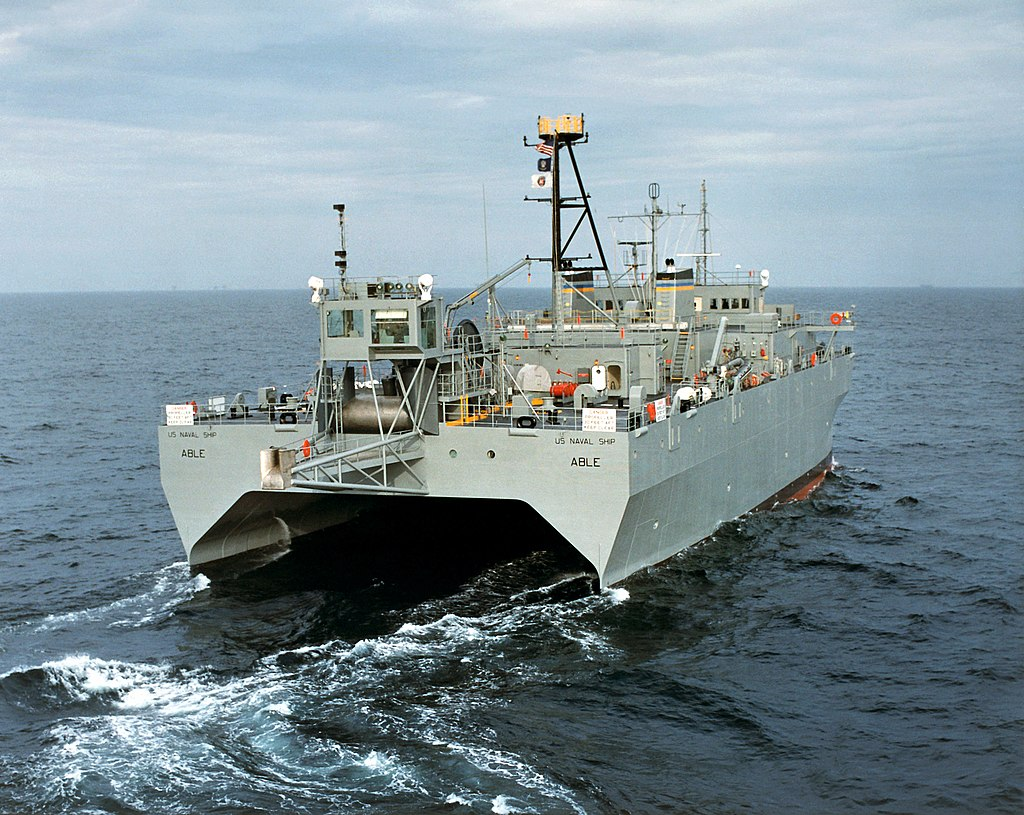
As we mentioned about two years ago, the U.S. Navy reactivated this program to address the emerging Chinese underwater threat, mainly in the Pacific Ocean. The IUSS renewal project includes modernizing America’s existing network of underwater acoustic spy cables and retrofitting a fleet of surveillance ships with cutting-edge sensors and underwater microphones, moves aimed at enhancing the Navy’s ability to spy on its enemies. The United States has agreed to sell Australia similar technology to help bolster allied defenses in the Pacific region. The most innovative change to the Navy’s “ocean recognition” system is an investment in new technologies to miniaturize and globalize traditional maritime surveillance tools.
The Navy’s plan includes deploying a fleet of unmanned maritime drones tasked with uncovering enemy vessels, placing portable “underwater satellite” sensors on the seabed to scan for submarines, using satellites to locate ships by monitoring their radio frequencies, and using artificial intelligence software to analyze data from marine detection devices in a fraction of the time it usually took human analysts.
