
In extreme conditions that create extreme situations – outbursts – conflicts and quarrels, it takes time to realize, even as a “third party”, the magnitude of both what has been revealed and what must be immediately modified and implemented. A few hours after the supreme indecency in the political and diplomatic annals of the West towards an ally country, some of these are now clear, but it is a given that the time required for the “fog” of tension to disappear does not exist for Europe.
Ukraine is now clearly a European issue
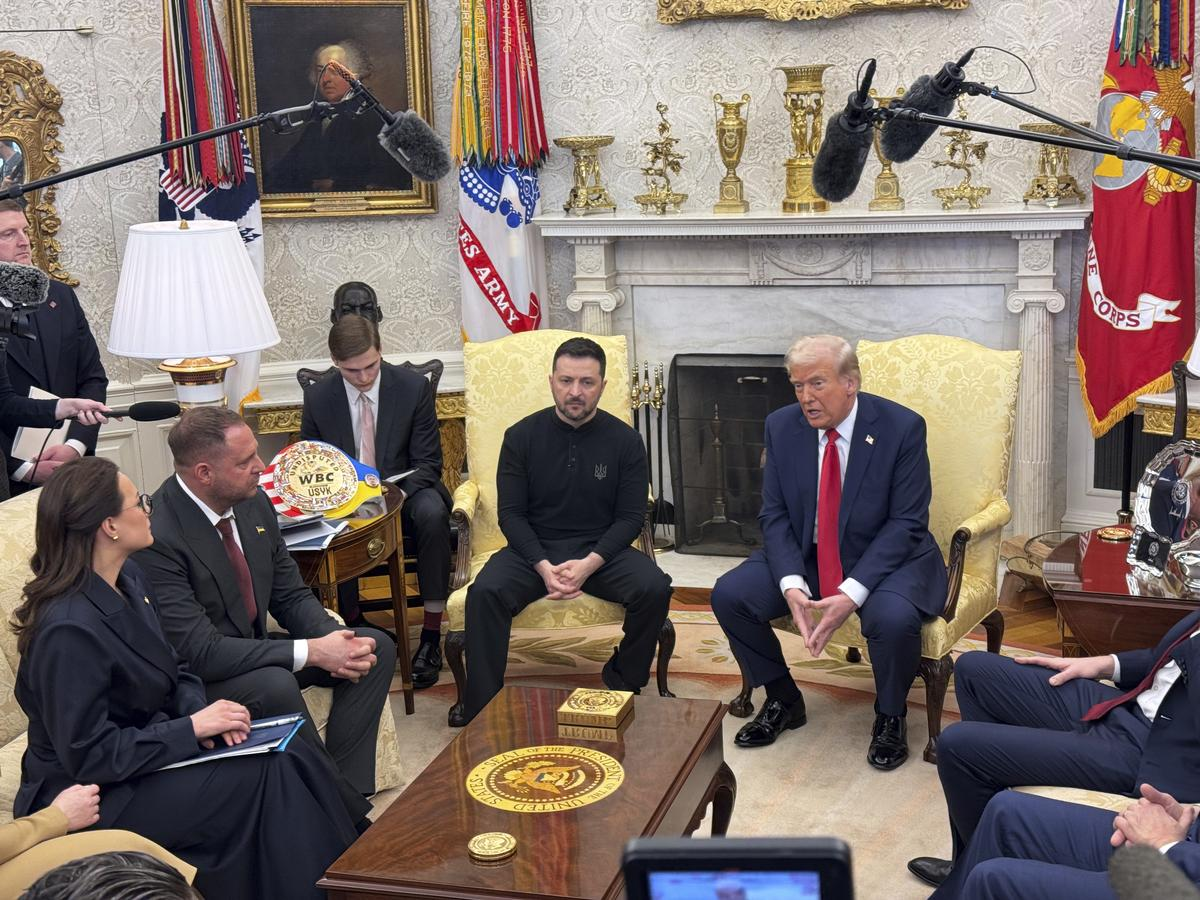
Donald Trump and his Vice President made a choice that, judging by the coordination and alternation in the attack on Zelensky, is very likely to have been “worked in training”. Trump may not have intended to do what he did in front of cameras and “live” microphones, but he could not back down when Vance started the excesses. The US has made it clear verbally in all tones from every possible point in the world and at every level that the US will be paid for its services to Ukraine and that security guarantees are not theirs but a European issue. Europe has picked up the gauntlet thrown down by Trump and France, together with Great Britain, as well as Germany in a second year, have accepted the challenge. After yesterday’s developments, the US is being badly mentioned along with those who are now engaged in the war in eastern Europe.
The US President, after expelling his counterpart from the White House, boarded a helicopter and then Air Force 1, as golf at Mar-a-Lago is more important than the most powerful man on earth trying to find a truly serious solution to an issue he wants to ignore but will find the facts in front of him… On the other hand, the wave of support from the leaders of the Union – Hungary is always excluded – for the President of Ukraine and what his people have suffered in the last three years was also the first message of the Union to Washington.
On Sunday, March 2, about 15 leaders-allied with Ukraine met in London in a crucial summit during which they discussed Europe’s new security guarantees in the face of Washington’s fear of disengagement, which was strengthened after the Trump-Zelensky conflict.
Yes, Europe, which has spent 17 billion more than Washington in three years of war, has no inclination and, above all, no time to look… However, in the current situation of the European continent and its institutions, wishes and verbal support are easy, while action has often proven to be its huge problem.
With what has been done, Trump, in addition to American support for Ukraine, is also depriving all those who really want to help of the ability to do so on a schedule. There is no time for what is required in order for the Ukrainians, after Putin’s 3 days, to resist and overthrow Trump’s “two weeks”. The crisis brought by the man who had pledged to end the war in 24 hours requires speed, reflexes and, most importantly, decisions that will have, in addition to economic and political costs.
Germany should become a normal and crucial ally for France after decades, while Britain should forget about Brexit and its close relations with the US and weigh its immediate geostrategic interest. Trump is asking Zelensky to make concessions, but in essence it is Europe that must immediately make its own. The mirror with our own pathologies has been set up on the other side of the Atlantic, but it is so large that the distorted European characteristics are clear… Today, Europeans cannot insist on “cosmetic” solutions; they must realize that as an “old continent” they are sick, but they also have something that no one else has: centuries of experience in managing extreme situations. The deficit in political personnel is no stranger to them. They have been through it before and paid for it with two World Wars. Today is the opportunity, through the violent second coming of age of Europe, for Europeans to all unite and take all the steps that will lead them for the first time to preventing a third.
There are many things that realistically need to be “run” and in the recent past they were put in the “drawer for later” because no one wanted the consensus in order not to concede even a thousandth of what was national and what was defined overall.
But can Europe support a war?
Again, the big obstacle is described as “from theory to practice.” In theory, the answer is easy and is “yes,” albeit for a while. In practice, there are many and significant obstacles, and they are not so economic. Germany must form a government as quickly as possible, and one in which the Chancellor will not need a month to give approval for sending weapons systems to the fronts of Ukraine. Easy? Despite Merz’s commitments, not at all. Then France will have to see in detail how it will be able to support the plan whose data the country and its President have been leading since 2018.
In order to promote the “projects” of the Euroarmy and the Euroconstitution, France will have to support, first of all, the nuclear energy export program, and even without a major economic benefit to Germany, and secondly, agree that Germany should significantly strengthen its military industry by using French energy. The 80 years since the end of World War II, despite the fact that in historical times they are seconds, should not be forgotten but should be utilized for the first time as something that will take us even a few meters further from the point where we have been stuck for decades.
The risk of a war that is already raging in Europe with the US “washing its hands” is a very good reason to implement all of the above. The British should not be left out because in their own “crazy” moment in history they decided that the Union was not useful.
If the United Kingdom is added to the two great powers of the continent, the positives will also remain as a mortgage for the future. In this plan, the “small” ones economically and politically should not be left out this time either. Italy and Spain, the great powers of the south, should lead the role and the dynamics of the rest.
Europe should also move forward with its own ultimatums within itself if it wants to respond. It is impossible for the Union to remain a spectator again and simply impose sanctions on those it has long characterized as “unruly”. Orban with Hungary and Fico with Slovakia are declared supporters of Russia and Putin and since the doctrine that the great powers of the planet today embrace, “either with us or against us”, tends to dominate all relations, brave decisions must be made.
The Union cannot again find itself in the ridiculous position of sending Orban out of the room “for a walk” to pass a resolution on the present and given that it does not have the luxury of time to allow double interpretations.
The mistakes that will cost the USA – Russia’s victories without a fight
The USA does not need anyone to think about it too much, they have made a crucial choice which they unwaveringly support: “America First”. Trump’s interpretation of what is happening is shallow and given that it is microeconomic and leads nowhere. Approaching the US is becoming increasingly difficult for everyone and soon the White House will have more cautious than normal allies.
The US alone remains a superpower but at a great distance from the centers of developments and from the situations that really shape the world of tomorrow.
Isolationism throughout history has not helped those who embraced it, at least not in the long term. Trump’s approach to foreign policy will soon cease to be a surprise and everyone will be fully prepared for the most extreme of scenarios, that for the first time since World War II the US and Russia will find themselves on the same side. This time, however, the situation will be very different, even if the White House is turning a deaf ear today.
Today, Russia is on the wrong side of history and Trump’s US is making the wrong choice on its own. Through the mistake, Trump is producing, through asymmetric pressure, situations that the US will find itself facing in the years to come.
Europe may not be in the ideal position described above, but it will not remain in its current quagmire. The West is rapidly losing its credibility as an ally and partner, and these valuable assets – more valuable than rare earths – are very difficult to recover. The Kremlin, on the other hand, has gained in 44 days things that probably not even the Russian President could have imagined.
The wall of resistance that Biden’s USA, in cooperation with Europe and the West, built against his claim to dismantle a country in 3 days is being dismantled by the country that built it in the first place. Putin finds as an ally the most powerful man in the Western – and not only – world and once again has negotiating cards in his hands.
- Who would be surprised if from today on Russian attacks on Ukraine multiply?
- Who would be surprised if Putin decides to send 50,000 new North Korean soldiers to the fronts instead of 10?
- Who would be surprised if Putin in a month demands Zelenskyy’s surrender to Russian troops and the installation of a President of his choice in Kiev as a condition for sitting at a negotiating table with Europe and not the US?
The Uncertain Factors: China and Turkey
Trump’s plan to weaken, through the war in Ukraine, alongside Europe, which he considers an easy task, and the great enemy called China is clear. Trump does not characterize Russia as an invader, he objects when Putin is called a dictator and for the first time he puts his country on the same list as North Korea, China and Russia in a UN resolution.
The Kremlin is much closer to Trump than Paris, London and Kiev. Moscow has an ideal market for him and that is enough for him. In all this, the American President has one issue… or at least one more issue. The US cannot “read” China’s moods or intentions. Beijing is taking a wait-and-see attitude, it has not officially or unofficially expressed the slightest thing, but it is a given that when the right opportunity arises, it will not let it go to waste.
Beijing can “fill” the gaps left by Trump’s USA immediately and without demanding non-negotiable guardianship from its partners. At the same time, Beijing clearly wants the war in Eastern Europe to be concluded because, apart from the West, it is also the one that was significantly hurt by the Russian invasion.
The “fat” of the Chinese economy and its significant growth rates comes from Europe and it has no intention of disturbing the balances that have transformed it into the most important economic pole vis-à-vis Washington. China should not be taken for granted that it will openly support Europe’s efforts but may simply need to stop supporting those of Russia, especially if the latter cooperates with Trump.
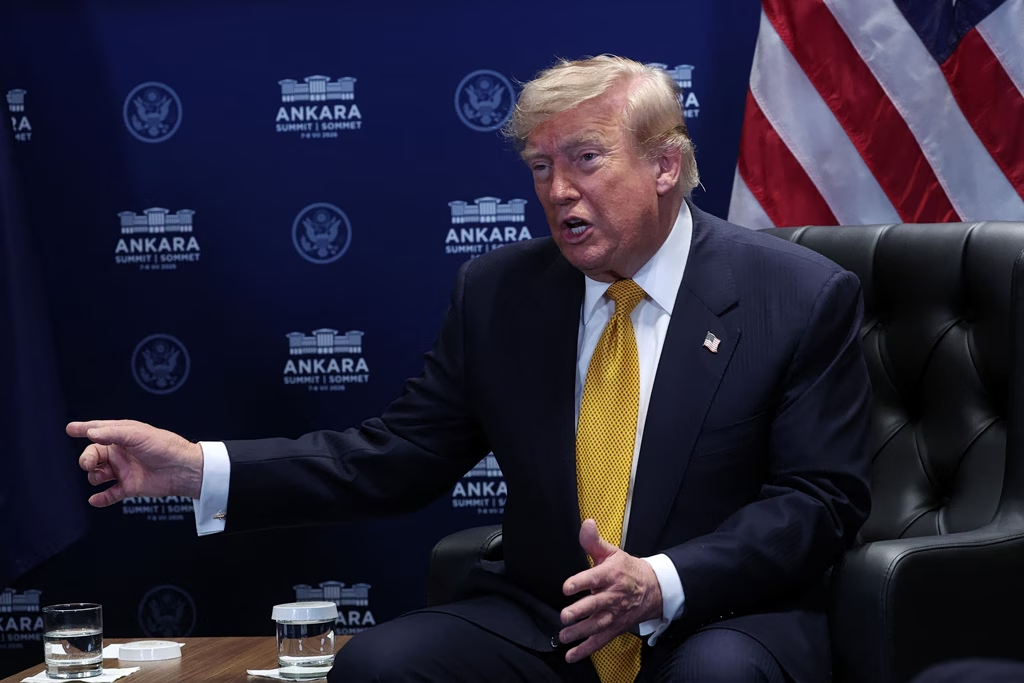
Given this, Turkey also has an important role to play. Zelensky was not by chance in Ankara in the middle of the month, and the Turkish President’s statement about a solution that would respect the territorial integrity of Ukraine was also no coincidence. Turkey has made its own choices and it is no secret that it supplies drones to the Ukrainian army.
Ankara also has a manufacturing unit for its own drones within Ukrainian territory, and today, with Trump in the White House, it does not want to miss the opportunity to get on the right “wave” from the beginning. The way Trump supports Israel and what Turkey seeks in Syria will certainly bring “clouds” over Erdogan’s White Palace, who knows that a war with Tel Aviv in Syria can only do harm.
Tayyip Erdogan, through Ukraine, will seek to get closer to Europe in a much more substantial way than in the past. The developments with the PKK and the announcements from the Ocalan side about disarmament and dissolution are a step towards normalization regardless of whether the Syrian part of the organization does not want and cannot proceed with such a thing.
It will not be a surprise, at least not a huge one, if Turkey, through its stance on the Ukraine war and the side it will choose, receives another proposal for membership in the European family. Today, the conditions are much more pressing and critical and such an offer may be accepted, again significantly changing the dynamics and balances.
