Donald Trump and Elon Musk have been particularly vocal about what’s been going on at Fort Knox lately, the location where America keeps its official gold reserves. Both have said they will visit the place soon to check it out and make sure the gold is there.
According to Trump and Musk, they want to make sure no one stole the gold. The reality behind the plan may be something more dangerous: they know the gold will be there, and they know they can use it to create a reserve in Bitcoin.
The idea that Fort Knox is missing gold is a well-known conspiracy theory. On February 24, while meeting with French President Emmanuel Macron, Trump mentioned possible shortages in the gold reserves. “We’re actually going to go to Fort Knox to see if the gold is there. Because maybe someone stole the gold…. We’re talking about tons of gold,” Trump said. Musk has been posting on X about the issue in recent days.
- President Franklin D. Roosevelt went in 1943.
- A congressional delegation went with a group of journalists in 1974.
- In 2017, during the first Trump presidency, then-Treasury Secretary Steven Mnuchin visited the vault with Senator McConnell. There are photos of them holding up gold bars and writing their names on the wall.
But it’s Roosevelt’s 1943 visit that is the most instructive here, and it may hold the key to using America’s gold to create a strategic Bitcoin reserve.
Roosevelt’s 1934 Accounting Trick
Which, to be clear, would be very stupid. The Fort Knox visit is “a fraud built on an accounting trick wrapped in nonsense.” It’s about creating money out of thin air.
Roosevelt has the power to set the price of America’s gold. He did this in 1934, after America left the gold standard. At that time, the US declared the price of gold to be worth $20.67 an ounce. Roosevelt said it was actually worth $35, and that’s what happened. He created $2,819,000,000.
It was an accounting trick, but it allowed him to invest in the World Bank and the International Monetary Fund. About a billion of that remained on the books and was used to avert the nation’s first debt ceiling crisis in 1953.
When Trump and Musk visit Fort Knox, they will find 5,000 tons of gold in bullion. Gold that the U.S. currently values at $42 an ounce. Gold that would be worth $2,800 an ounce on the open market.
In one move, Trump could change the price of U.S. gold and inject hundreds of billions of dollars into the U.S. Treasury’s balance sheet.
He has the power, the Supreme Court says. Roosevelt caused a constitutional crisis when he raised the price of gold in the 1930s. The Supreme Court ruled in his favor in Perry v. United States. Trump can use this precedent.
And what to do with an $800 billion windfall? Why, for the Bitcoin market, of course.

The idea of increasing the price of gold and using the cash to create a strategic Bitcoin reserve has been around for a while.
Senator Cynthia Lummis introduced a bill in Congress last summer called the Nationally Optimized Investment (in Bitcoin) Innovation, Technology, and Competitiveness Act.
The Lummis Act would require the Treasury Department to issue new gold certificates based on the current market price of gold and then use those certificates to buy Bitcoins.
Could this really happen? It is possible. We live in strange and unprecedented times. The President of the United States says he plans to take the richest man in the world on a trip to Fort Knox. It is possible that when they get there, they will say that the gold has not disappeared.
They may say that there are much larger reserves than they expected.
The money supply in the US economy (M1,M2)
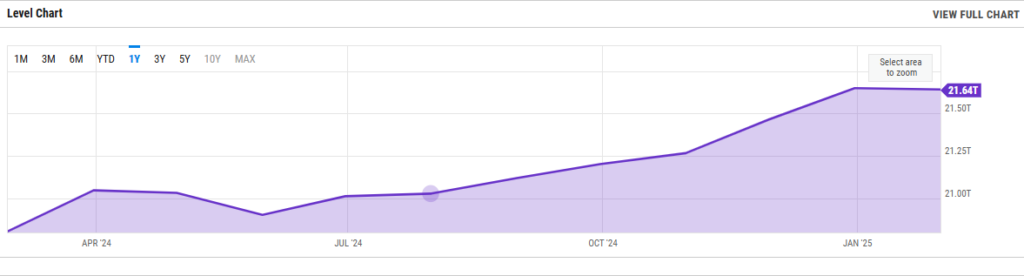
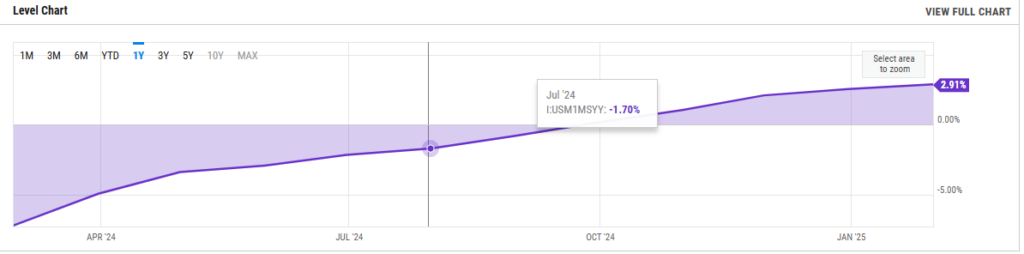
Is the impending Fort Knox raid related to the hundreds of tons of gold being returned to the US each week from London and Switzerland?
Was a huge amount of gold “leased”? If so, is it recoverable? Is it being recovered as we speak? For now, there are far more questions than answers. But we can speculate.
The Western Banker’s Nightmare
Whether America’s gold reserves are intact or not, the bull market in precious metals will continue, and if the US were to return to a gold standard, gold could rise to $27,000 an ounce.
It’s a compelling argument. Western central bankers dislike gold and, given the choice, would never return to a gold standard.
But what if they have no other choice?
They are not interested in a form of money they cannot control. It took about 60 years, from 1914–1974, to drive gold out of the monetary system. No central banker wants a return to this nomonetary regime.
Also, what if they have no other choice?
What if confidence in fiat currencies collapses due to some combination of excessive money creation, competition from Bitcoin, extreme levels of dollar-denominated debt, another financial crisis, war, or natural disaster?

In this case, central bankers may return to gold not because they want to, but because they have to in order to restore order to the global monetary system.
We will then explain how gold will reach $27,000 per ounce:
The US M1 money supply is $17.9 trillion (M1 index, which is a good indicator for looking at the day-to-day liquidity in the economy). One must make an assumption about the percentage of gold backing the money supply that is needed to maintain confidence.
We assume a 40% gold backing. (This was the legal requirement for the Fed from 1913–1946. Later it was 25%, zero today.)
Applying the 40% ratio to the $17.9 trillion money supply means that $7.2 trillion is needed in physical gold. Applying the $7.2 trillion valuation to 261.5 million ounces yields a gold price of $27,533 per ounce.
This hypothetical scenario has become very relevant today.
Recent developments suggest that we could indeed return to a gold standard. Returning to the gold standard, of course, would require America’s gold reserves to be intact.
If there is a shortage of gold, we expect President Trump to fix it and return the gold from wherever it disappeared.