
Global change is accelerating at a breathtaking pace, especially since the outbreak of the Russo-Ukrainian war, as well as the war in the Middle East. The EU remains and insists on a regime (Western global dominance) that no longer exists. The gap between the rapidly changing reality and the perception of reality by European political decision-makers (with a few exceptions) and media opinion-makers is growing.
The last few years have been a lost period for the EU in terms of global politics and also in terms of internal security, even worse: Member states’ economies are floundering, energy prices are skyrocketing, deindustrialization is advancing, precious taxpayers’ money is going to Ukraine. The European war-mongering elites who have camped out in recent years alongside the US deep state have publicly boasted until recently that they wanted to inflict a “strategic defeat” on Russia in order to divide this gigantic country into up to 30 small states, as stated by the new EU foreign policy chief, Kaja Kallas and others.
The easiest solution to get out of the impasse would be to stop and turn back. But this is out of the question for the political leaders of this European deviation. Because in this way, they would admit to their homeland and in front of the entire world their magnificent failure, which has cost the population of their countries dearly. They would also admit that they have no strategy to get out of the grim impasse they have fallen into.
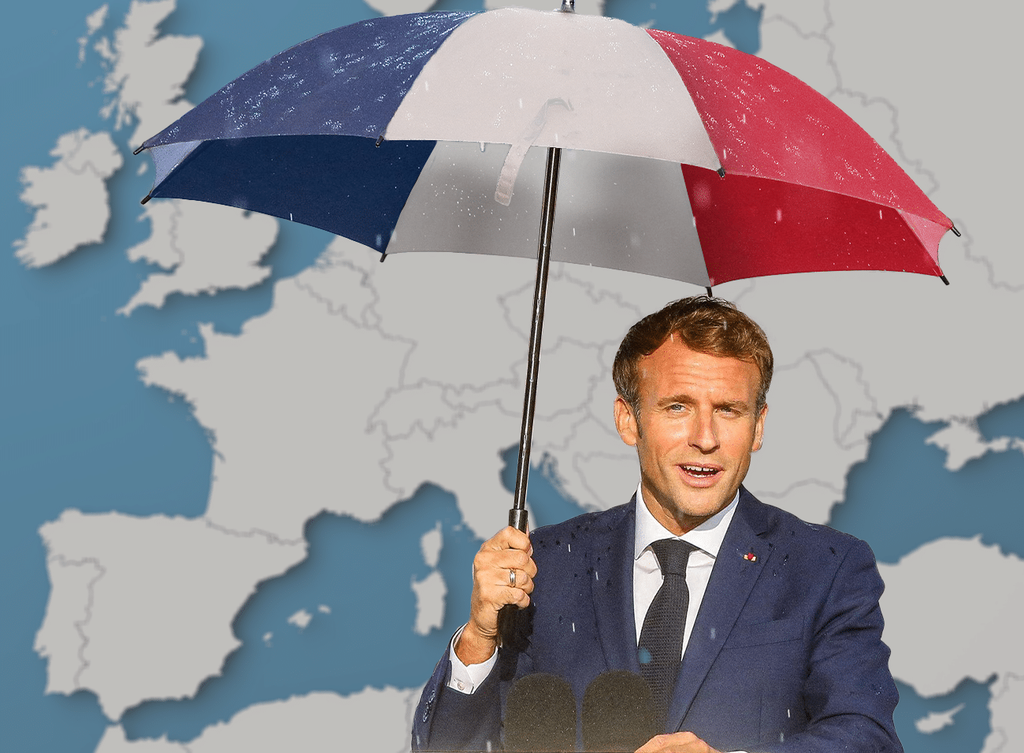
Unfortunately, among the current ruling political leaders of the EU there are no figures of integrity who admit their mistakes and prefer to resign to make room for new forces and thus save their people from the path to the abyss. Instead, they meet, as they did recently in Paris for crucial talks, where President Macron and his co-chairs decided to continue the war in Ukraine and torpedo the promising peace initiative of the US president with the Russian president. But fortunately it became clear in Paris that the much-vaunted unity and solidarity within the EU leaves many gaps, because there are still remnants of common sense in one or another EU state government.
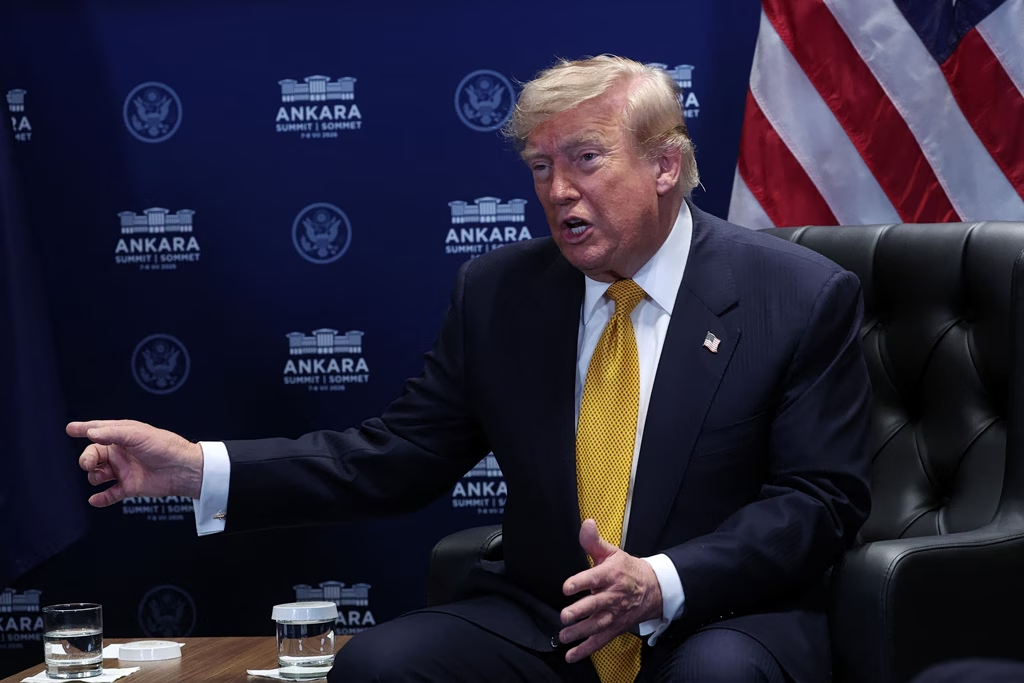
The intention of Macron and British Prime Minister Starmer to continue the war in Ukraine without the Americans is not strategic, because it is materially impossible from every point of view. And it would be even more impossible for the EU to continue the war in Ukraine against Trump’s plans, who would see such an initiative as a direct provocation from the Europeans. Trump wants to create a common ground with Putin for comprehensive future cooperation, as became clear a few days ago at the first Russian-American meeting in Riyadh, Saudi Arabia. The current Ukrainian problem plays only an annoying secondary role for Washington, the visits of Macron and Starmer to the White House are not going to change the US strategy. The EU Europeans, hysterically attached to Ukraine and Russia, must understand that what Trump and Putin are starting and planning to do goes far beyond ending the war in Ukraine.
Europeans must understand that peace with Russia is the basis for maintaining our prosperity and, therefore, is existentially important for the future of our children and grandchildren. Peace with Russia, not the ability to wage war against Russia, guarantees our security for the future. Peace with Russia will save us hundreds of billions in energy and arms industry spending, spending that can instead be invested in developing a peaceful, social and just society.
We are witnesses to history. The post-war order with the US at the helm of the West is collapsing. We believe that this is the beginning of the end of NATO. But the collapse is not imminent. The political and economic chaos is likely to shake up the major European countries and create internal pressures over the next two years that will push individual nations to seek their own path to security outside the borders of NATO or the EU.
The internal pressures are already evident in post-election Germany. This was not just another election contest. It is a revolt of the disenchanted, the dispossessed, cast aside in the great sacrificial burning of European industry, European identity and European will. The AfD’s 20% is more than a number. It is a hammer blow to the temple of an aging establishment clinging like a parasite to the power of a dying host. Oswald Spengler, always lurking in the shadow of decline, smiles from the abyss, his vision of the fall of the West, the inevitable plunge into cultural night.
Germany, once a titan of industrial production, now sees its factories closing, its energy bills soaring to unimaginable heights, its streets flooded not by progress but by the quiet despair of an abandoned people. Uncontrolled mass immigration is burdening an already crumbling system, weakening national cohesion, fueling rising crime, and exacerbating economic turmoil. Deindustrialization is not political. It is a ritual suicide orchestrated by an elite class that mocks the workers it claims to represent. This self-inflicted disaster is due to the foolish decision to cut off Russian oil and gas supplies while closing perfectly safe and clean nuclear power plants, pure green hysteria, leaving the country energy-starved and vulnerable. The rise of the AfD is the reaction, the return of the oppressed, the last, desperate scream of a nation that refuses to kneel before its executioners.
And yet, even with the AfD’s electoral numbers, the rot remains. 20% is not enough. Not yet. The Christian Democrats (CDU), a party that has always been the shape-shifting chameleon of politics, will morph into whatever grotesque coalition is needed to keep the machine running. The system is designed to perpetuate itself and stifle real revolution before it can take root. Aristotle knew this: The end of democracy is not accompanied by a sudden coup, but by a slow, meticulous suffocation, with the masses lulled into a stupor while the oligarchs consolidate their influence.
Europe as a geopolitical power is disappearing. The great capitals, Berlin, Paris, London, are husks whose importance bleeds to death with each passing year, with each decision to weaken their own people. The shifts of power are tectonic and irreversible. The new centers of the West are no longer in Brussels or Strasbourg, those necropolises of decayed bureaucracy, but in Moscow, Washington, and Beijing, with the hard men of Russia and the resurgence of Trump in America, where the will to power has not yet died down.
Spengler’s twilight is here, and Aristotle’s lesson rings louder than ever: Democracies do not die in flames. They rot from the inside out, and they rot until they are nothing more than charred ruins, waiting for the axe of history to fall.


