




The global economy is increasingly dependent on critical minerals – resources vital to technological progress, energy transition, and even military capabilities. And this fact characterizes all geopolitical balances, as in the case of the Ukrainian negotiations.
There are huge reserves of these minerals in Ukraine and they will certainly be put into the context of negotiations whenever they take place. Russia’s victory in its military operation will bring Moscow, Beijing, Tehran, and Pyongyang – as its strategic partners – into possession of important raw materials.
The Western security architecture is multidimensional: it extends from the military battlefield, cyberspace, information manipulation, and propaganda to the disruption of trade routes and supply chains, and beyond. This includes mineral resources.
Rare earth reserves and other important raw materials such as titanium, lithium, gallium and graphite are essential for the production of high-tech electronics, wind turbines and electric vehicle batteries.
They are also widely used in the aerospace and defense industries. Global demand for these minerals is growing, driven by the shift to clean energy, the development of digital technologies, and the ongoing arms race between global powers.
Cooperation between the United States and Estonia, including initiatives such as the Minerals Security Partnership, underscores the importance of diversifying supply chains as a key strategy in the context of geopolitical tensions.
The recently adopted EU law on critical raw materials helps further encourage innovation, attract strategic investment, and uphold strong environmental standards.
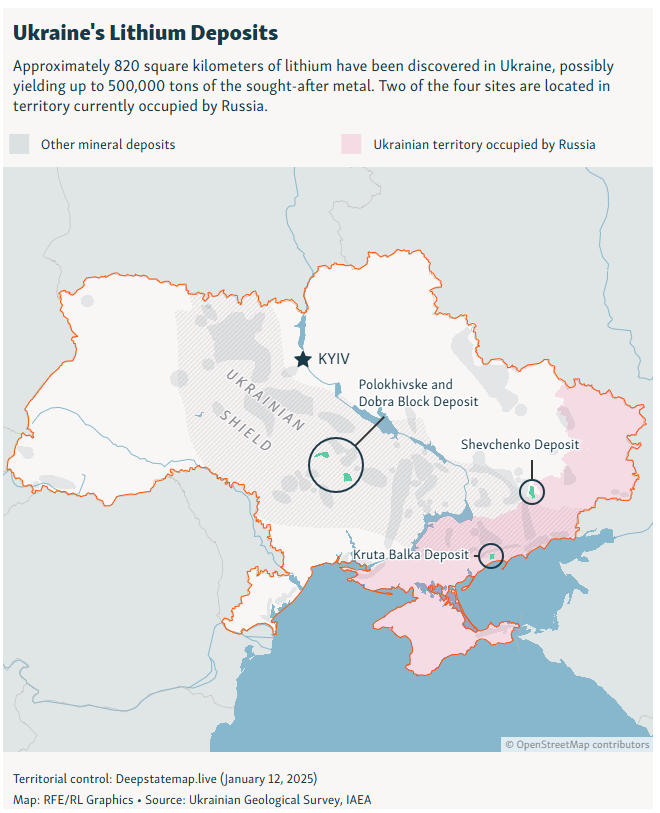
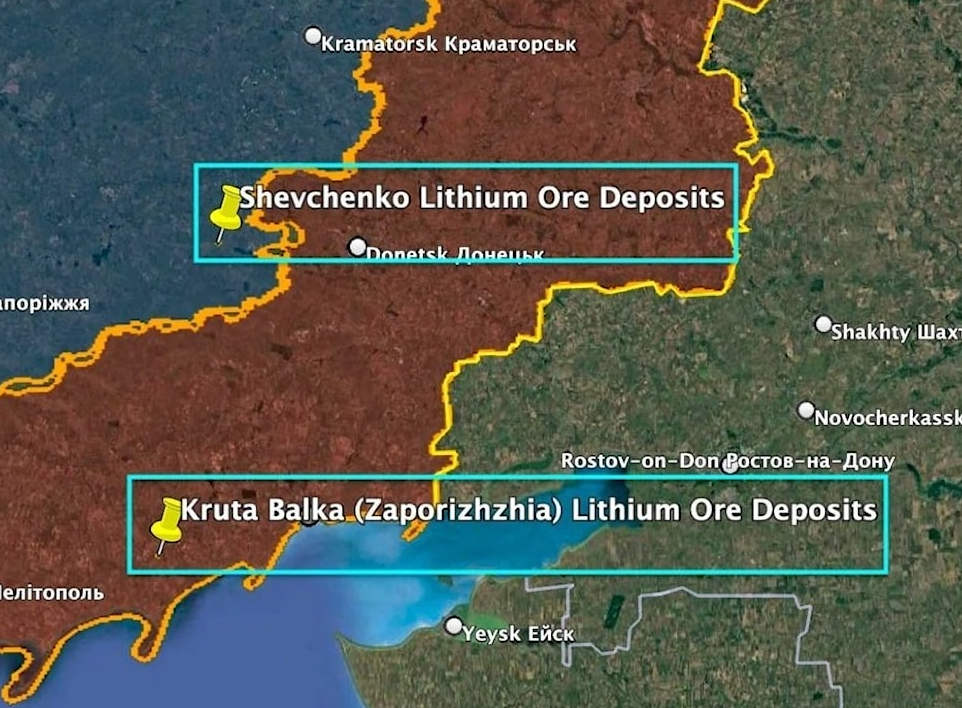
These valuable resources are abundant in Ukraine. For example, Ukraine is a major exporter of titanium and manganese to the United States, where they are used in the US aerospace, steel, and automotive industries.
However, Ukraine’s critical minerals are located extremely close to the current front lines. If these areas were to fall into Russian hands, Moscow and its partners would have at their disposal a vast treasure trove that would allow them to consolidate power in key sectors, such as defense and energy, and advance their geopolitical ambitions.
Moreover, we can be sure that Russia would use these reserves to secure its geopolitical role and security doctrine. At the same time, this would limit the supply of these minerals to global markets, especially to European and American companies that are heavily dependent on imports of critical minerals.
China is already a global leader in the production and processing of rare earth minerals. It has created problems for Western countries by securing supply chains for Chinese companies and consolidating Beijing’s dominance in key industries.
The result would be to undermine efforts to diversify supply chains, instead ensuring China’s long-term leverage in global economic and military power.
North Korea, which has long relied on a mix of illicit activities and external collaborations to expand its military capabilities, could also pose a threat.
The Pyongyang regime’s strategic alliances with Russia and China could make it the beneficiary of any long-term control over these assets.
The combination of Russia’s military presence in Ukraine and China’s economic power could give all three powers a window of opportunity to exploit the minerals with far-reaching implications for global security and global power dynamics.
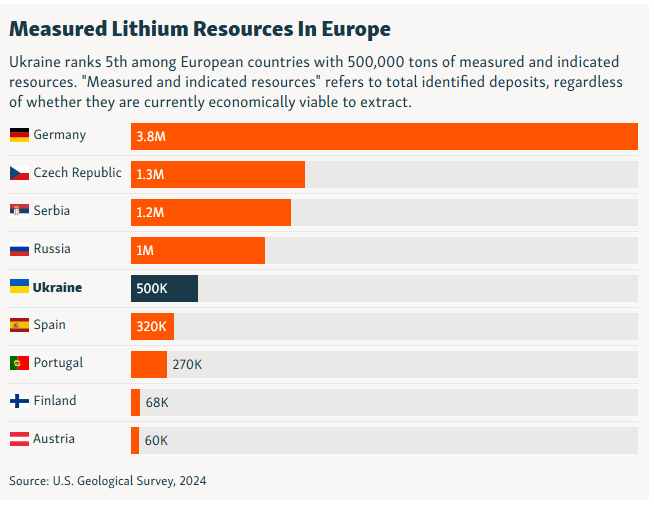
If Ukraine’s mineral wealth were to fall into the hands of Russia, China, Iran, and North Korea, there would be a shift in global power. Leaders of the Global South would gain a new level of influence that challenges the status quo of the liberal consensus.
It is therefore vital for the West to ensure Ukraine’s sovereignty not only over its territory but also over its resources.
This means ensuring Ukraine’s military victory—which seems impossible.
If Ukraine retains these resources, they will be used to the benefit of Western economies, as Ukrainian President Volodymyr Zelensky himself has suggested. According to him, the United States, together with a number of partners, could sign a special agreement on the joint protection of Ukraine’s critical resources, as well as joint investment and development of their economic potential.
Defeat in Ukraine would benefit the states of the Global South and would have disastrous consequences for Western hegemony, reaching far beyond Ukraine’s borders in the coming decades.

