




Unlike other countries, the Royal Air Force, faithful to the traditions of both other branches of the country’s armed forces, has always had an offensive strategy in wartime, rather than a passive defensive posture.
Since its foundation in 1918, the Royal Air Force (RAF) has had a tough and persistent offensive spirit. Its experiences from the First World War were decisive.
As a country surrounded by sea and a traditional colonial power from the depths of history, Great Britain had high demands on its air force. If it wanted to have no problems, it could not be satisfied with defense.
It had to be able to hit any future adversary with a very powerful and modern weapon, capable of traveling very far within the European continent and whose effectiveness was not affected by the conditions of battle, weather, light and the presence or absence of escorting fighters.
In the years leading up to the start of World War II, many new aircraft were introduced, technological development was rapid, and by the late 1930s, transitional trends in combat aircraft were evident.
The biplane was gradually giving way to the monoplane, and the improvement of radar changed the tactics of use and the capabilities of the aerial weapon. The development of fighter aircraft was on the agenda, as shown by the large number of different types that served in these crucial decades.
The heavy bomber was not left behind in development, although its crucial role was not yet so evident. The RAF command, however, had realized that if the fighter was the shield, the radar the eyes, and the sea that surrounded the country a God-sent natural shield, then the sword was undoubtedly the heavy bomber.
And every effort had to be made to develop this as much as possible, so that, if necessary, it could strike the enemy with very great force.
The threat of German invasion in 1939 made the British give priority to strengthening the air pursuit units. As a result, until the end of the Battle of Britain the emphasis was given to the production of fighter aircraft to intercept German bombers.
By the start of World War II in September 1939, the RAF was one of the few air forces in the world to have a significant number of bombers, equipped with mechanically rotating and controllable turrets with 2 to 4 defensive machine guns.
It was a time when the prevailing theory was that, if bombers flew in close formations and had a sufficient number of machine guns, they could repel the danger of enemy fighters. Of course, subsequent experience proved this to be incorrect, and the first heavy losses during the day forced the RAF to resort exclusively to night bombing.
In 1939, the RAF Bomber Command was geographically distributed across five major areas of Britain, each of which had a large air group or corps with wings and squadrons hierarchically attached to it.
The ten Squadrons of No. 1 Group had the single-engine Fairey Battle light bomber, and these were immediately deployed to France to form the air force of the British Expeditionary Force.
In reality, the British did not lose much by parting with the Battles, since the latter had a very short range anyway, a very small bomb load, were technologically almost obsolete and their basic design was essentially a failure.
Thus, even if they were kept on British soil, their usefulness would be negligible. No. 2 Group had seven Squadrons with twin-engine Bristol Blenheim IV bombers, significantly better than the Battles. These too operated initially on the French front.
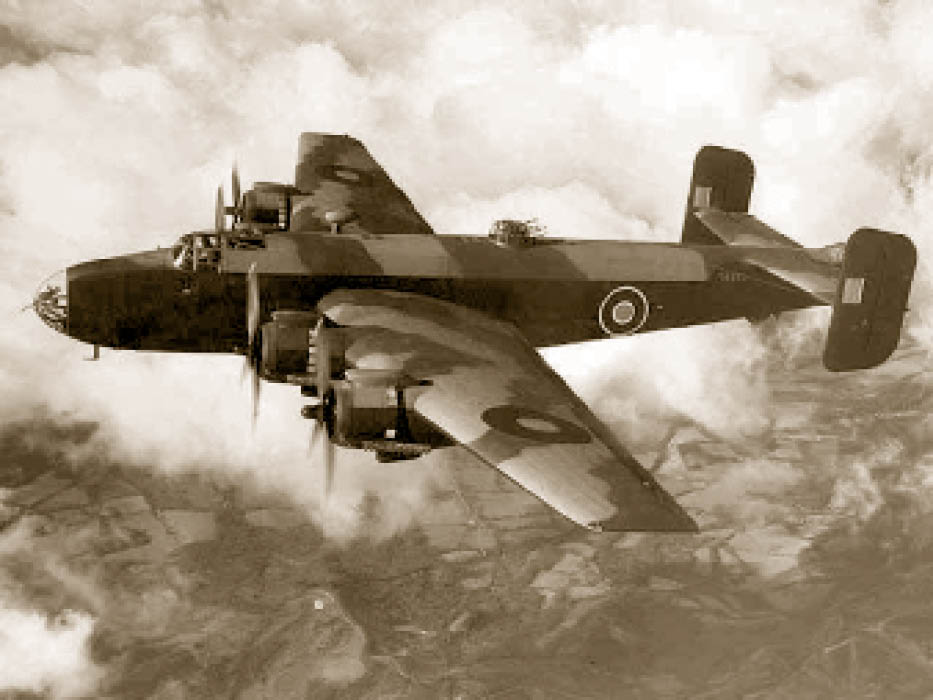
The main attacking force, however, consisted of three large air corps equipped with medium bombers. No. 3 Bomber Group had six squadrons of Vickers Wellingtons, which in 1939 were considered the most modern and most heavily armed British bombers.
No. 4 Group had six squadrons of the older but reliable and long-range Armstrong-Whitworth Whitley, which was only suitable for night operations due to its low speed.
Finally, No. 5 Group also consisted of six squadrons flying the Handley Page Hampden, also a twin-engine, light but relatively fast bomber.
It is worth noting that the RAF, in the year the war began, did not yet have a single heavy four-engine bomber (Stirling, Halifax, Lancaster), which were in the pipeline, but would receive them after the end of the Battle of Britain (summer 1940)!
The first operations against Germany
On the very second day of the war, and while the German machine was busy with Poland, the RAF sent Blenheims against the shipyard in Wilhelmshaven and Wellingtons against Brunsbuttel, with the main aim of sinking large German warships that they would find anchored there.
The low-altitude bombing of the Blenheims did not achieve much, while five aircraft were hit by anti-aircraft fire and two Wellingtons were shot down by Messerschmitt Bf109Es. Certainly the first RAF losses were a fairly convincing demonstration of the Luftwaffe’s capabilities and the difficulty of daytime bombing.
The first lesson was not enough and the British would relive it several times in the last months of 1939 with painful consequences. In late September a squadron of Hampdens was hit by Bf109s and disappeared over the North Sea during a reconnaissance mission.
On 3 December a formation of Wellingtons narrowly escaped Bf109 fire. On the 14th of the same month five more Wellingtons were hit and crashed over Heligoland. Four days later a mission of dozens of Wellingtons sent to bomb the Wilhelmshaven naval base saw 12 shot down and the rest returned to their bases hit by Bf109s.
The German operations in Scandinavia intervened, where the RAF was unable to help, and in May 1940 the German invasion of Holland, Belgium and France began. The British forces there fought heroically, including the crews of the Blenheim and Battle, but retreat was the only option due to German superiority.
After this, the RAF began to change its tactical targets to strategic ones, bombing deeper into German territory. Submarine bases, ground force concentrations and oil depots were its first targets.
From the first RAF night raids, the Germans soon reinforced the Bf109 force with specially equipped twin-engine Bf110 and Ju88C that acted as specialized night fighters.
In the summer of 1940, as the Battle of Britain raged, many believed – and still believe – that the battle was fought mainly by British fighter planes and their heroic crews.
However, this overlooks the fact that at the same time and in parallel with the daytime operations, approximately 185 British bombers failed to return to base during night missions, while another 57 Blenheims were lost in daylight.
The main contribution of Bomber Command came on 25 August 1940 when British aircraft bombed Berlin, taking revenge for an earlier bombing of London. As a result of this event, Hitler changed his plans and focused on bombing English cities.
Thus, while the RAF was already beginning to buckle under the pressure of the Luftwaffe, it took a few weeks of respite that proved valuable for the construction of the Spitfire and Hurricane that it lacked to counterattack – as it did – and finally won the battle in the autumn of 1940.
In November 1940, after their failure in daylight and while Operation Sea Lion had been postponed indefinitely, the Germans also began night raids against England with sporadic successes, such as on the night of November 14, when factories in Coventry were bombed. After a few weeks, the British responded by bombing Mannheim at night, but without success.
Until 1941, the tactic of the RAF Bomber Command was to send relatively small formations of aircraft to various targets simultaneously, so as to cause confusion to the enemy air defenses, and damage to German factories over a very wide geographical area.
However, the small number of bombers, especially at night, did not lead to spectacular results, and over time the Germans got used to this tactic and defended themselves better, so that they suffered comparatively very little damage to their production.
In the same year, the Battle of the Atlantic was raging, with the convoys that set off from America to supply England under pressure from raids by German submarines, Fw200 Condor aircraft and, to a lesser extent, by German surface ships. Thus the RAF was called upon to strike two very specific large targets, the U-Boat shipyards and the Fw200 production plants in Bremen.
It was then necessary to be able to concentrate more than 100 bombers for a single raid. At that time the first four-engine Stirling and Halifax were entering service, of which only the latter was satisfactory, since the Stirling presented many problems with its short wings (due to a specification that said it had to fit in the pre-war hangars!) and thus had a low operational ceiling, while its hatches could not accommodate the very large bombs.
In 1941 cities such as Hamburg and Bremen began to feel the power of 100 or more bombers simultaneously in one night and with a frequent, repetitive rhythm.
On 29 July 1941, the RAF sent 100 aircraft in broad daylight to bomb the battleships Scharnhorst and Gneisenau, which were reportedly in Brest for repairs along with the cruiser Prinz Eugen. The mission was a complete failure. The damage to the ships was very minor, while many aircraft were lost. The operation was repeated in December of the same year with similar results.
For a time, the Navy’s view prevailed, insisting that the RAF’s heavy bombers should concentrate on the Battle of the Atlantic and not on targets inside Germany. Statistics showed that only one bomber in six found a continental target, while for coastal or sea targets the ratio was better: one in three.
Sir Arthur Harris takes action…
At that critical moment, bomber command passed into the hands of Wing Commander Sir Arthur Harris, who undertook to restore the faith of RAF officers that heavy bombers could achieve much more than protecting convoys in the Atlantic and hitting anchored battleships or submarines.
At the same time, the British had developed a very advanced electronic target detection device, called the “GEE” and at the same time had the production capacity to concentrate forces of the order of 1000 bombers on a single mission, which changed the data of attacking a target, with a much greater chance of success.
As an added bonus, by the end of 1941, the Lancaster had begun to roll off the production lines, offering much greater capabilities, both in terms of navigation and a larger roof, as well as the ability to carry heavier bombs over longer distances.
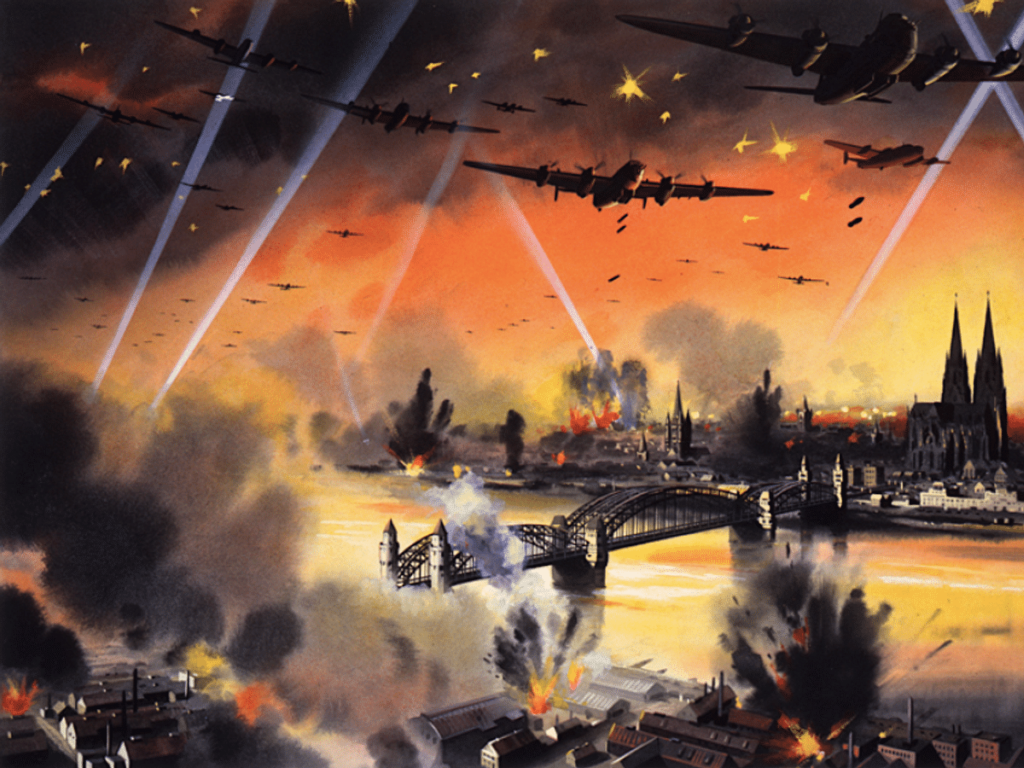
By May 1942, Harris had managed to gather everything he needed to begin his massive raids. The first target was Cologne on May 30. Until then, British bombers had invaded German airspace quite scattered, without any coherence, and each pilot had to find the target on his own.
However, this tactic gave the German fighters the advantage of having a better chance of interception, since each German squadron had a very specific area of responsibility and action.
By changing the scenario and sending 1,000 bombers to invade flying in very tight formation, the chances of interception were significantly reduced, and in the first mission only 41 aircraft were lost, a percentage of 3.8% of the total force, much lower than previous losses.
This first raid on Cologne was therefore successful and established the application of this method by the British camp.
Two more followed in June against Essen and Bremen, but only the second was quite successful. In the case of Essen, errors were made in the dropping of reconnaissance flares, while the area was covered by fog and low clouds, resulting in a large number of misses.
The raid on Essen took place on the night of 1/2 June and involved 545 Wellingtons, 127 Halifaxes, 77 Stirlings, 74 Lancasters, 71 Hampdens, 33 Manchesters (the unsuccessful twin-engined predecessor to the Lancaster) and 29 Whitleys.
A total of 956 aircraft were flown, of which 31 were shot down or lost from various causes – 3.2% of the total force (of which 15 Wellingtons, 8 Halifaxes, 4 Lancasters, and one each for the other three types involved). At the same time, 48 Blenheims, as well as pursuit and military cooperation aircraft bombed German airfields with poor results (only 10 aircraft actually hit targets) and suffered 3 losses.
In March 1943, Harris devised a new plan for concentrated bomber action over heavily industrialized areas such as the Ruhr. This time, Harris had three new important weapons at his disposal that facilitated the bombers’ work: the electronic navigation and targeting devices “Oboe” and “H2S”, as well as the revolutionary Mosquito aircraft.
The Mosquitoes, almost unobtrusively, thanks to their very high speed, dropped special targeting flares with great accuracy over the target that other aircraft had previously detected with the Oboe device, while the H2S was a primitive radar that gave the bombers a good “picture” of the ground they were going to bomb.
On March 5, these devices were successfully tested in the bombing of the Krupps industrial complex in Essen, despite the presence of fog. However, in the Ruhr area, the Luftwaffe showed its teeth and in the period from March 5 to June 28, 1943, 640 British aircraft were lost in 27 raids!
But Harris did not give up and British scientists gave him another gift in the form of a new invention: it turned out that thin strips of metal falling into the air confused German radars, both night fighters and anti-aircraft ground stations.
However, this (code Window) was not used immediately because the British were afraid that the Germans would copy it and use it in their own attacks over Britain. So they waited patiently until the new Mk. X, which was immune to Window, and only then did they use the new system in a gigantic bombing campaign of Hamburg. This happened on July 24, 1943.
German radars were “blinded” by Window, so British losses remained remarkably low. That night, due to the special incendiary bombs used together with explosives, Hamburg burned to a great extent and there were many human losses, reminiscent of terrifying nights such as the bombing of Dresden and Japanese cities in the last months of the war.
The German Minister of Armaments and War Production, Albert Speer, himself stated after the war that if the British had been able to repeat this destruction in three or four more German cities, in a short period of time, Germany would have had few alternatives other than capitulation, although this was probably utopian, given Hitler’s temperament…
In the meantime, the Germans had prepared their own clever weapons in the form of the V1 and V2 surface-to-surface missiles. Despite British raids from the summer of 1943 onwards, it was not possible to stop this German effort. Their missile program was not significantly affected and continued, although it ultimately failed to achieve anything substantial in the development of operations…
On the night of November 18, 1943, Berlin was mercilessly bombed by 450 aircraft. As usual, the British first used the fast Mosquitos to fool the German air defenses. As the Mosquitos approached Berlin, the Germans realized that it was a bluff and that the real target was Mannheim, towards which another force of 300 bombers was flying.
Thus, the main force of 450 bombed Berlin almost unmolested with only 9 losses, while the force in Mannheim had 23 aircraft losses.
Exactly four days later Berlin was bombed again by 630 aircraft, with 26 losses, a rate of around 4%, acceptable, according to the data we analyzed above.
By March 1944, 15 more major raids had been carried out, at a total cost of almost 500 bombers, but Berlin held out, even if it ended up a city with many ruins…
The Leipzig Raid, February 19, 1944
In November 1943, the famous No. 100 Bomber Support Group was created, which aimed to create countermeasures against German radars with specially equipped aircraft, raids against German night fighter bases using low-altitude bombers, and, finally, the escort of the bombers with high-altitude fighters that would intercept the incoming German aircraft.
One of the most important targets of February 19, 1944, was the Junkers factory in Leipzig, the largest city in the Saxony federation, with 750,000 inhabitants, 150 km south of Berlin. The date of their target selection coincided with the start of the largest daytime raids by the US 8th Air Force from British soil.
To mislead the German air defenses, and thus minimize their losses, the British prepared a series of bluff attacks.
Initially, 50 Lancasters would bomb targets and drop mines on the Baltic coast to divert German night fighters in the area. A second formation of Mosquitos would attack Berlin, implying that this would be the main target.
The main bomber force would initially also head for Berlin to enhance the image of German air defense controllers, but at a distance of 200 km. from the German capital it was ordered to change direction, first turning right 45 degrees southeast towards Dresden and then almost 90 degrees right again, heading south-southwest, towards the real target which was Leipzig.
At the same time, a third Mosquito formation was attacking Aachen and a fourth Mosquito force was bombing German fighter bases.
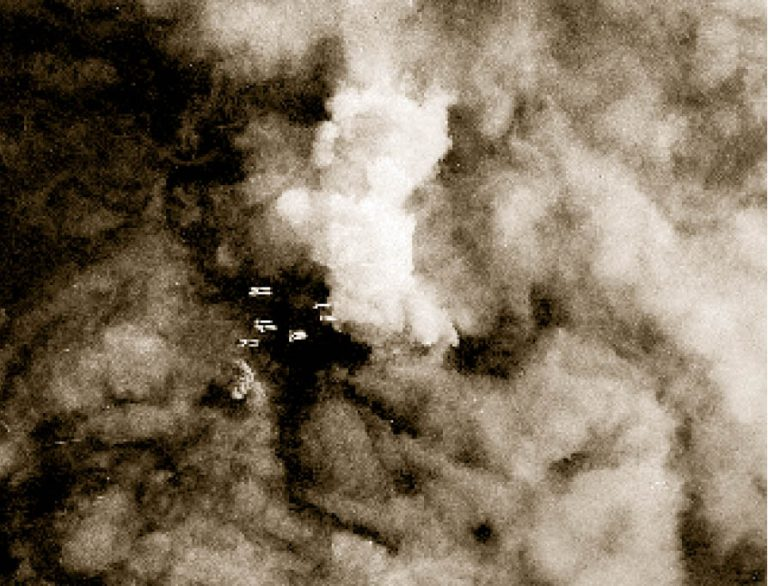
The German night fighters, mainly Ju88G and Me110G-4, assisted by single-engined aircraft with or without special night pursuit equipment, found themselves urgently receiving calls to change course, as they could not be everywhere at once! However, during its course, the main force was fired upon by many German aircraft. Its deceptive maneuvers only succeeded in preventing the Germans from having a clear prediction of who the main and final target of the British was.
Thus Leipzig was mercilessly bombed by 730 aircraft that dropped 2,500 tons of incendiary and explosive bombs, causing great damage to the factory that manufactured Jumo engines and the Junkers Ju88G, the most capable pursuers of British bombers!
In total, British losses in the Leipzig raid were 75 aircraft to the Germans’ 17. The Germans had taken off that night almost 700 fighters of all types!
Six weeks later things got even worse. In a raid on Nuremberg, employing similar deception tactics, Harris lost almost 100 bombers that fell into the “wolf’s mouth” with a full moon and a complete lack of clouds and fog! At the same time, the bombing of the city was a complete failure with the bombs being dropped too early to disengage from the deadly circle of the pursuers…
The Germans had apparently understood the British intentions this time and, aided by the weather, took advantage of it…
In April 1944, Eisenhower, who was the supreme commander of the Allied forces, convinced Harris to temporarily abandon the bombing of German cities and to concentrate, in conjunction with the bombers of the 8th Air Force, on much more critical targets, such as railway junctions, military installations and radar systems.
In May 1944, such a bombing completely destroyed a very important heavy tank training unit with irreplaceable experienced personnel. Small details that counted on the battlefield, when some of the difficult Tigers and Panthers would be flown by poorly trained crews…
These bombings contributed greatly to the success of the Normandy landings on June 6, 1944, as they destroyed many critical transport hubs, bridges, railway lines, as well as valuable German material depots and production lines.
On the night of October 14 to 15, 1944, the RAF launched its largest attack against German targets: 1,576 aircraft on the city of Duisburg, dropping 4,547 tons of bombs.
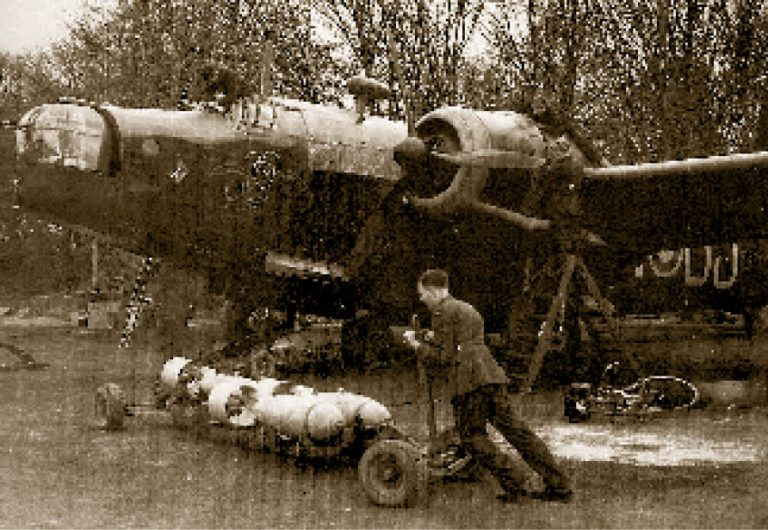
The Lancaster’s capabilities had been enhanced by the ability to carry bombs such as the 12,000 lb Tallboy and the 22,000 lb Grand Slam, weapons crucial in sinking the Tirpitz and several dams respectively (in the latter case by the famous No. 617 Squadron Dum Busters).
The last operations of Bomber Command were in March 1945 against Berlin and in April with the sinking of Admiral Scheer at Kiel and the bombing of oil refineries at Tonsberg. Kiel was bombed once more on 2–3 May by 303 bombers with only three losses. This was the last mission of Bomber Command before the surrender.
The Cost of Operations
Both sides suffered enormous losses during these types of operations. The RAF Bomber Command lost 8,655 aircraft, while another 500 were damaged beyond repair.
In these aircraft, 47,000 of their crews were killed (67% of the RAF’s total losses during the war) and another 4,200 were wounded.
The chance of survival was about one in three! In contrast, the number of USAAF crews killed in Europe did not exceed 30,000, demonstrating how much more dangerous night missions were.
Only the crews of German submarines had a lower survival rate. One million tons of bombs were dropped (955,044 tons, to be exact) and, aided by daily USAAF bombing (another million from the 8th and 15th Air Forces), Germany was driven with mathematical precision towards capitulation, essentially within a few months…
Almost 45% of the RAF’s strategic targets were major German industrial cities.
14% were transport hubs, 13% ground army support missions (tanks, artillery, etc.) and 10% refineries and fuel depots.
The remaining 18% were naval and air targets, as well as other military and industrial facilities. In contrast, the USAAF’s targets were 36% ground support, 26% transport hubs, 13% fuel and 10% airfields and aircraft factories, with the remaining 15% being cities and naval targets.
The British followed a very clever strategy: not being able to bomb in daylight due to a lack of suitable escort fighters, they specialized in nighttime, making their mission difficult and drastically limiting the ability to intercept enemy fighters. It was perhaps the most difficult and dangerous type of air operation.
It took a lot of courage, audacity and a brave dose of heroism on the part of British crews to fly 2,000 km, unescorted by chasers, for 6 hours, at night, under anti-aircraft fire all around them and with chasers lurking, as well as strong nerves to stay above the target and then take the difficult path back, with their pursuers following them.
Of the 22 men of the bomber command who were awarded the highest decoration, the Victoria Cross, ten received it posthumously…
Some still express doubts today about whether the bombing of German civilians and the destruction of entire cities, such as Dresden, with the loss of thousands of citizens, was morally correct, a few weeks before the capitulation. But at night there was no means of bombing military targets with precision.
There had also been heavy bombing of British cities. The aim of the destruction of populated industrial areas was to drastically reduce the workforce in the factories along with their morale, and to render the electricity, water and food installations useless.
The war had to end as soon as possible, before Hitler could acquire any decisive weapon or strengthen Germany’s defences, halting the Allied advance that had begun with the Normandy landings.
Without the finishing blow, such as that of the RAF during the night, it is impossible to imagine how many more casualties there would have been if the German resistance had continued “to the end”.
When Hitler abandoned the failed Operation Sea Lion in 1940, he could not have imagined that, by leaving the British alone on their large island, he would receive the final blow a few years later as a “response”…

