A great “baron” from Ecuador to Europe is 44-year-old Dritan Rexhepi, who runs a colossal multinational cartel – In 2011 he introduced himself as a Greek investor, was a paid hitman and had escaped from Albania, Italy and Belgium – He is now a prisoner in Turkish prisons.
During the holiday season, consumption increases dramatically, almost doubling per day.
Something similar also applies to other psychotropic substances such as methamphetamine, but it is clear that coca is at the top of the preferences for a number of reasons, beyond its action per se: It “lifts” the user, not only because it is naturally stimulating, but also because it is surrounded by aristocratic glamour, as the number 1 “drug of the rich”. As such, it fits perfectly with the euphoria and manic bliss of the holidays, the established debauchery, the exceptional abuses, etc.
Global abundance
At the same time, however, the increased use of coca in Europe indirectly confirms a process that has been taking place in recent years on a global scale. That is, cocaine is more abundant and more easily accessible – although not cheaper than in the past. Indicatively, the current price is around 80-100 euros per gram and remains high, even though the product is going through a period of global abundance, while the corridors followed by smuggling have multiplied accordingly, from Latin America to Europe and other markets on the rest of the planet.
The need to avoid the dense patrols of the US Drug Enforcement Agency on the coast of Colombia, led the Balkan and European circuits to plan different routes, through countries such as Costa Rica, Paraguay and, above all, Ecuador. From quieter – and less controlled – ports in Latin America, Italians, Russians, Turks and, above all, Albanian traffickers have secured the ability to transship tons of cocaine from Colombia, Bolivia, Peru, etc. onto ships that were, in principle, carrying bananas or other food destined for the Netherlands, Belgium or Spain.
The expectation of unimaginable profits overcomes any fear or inhibition and encourages ingenuity. Given that Albanian traffickers buy coca from Colombia for $2,000 per kilo and can sell it in Europe for 10 to 15 times more, they have more than a strong incentive to search the world map for channels that no one had previously thought of using. Moreover, the European market, which is estimated at 12 billion euros per year, she seems gluttonous and insatiable, asking for more and more coke.
Albanians dominate
Albanian gangs have moved more dynamically and effectively than most of their competitors and have managed to take the reins, as the new key holders of international cocaine trafficking, with expanded alternative options for cargo routes. And one of the would-be successors to the notorious drug lords of the recent past, such as Pablo Escobar, “El Chapo” Guzman, etc. is reportedly an Albanian, 44-year-old Dritan Rexhepi.
Although imprisoned (currently in Turkey and awaiting extradition to Albania), Rexhepi appears to be the new big powerful boss of a colossal narco-multinational, a cartel that is not inferior in power, turnover and organization to its counterparts in Colombia and Mexico. In Netflix terms, this could be the new protagonist in a possible next offshoot of the “Narcos” series.
Arrested in the Netherlands
In any case, his life is sufficiently episodic to be used as a canvas for a fascinating scenario. In fact, Dritan Rexhepi began his ascent to the highest power of modern narcos from Ecuador, displaying one of his false identities: he introduced himself as a Greek businessman, investor, etc. This happened around 2011, when Rexhepi went to Ecuador following a trend of the time that had developed in the Albanian underworld at the time. The Albanians who had been involved in the drug trade and had created a network of collaborators throughout Europe had foreseen in time that Ecuador was emerging as a rising power, as a central hub for the movement of cocaine shipments, in almost every direction around the globe.
Moreover, the laxity of the local authorities created a framework of extremely favorable conditions for the settlement of people with the aspirations of people like Dritan Rexhepi. There he could buy real estate without any problems, establish companies with a legal front to start his illegal and criminal activities, etc.
Of course, Rexhepi did not immigrate to Ecuador with a clean criminal record from his previous life. In Albania, as a paid hitman, he had been involved in the murder of a police officer and a civilian in 1999, a double crime for which he was arrested in 2006. However, he immediately escaped from custody and began wandering around the Balkans and Italy as a fugitive. Albanians and Italians were looking for him, but he was eventually arrested in the Netherlands for drug trafficking offenses.
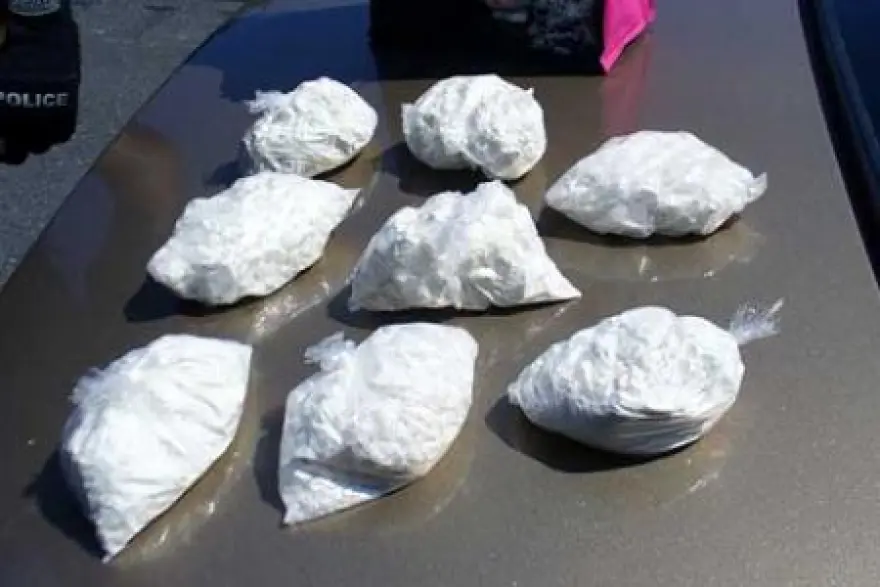
Rexhepi was extradited to Italy, where he was sentenced to 13 years in prison, escaped and was arrested again, this time in Spain, where the authorities extradited him to Belgium. After another escape, the elusive Dritan Rexhepi decided to move to Ecuador, a country that does not produce cocaine itself – but Colombia and Peru, two countries with which Ecuador borders, do.
Boss from the cell
Rexhepi very quickly networked, establishing a regular criminal organization, applying the methods of the archetypal narcos, with a chain of businesses that trafficked hundreds of tons of cocaine and laundered the illegal money. However, Rexhepi had open horizons and bigger ambitions, which is why he engaged in a systematic attempt to infiltrate Ecuadorian government agencies, through bribery, extortion and rampant corruption. He collaborated with local thugs and even used the Albanian vice-consul in Ecuador as an accomplice – although, once again, Dritan Rexhepi found himself behind bars.
In 2014, he was arrested in the country’s largest city, Guayaquil, and sentenced to 13 years in prison, as a guilty party to drug trafficking. In reality, however, this specific sentence for Rexhepi was something of a change of work environment, as from his cell he devoted himself undistractedly to further strengthening and expanding his network. In 2015, he attempted to appeal the first-instance verdict against him, citing a miscarriage of justice. He claimed that his real name was Murataj Lulezim and that he was in prison by mistake because the police and the court confused him with Dritan Rexhepi. “There is not the slightest evidence against me, not even a single photograph that would connect me to the crime I was charged with,” Rexhepi said at the time. And, using the same dramatic tone of innocence that drowns him in justice, he emphasized that “my only sin – let’s put it that way – is that I am an Albanian citizen. And I came to Ecuador because the country is being advertised abroad to attract investment.”
Regardless of Rexhepi’s own status in Ecuador, his organization continued to spread its tentacles around the world, creating transit stations in Greece, Romania, Hungary, Italy, Spain, the Netherlands and Germany, Dubai and, of course, Albania. In all these countries, in September 2020, European law enforcement authorities arrested 20 of Rexhepi’s accomplices, after months of monitoring their movements. Again, however, he did not flinch.
In August 2021, by pulling the right strings behind the scenes, he succeeded in converting his sentence to house arrest with a digital transmitter (“bracelet”), supposedly for health reasons. Just a few days later, even the bracelet was removed from his leg, as it was determined that Rexhepi was not a fugitive and that he would comply with the condition imposed on him, namely reporting to his local police station every 15 days. Coincidentally, shortly after Ecuadorian presidential candidate Fernando Villasencio strongly criticized the authorities’ decision to release Rexhepi, he was assassinated by unknown assailants.
The Phantom “Bello”
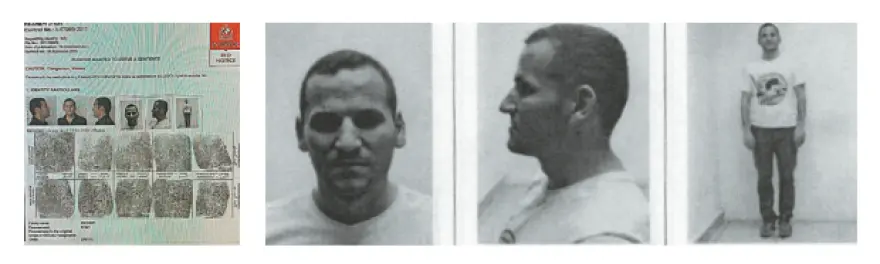
However, the Albanian narco was arrested again in November 2023, following strong pressure from abroad. Italian and Albanian anti-drug agencies demanded that Ecuador extradite Rexhepi. However, instead of being taken to court or prison, Dritan Rexhepi found himself in Turkey, living in a luxurious seaside mansion in a suburb of Istanbul. He had traveled there on a Colombian passport, as Benjamin Omar Perez Garcia, combining, with characteristic impudence, some of the most common South American names. Italian drug enforcement agents located him and notified their Turkish colleagues, who proceeded to arrest him.
Although news of what will happen to Rexhepi is mixed, with the Turkish government reportedly approving his extradition to Albania, it is almost certain that, sooner or later, the Albanian narco will find a way to regain freedom of movement. The “Albanian coca cartel” is on a trajectory of rapid growth and the big boss cannot afford to waste his time in detention centers. After all, both the demand for cocaine in Europe and production in South America are constantly increasing. In 2022, 2,757 tons of coca were produced, recording an increase of around 20% compared to the previous year.
Upgraded cultivation methods, even scientifically improved varieties of the coca plant, are contributing to the fact that the land of Colombia produces twice as much coca as it did a decade ago. On the other hand, Europe has even surpassed the US, traditionally the world’s largest market, in cocaine consumption. This is indicated by the seizures of cocaine shipments in European ports, which have increased fivefold between 2011 and 2021. That is, precisely the period when Dritan Rexhepi built his drug empire, stamping the “bricks” of coca with his favorite label “Kompania Bello”. In free translation, the “Company of the Puppet”.
Cocaine use
- €80-100 per gram, the current price, despite the drug being in global abundance
- $2,000 per kilo, Albanian traffickers buy coca from Colombia
- €12 billion, the annual European “market” is estimated.
- 2,757 tons of coca were produced in 2022, recording a 20% increase compared to 2021, while Europe has even surpassed the US in cocaine consumption.