



“Bee”, “flower”, “peach”, “ear of wheat”, “owl”, “biscuit”: if anything, alternative local currencies have imaginative names in France. Unconventional and not intended to replace the national currency, they are used locally, to support small businesses and producers, strengthening small supply chains and helping to develop geographical areas and create jobs.
In this sense, they have a clear ecological dimension, as they reward sustainable practices in practice. The result is that their reach is growing. That’s more than any other country in Europe. Only a third of them are in digital form.
The first alternative local currency, Abeille – which means “bee” – was launched in France in 2010, in the southwestern department of Lot-et-Garonne.
And the most recent, Eco, was launched in three cities in the Saint-Denis department, northeast of the Paris metropolitan area, just last summer.
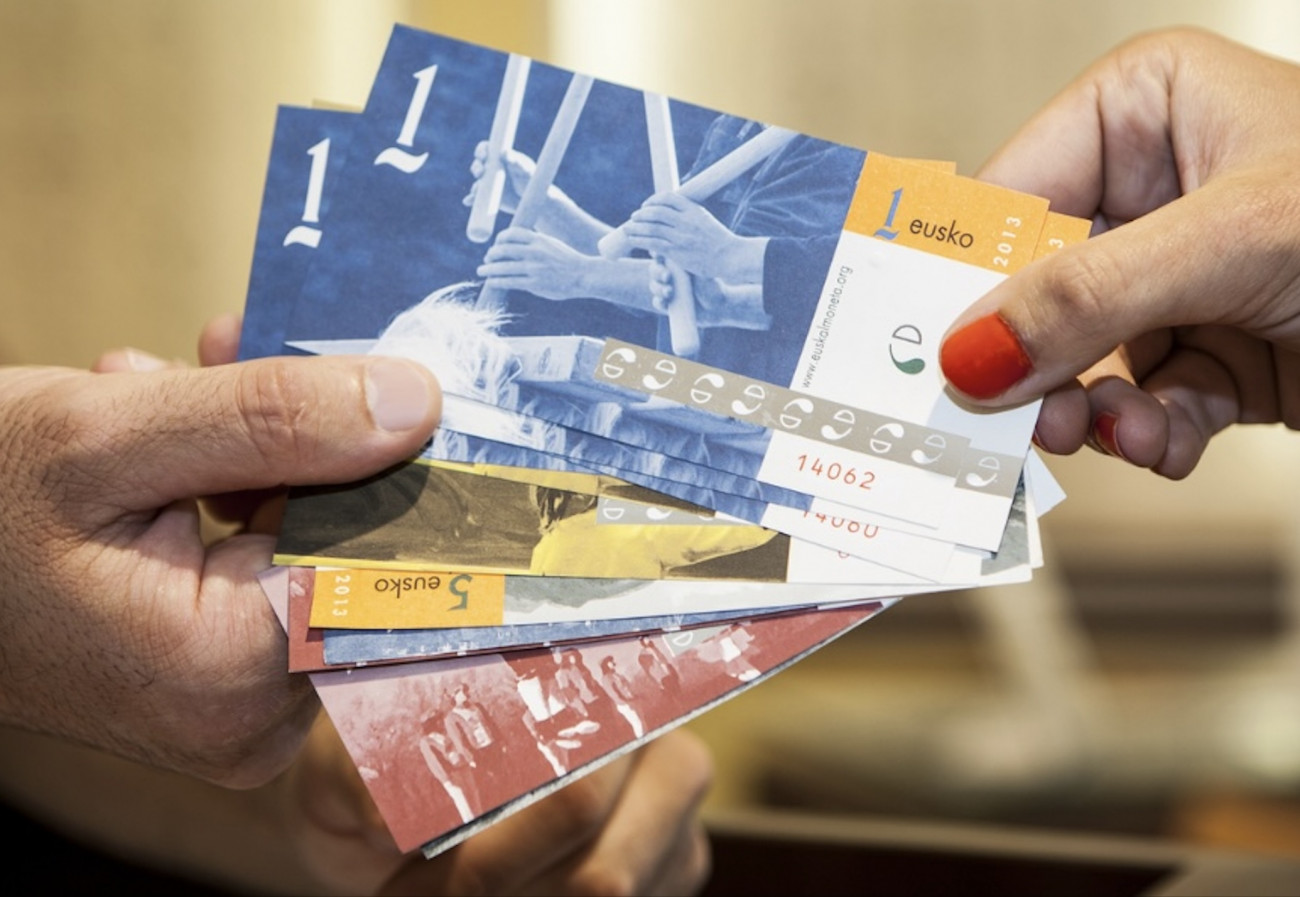
The most widespread, however, is Eusko, the largest alternative local currency in all of Europe.
It began circulating in 2013 in the Northern Basque Country,
in southwestern France, as well as across the border in the Basque Country, in northern Spain.
Today, Eusko is used by 4,000 individual members and 1,400 professionals.
One of its co-founders is Dante Edme-Sanjurjo, a journalist specializing in Social and Solidarity Economy issues.
He is also co-president of Sol Movement, a monetary experimentation laboratory that functions as a quasi-umbrella for similar initiatives.
Multiple benefits
Today, nearly 40,000 individuals and 10,000 businesses or associations in 13,000 municipalities in France use alternative local currencies, making the second largest economy in the eurozone a leader in the venture.
In 2022, the total value of those in circulation corresponded to 7.3 billion euros.
Since then, others have emerged, often from citizens’ collectives.
A study by Sol Movement has documented in detail the social utility of local currencies.
48% of users of this type of transaction increased their consumption of local products.
36% switched to consuming organic products.
Almost seven out of ten reduced their purchases in large supermarkets.
69% reported a better understanding of the interconnection between economic and social issues.
Among professionals, 84% reported reducing the environmental impact of their activities as a goal.
64% focused more on the sustainable practices of business partners.
In terms of turnover, 22% of professionals saw an increase in revenue, with payments in local currencies generating 1.25 to 1.55 times more local income than transactions in euros.
This trend is clearly increasing after the COVID-19 pandemic.
The use of local currencies, they observe, strengthens social ties, acting as a platform for small-scale democratic participation.
In 2022, for example, the local currency Gonette in Lyon joined a research program, aiming to push students towards healthier and more sustainable food choices.
With Eusko as its axis, an Institute of Local Currencies https://institut-des-monnaies-locales.org/ has even been created to raise awareness and “educate” citizens, businesses, trade and agricultural associations, and even local authorities.
Major challenges
The next challenge for proponents of alternative local currencies is to expand their reach beyond activist circles.
One of the emerging new success stories is Moneko.
It began circulating in 2020 in the Loire-Atlantique department, in the western Loire region.
It is essentially a merger of the digital SoNantes that was launched in the city of Nantes and Retz’l that was created by activists in favor of changing globalization in the neighboring Pays de la Ré.
In contrast to the inglorious course of its two components, Moneko has seen an upward trend.
As of 2023, it is the second largest local currency in France, with 1 million monekos exchanged within 12 months.
Approved in July 2014, the French Law on the Social and Solidarity Economy provides the legal framework for complementary local currencies, recognizing them under strict conditions as means of payment.
In this context, local authorities can grant creditors the possibility of this type of payment.
However, the procedures remain complicated and resources are limited.
The Sol Movement is now lobbying for the creation of a state fund for local currencies, in order to ensure their continued development.
Among the challenges is their digital transition, thus increasing the accessibility of this method of payment.
However, many still describe them as a “game” for the “bubble” of eco-hipsters.
