



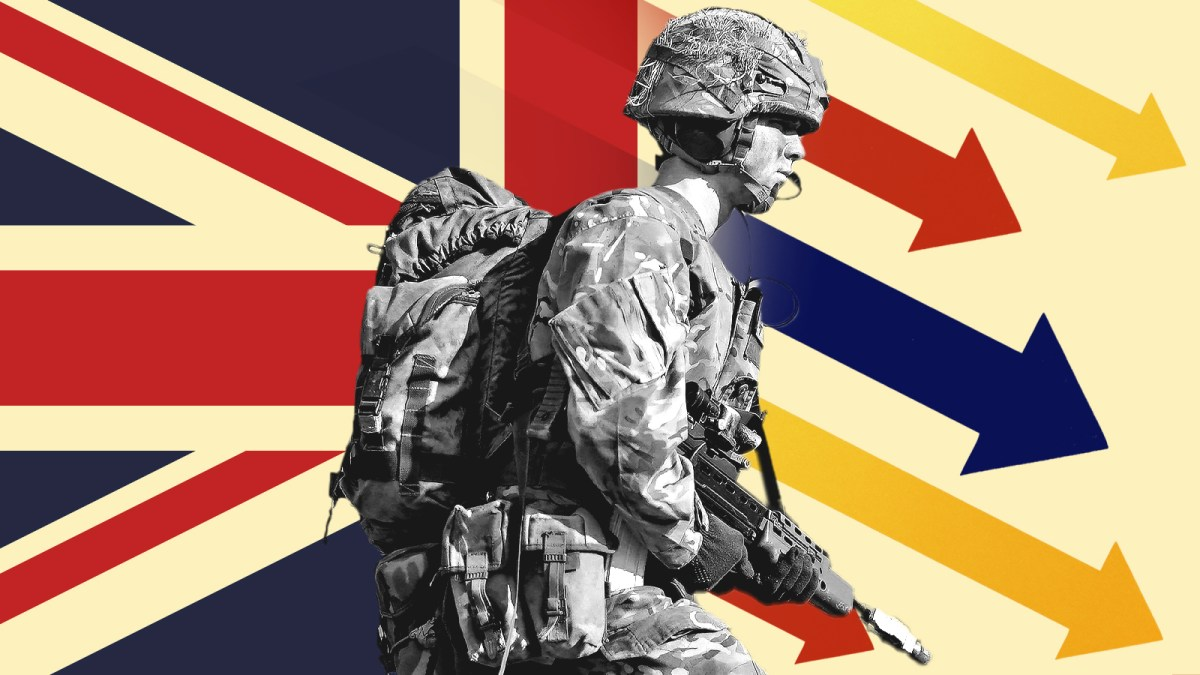
A missile shield over a specific sea, which several countries with island complexes invoke as the perfect defensive armor, reminded us of another case of corresponding ideas and policies. After all, missiles, since the Second World War, have caused awe. They are considered “invincible”, as the Weapon that will destroy all other Weapons. And obviously, their deification in every form is not a Greek invention.
Today, after almost 70 years, few people internationally will remember Duncan Sandys. Nor of course his Famous White Paper, but the Armed Forces of Great Britain (at that time it was still Great), certainly have not forgotten him. And they probably never will. And the problem for Britain is that after Sandys, Denis Winston Healey took over as Minister of Defense. But let’s take things in chronological order.
Sandys’s 1957 study, then Secretary of State for Defence, known as “The 1957 Defence White Paper“, was one of the most controversial and defining documents in the history of British defence policy during the Cold War. The document was not simply a review of defence strategy, but a radical transformation of it, with significant consequences for Britain’s aviation and defence industries, as well as for its military power.
By the 1950s, the Cold War had escalated to a level where the two superpowers, the United States and the Soviet Union, were competing for technological and military supremacy. The Soviet launch of Sputnik in 1957 was a confirmation of the possibility of using space rockets for military purposes, dramatically changing the landscape of defence doctrines. Satellites and ballistic missiles were seen as the new means of deterrence and attack, calling into question the value of aircraft, particularly bombers.

Duncan Sandys, Winston Churchill’s son-in-law and a government veteran, became Defence Secretary in 1957 under Harold Macmillan. His strategy was based on the belief that military power would increasingly rely on missiles. The need for economic adjustment after the Second World War, together with the need for Britain to remain a major power on the international stage, also played a role in shaping his policy.
The White Paper focused on increasing the effectiveness of defense spending by canceling programs that were now considered ineffective or obsolete, on the transition to missile defense, and on reducing conventional forces by restructuring the British armed forces, again with an emphasis on missile power and rapid reaction.
The assessment of this new reality led Sandys to propose a series of measures that would drastically affect the defense industry. Where the White Paper emphasized the development and increase in missile production, including both ballistic and surface-to-air and air-to-air missiles. In this context, we also had the cancellation of many programs to develop new aircraft, such as the Avro 730 supersonic bomber and the F.155 interceptor.
Furthermore, the focus on missiles was not without its challenges. Their technology at that time was still in its infancy, with many programs facing huge technical problems, delays and cost overruns. Thus, ballistic missile development, such as the Blue Streak program, proved particularly demanding and was ultimately cancelled in 1971 due to technical difficulties and the rapidly developing American and Soviet programs using space carriers to carry nuclear warheads.
Sandys’ decision to cancel many aircraft development programs also had long-term consequences for Britain’s ability to maintain an independent defense industry. The country was later forced to turn to international partnerships, such as the Concorde program with France, and later participation in multinational programs such as the Panavia Tornado. However, the cost in terms of loss of technical knowledge, experience and independence in aircraft development was enormous, while the many independent aircraft technology companies were forced to unite into large groups (the British Aircraft Corporation, Hawker Siddeley and Westland Aircraft), which led to a loss of innovation and competition. He also restructured the Army, with dozens of units abolished or merged into new formations, with a serious overall reduction in the force ceiling.
Sandys’s Defence White Paper was revised in many aspects by subsequent governments, but the decision to invest more money in missiles rather than aircraft has been seen by many as a serious mistake. It was a teaching moment in terms of adapting to rapid technological change, but also a reminder that defence strategy must be flexible and not overly dependent on a single form of technology or weapons.
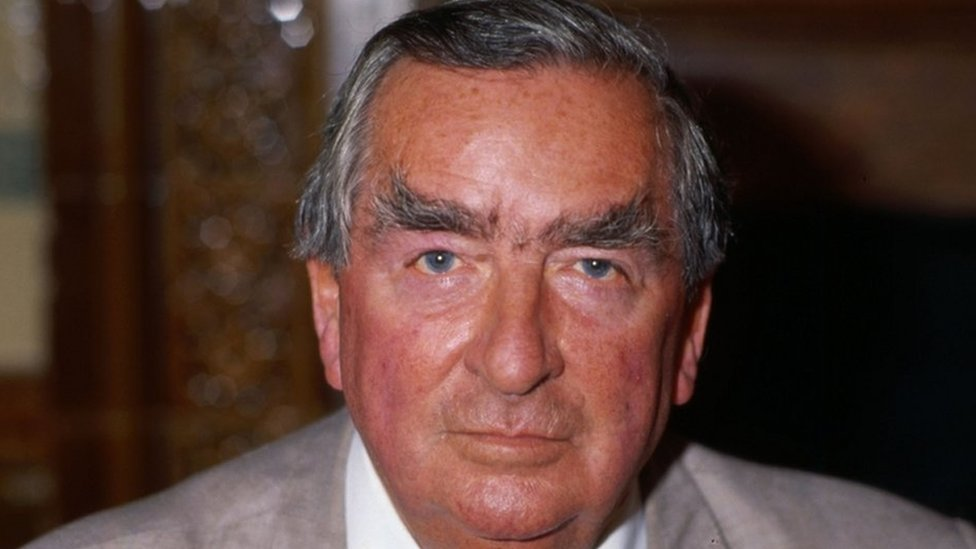
From Sandys to Healey, the completion of the “disaster”
Denis Healey’s tenure as Defence Secretary marked a significant shift in the country’s defence policy, as while he followed in the footsteps of his predecessor, Sandys, he also overturned many of his decisions. Healey served from 1964 to 1970, during Harold Wilson’s first government, at a time when economic and geopolitical pressures demanded continued radical changes in defence.
Healey’s policy was equally, if not more, influential than Sandys’. His philosophy was one of unconditional savings (due in part to Britain’s many economic problems), avoidance of inefficient defence spending and a focus on more practical, cost-effective solutions.
One of his most controversial decisions was the cancellation of the TSR-2 (in Sandys’s terms) programme. An ambitious programme to develop a tactical bomber and strike fighter, which promised advanced performance but had already suffered significant cost overruns and delays. The decision to cancel the programme was taken a few months after its first flight, on the grounds that the cost of building and operating it would be unprofitable for Britain. This decision caused strong reactions in the aviation industry and in political circles, as they considered that the country was missing a significant opportunity to maintain its leadership in aviation technology.
In addition to the TSR-2, Healey suspended or cancelled several other major armaments programmes. One of these was the Type 82 class of destroyers, which would have been the next step in naval technology. Instead, the decision was to proceed with the construction of just one ship of this type, HMS Bristol, and to focus on more economical options such as the Type 42 destroyers. The Type 42s fought in the Falklands but with significant losses.
The decision to cancel the highly advanced Hawker Siddeley P.1154, a project to develop a supersonic vertical take-off and landing (VTOL) aircraft, was also controversial. This program, which could have given the country an aircraft with capabilities that no other nation had, was cancelled due to high costs and technical challenges. Instead, Britain chose to develop the Harrier, a vertical/short take-off and landing (V/STOL) aircraft that was more practical and economical, although less ambitious.
Healey’s policy of cancelling these programmes was not only a response to economic pressures but also an adjustment to the country’s changing strategic focus. After all, Britain had ceased to be a superpower, with almost 50% of its forces deployed in its colonies.
However, Healey’s decisions were not without criticism. The defence industry suffered significant losses in jobs and know-how. Dependence on foreign technology increased, as was seen with the US purchase of the F-111 to replace the TSR-2, a decision that proved problematic due to delays and integration problems. Also, instead of the P.1154, the Navy purchased American F-4 Phantoms.
Thus the legacy of Sandys and Healey’s decisions in the crucial 1960s is clearly controversial. On the one hand, they managed to save resources and refocus British defense in a more realistic context, in the spirit of the post-war downsizing of the “Empire on which the sun never sets”. On the other hand, Britain missed significant opportunities to lead in the fields of aviation and naval technology, but also more generally in matters of technological innovation and productivity, something from which it did not recover. While even today – and this is the most important thing – British defense power remains a “ghost” compared to the past. With only 148 tanks, with 200 guns (towed and self-propelled) with about 140 front-line fighters (Eurofighter and F-35B) and so on. Something that, after the shocking developments in Ukraine, has forced a “rally” of armaments and investments to gain lost ground.
The conclusion is that for all these countries that want to build a defensive dome of missile systems, it would be a tragic mistake to forget that strong “conventional” forces are always required, with many and sophisticated surface ships, many modern fighters with a large weapons load, precision artillery with plenty of ammunition, a strong tank force, and so on. Let’s hope that the case of Britain will have been studied as it should.
