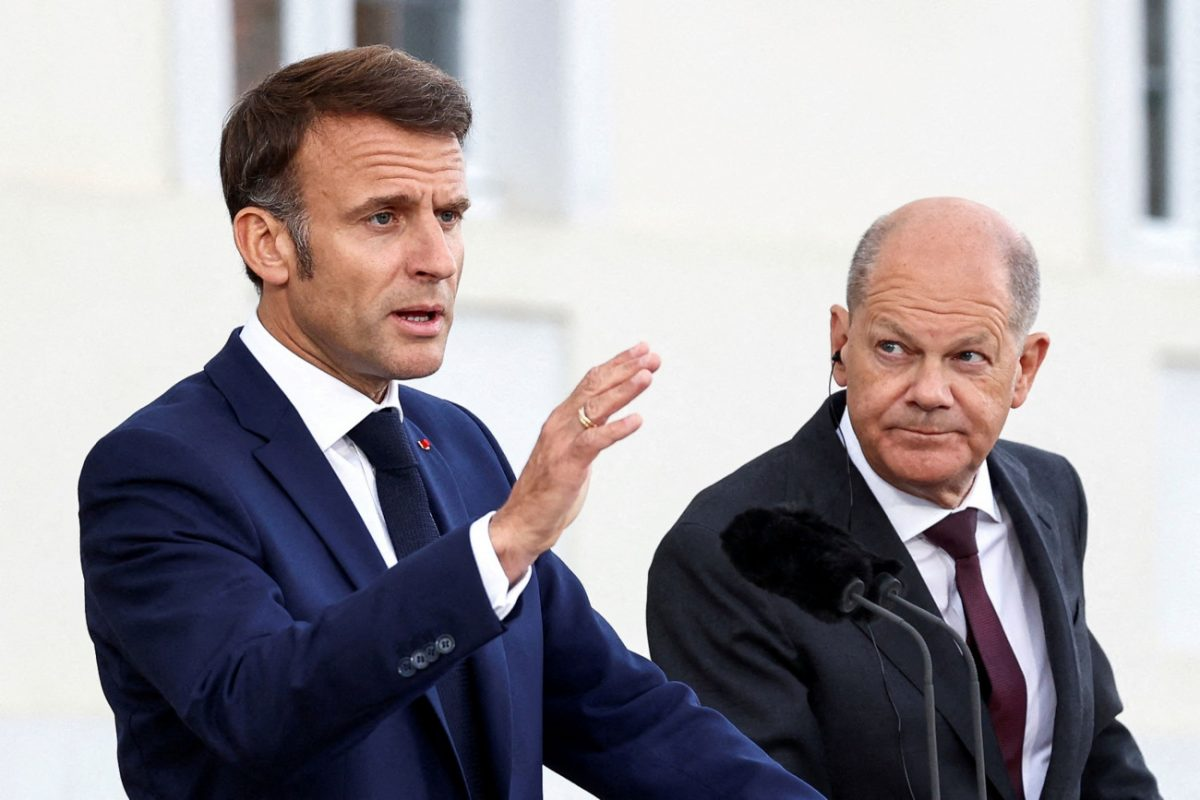
In a Europe in multiple crises – leadership, political, economic, social, demographic and geopolitical – the notorious Franco-German axis between the two largest economies in the eurozone and traditionally the driving force of the EU is weaker than ever.
The two de facto leading European powers, France and Germany, are in a simultaneous political and economic vortex, with government liquidity, fiscal uncertainty and without approved budgets for 2025, threatening the balance not only in their bilateral relationship, but throughout Europe.
In the background are two major wars in Ukraine and the Middle East, one on the territory of the Old Continent itself and the other in its geographical neighborhood, both at a critical juncture.
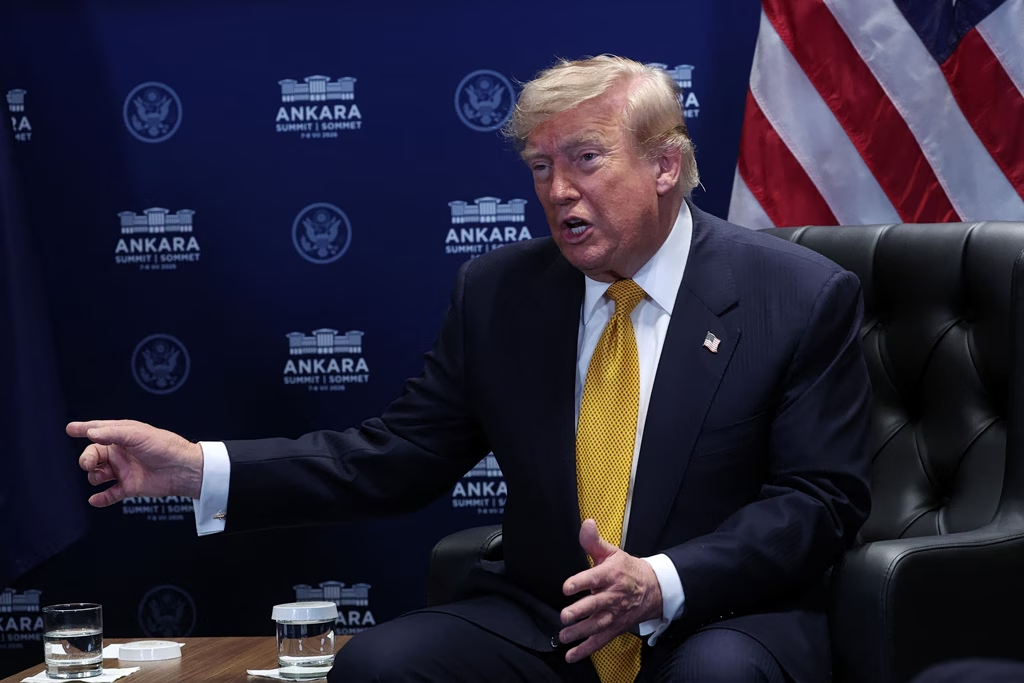
And just a few weeks before Donald Trump returns to the White House, more aggressive, with his plans for a new world war, in this case a trade war, as a priority, under the motto “America First” and the main “target” being China.
The multi-layered divided EU, meanwhile, has just elected a controversial new European Commission, with a clear inclination towards the Right and Far Right, while successive crises in the ranks of the “27” – energy, precision and widening inequalities – underline the need for a new social contract, without which the prospects seem bleak.
This, in the wake of the recent, albeit belated, alarm about European competitiveness and the need for debt mutualization signaled by the former head of the European Central Bank – and later of a technocratic government in Italy, the third largest economy in the eurozone – Mario Draghi.
A Franco-German “suicide dance”?
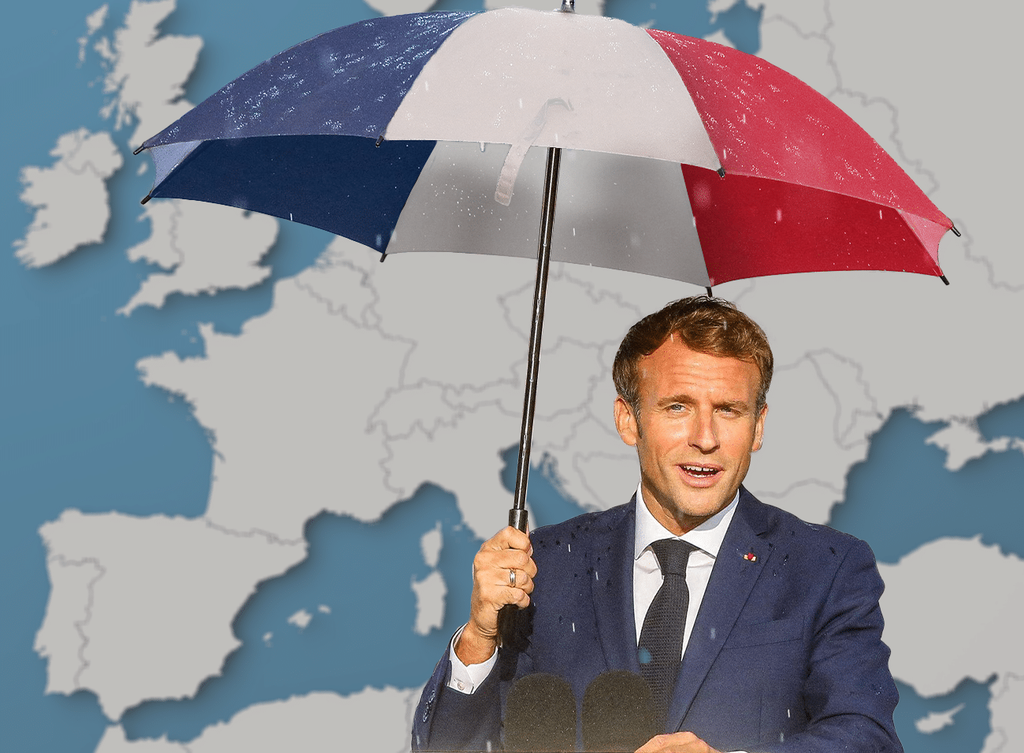
With the ultimately tragic and politically adventurous choices of French President Macron – from the announcement of early parliamentary elections last June, immediately after the government’s failure in the European elections, to the appointment of a new government against the will of the people – the second largest economy in the eurozone is now preparing to acquire its fourth prime minister this year.
The scene is composed of a fragmented National Assembly – which cannot constitutionally be dissolved before June 2025 – with the “Zeus” French president of the “divide and rule” policy trapped in the “Erinys” of the Le Pen far-right, the national economy in the “vice” of the growing deficit and record public debt, society in turmoil and the country’s new austerity budget in the air.
Under European fiscal surveillance – also since last June – Paris now sees the rating agency Moody’s ringing the alarm bells about France’s creditworthiness.
In the meantime, the eyes of the French political elite – and not only – are turned to economically suffocating Germany, where the Social Democrat Olaf Scholz is now Chancellor for a limited period.
He is expected to formally take office on the 16th of the month, losing – barring a shocking unexpected event – the vote of confidence scheduled for then in the remaining coalition government he leads.
He is now in the minority with the Greens, after the -premeditated, as it turns out – exit of the Liberals.
Early elections are expected on February 23, with the eurozone’s largest economy also without an approved budget for 2025, the far-right AfD steadily emerging in second place in the polls, and post-election scenarios for the formation of a new coalition government – dominated by the center-right Christian Democrats of the post-Merkel era – having in the foreground, if they wish, even the… release of the “debt brake.”
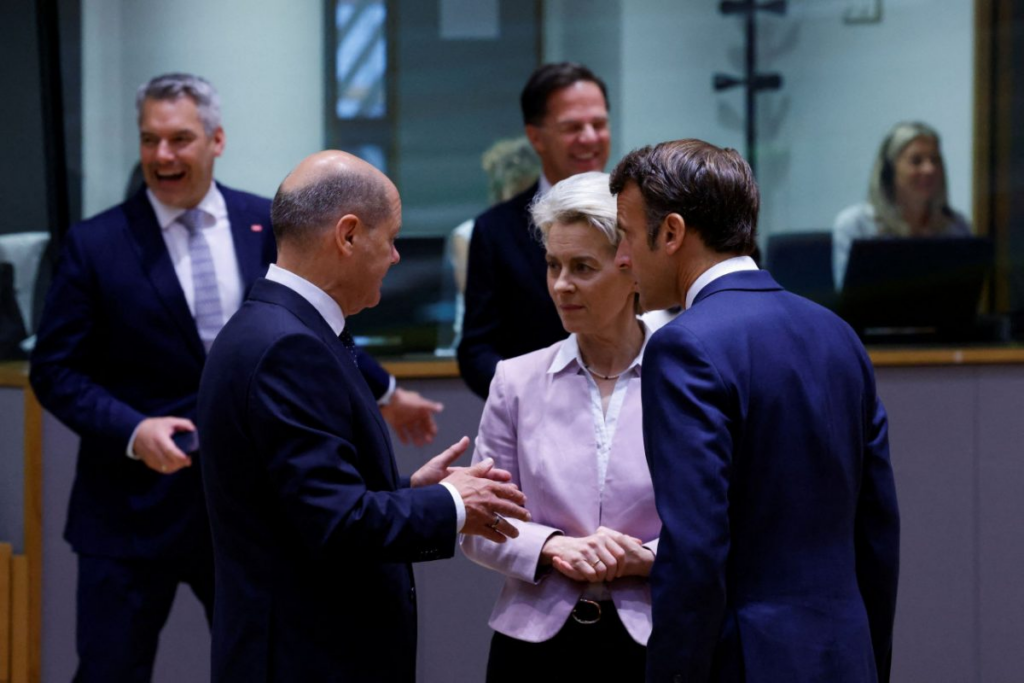
Europe without a compass
Beyond the economy and the visible risk of a more dangerous debt spiral in the eurozone than in 2010 – no longer just post-pandemic or due to the Ukrainian crisis – in France under “reformer president” Macron, the crisis is touching the foundations of its Fifth Republic, with the potential to develop into a constitutional and institutional one.
In Germany, the “engine of Europe”, the crisis seems structural, with Merkel’s “legacy” – support for NATO for defense, Russia for cheap energy and China for exports – collapsing.
In both countries, the Far Right is lurking, while expanding its political base and footprint both in the governments of the “27” (e.g. Italy, the Netherlands, Finland), as well as in the institutions and in EU policy (see immigration).
At the present juncture, the further destabilization of Europe of different trends and speeds places it in the position of the “frog”, when the USA and China already seem like “buffaloes arguing”.
And especially with Germany and France at this stage in paralysis and awaiting a message from Donald Trump – on the occasion of his presence at the reopening of Notre Dame de Paris this Saturday – that, ultimately, things will not go to hell.
A stance that is clearly not a strategy.
Even more so when Russia, with Ukraine as its axis and the leadership deficit in the EU as a backdrop, is bringing back demands to change the security architecture of the entire Old Continent.
Putin’s… “trolling” (?)
As a “cherry-pick”, Vladimir Putin is now calling for the return of Western companies – and especially German ones – to Russian soil.
“Our doors are always open, we have always had very good relations with Germany for decades and we understood each other very well,” he stressed at the “Russia Calling” investment forum in Moscow.
The conditions for German companies in Russia are better than elsewhere, he argued, pointing to the US.
Although they should not expect preferential treatment, he stressed, no obstacles will be placed in the way of their eventual return.
For now, the losers are the Volkswagen workers, he said, who are “on strike by the thousands because factories are closing” in Germany.
The Russian economy is expected to grow by 3.9-4% this year, he pointed out in a counterpoint.
He failed to mention, of course, that the impetus is mainly attributed to the arms industry, otherwise referring to high inflation in Russia – and conveniently – only in passing.