

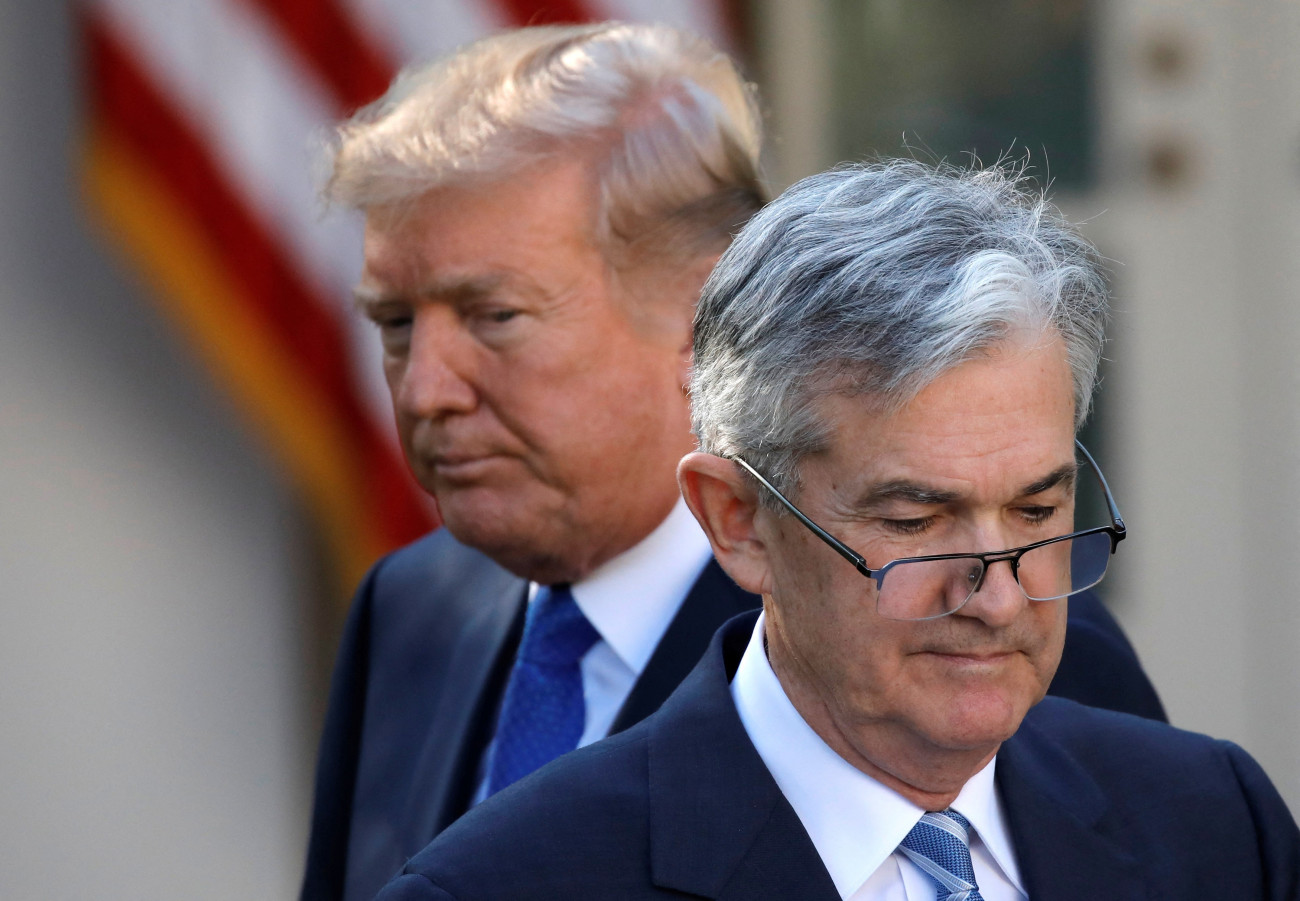
At first glance, Thursday’s 7 November – standard – press conference of the head of the Federal Reserve was business as usual… With his purple tie, his classic dark suit and the same glasses frame he has been choosing for years. However, something was missing: Jay Powell was clearly somber compared to previous similar occasions that he let a smile or even a sneer crack his lips.
The reason is obvious. Donald Trump’s re-election two days earlier upends the policy data on which the Fed has based its monetary decisions until now, raising concerns about the Fed’s independence as the new president has said he wants a say in formation of interest rates.
The key question to Powell
As expected, in addition to the usual questions about the Fed’s next moves, the economy, inflation and the labor market, the press conference also had plenty of politics, which is also unusual.
Jerome Powell said Thursday 7, November that he will not resign if President-elect Donald Trump calls for his resignation.
When asked if he would resign if asked by Trump, the Fed chairman simply said, “No.” Powell then told reporters that the president does not have the power to fire or demote him.
“Not allowed under the law,” Powell said succinctly.
Asked again if there was concern about the Fed’s independence, the American banker made it clear he would not get into political matters: “I’m not going to get into any of the political stuff here today.”
He also stressed that Trump’s election victory will not have an immediate impact on central bank policy. “In the near future, the election will not affect our policy decisions,” he stressed, adding, however, that the policies of the next administration could in the long run have an economic effect that would affect the Fed’s dual mandate of maximum employment and price stability. But it’s still too early to tell and the Fed isn’t making assumptions, Powell said.
“It’s such an early stage,” Powell explained. “We don’t know what the policies are, and once we know what they are, we won’t have a sense of when they will be implemented,” he said.
“We’re not guessing, we’re not speculating and we’re not assuming,” Powell said at the news conference after the meeting.
The Trump-Powell relationship
Investors will be watching the two men’s controversial relationship closely. Trump appointed Powell in 2017, but repeatedly attacked them during his first term as president, arguing that Powell did not loosen monetary policy quickly enough.
Trump said in an interview in October that the president should be able to weigh in on interest rate decisions: “I don’t think I should be allowed to ask for that, but I think I have the right to make comments about whether interest rates they should go up or down,” Trump told Bloomberg News at the Chicago Economic Club on Oct. 15.
Trump will have the opportunity to name a new president once Jay Powell’s term ends in May 2026, and no one knows yet what he will do, and whether he will pressure Powell to resign by then…
The challenges for the Federal Reserve
The decision comes amid a changing political landscape.
President-elect Donald Trump scored a stunning victory in Tuesday’s election. Economists largely expect his policies to pose challenges to inflation, with his stated intentions for punitive tariffs and mass deportations of undocumented immigrants. In his first term, however, inflation has been kept low, while economic growth, apart from the initial phase of the Covid pandemic, has remained strong.
But Trump has been a vocal critic of Powell and his colleagues during his first term in office, and the U.S. Banker’s term expires in early 2026.
Trump’s election
Former President Donald Trump’s victory in Tuesday’s presidential election and the prospect that his fellow Republicans will control both houses of Congress starting in January are setting in motion policy changes from import tariffs to tax cuts that could rewrite the outlook for economic growth and inflation that Fed policymakers expected to face next year.
It could take months for the proposals to evolve and work their way through Congress even under full Republican control.
For now, the new economic data continues to work in the Fed’s favor. Data released Thursday showed that initial jobless claims remained low in the latest week and worker productivity jumped 2.2 percent in the third quarter, helping to offset a 4.2 percent increase in hourly workers’ wages.